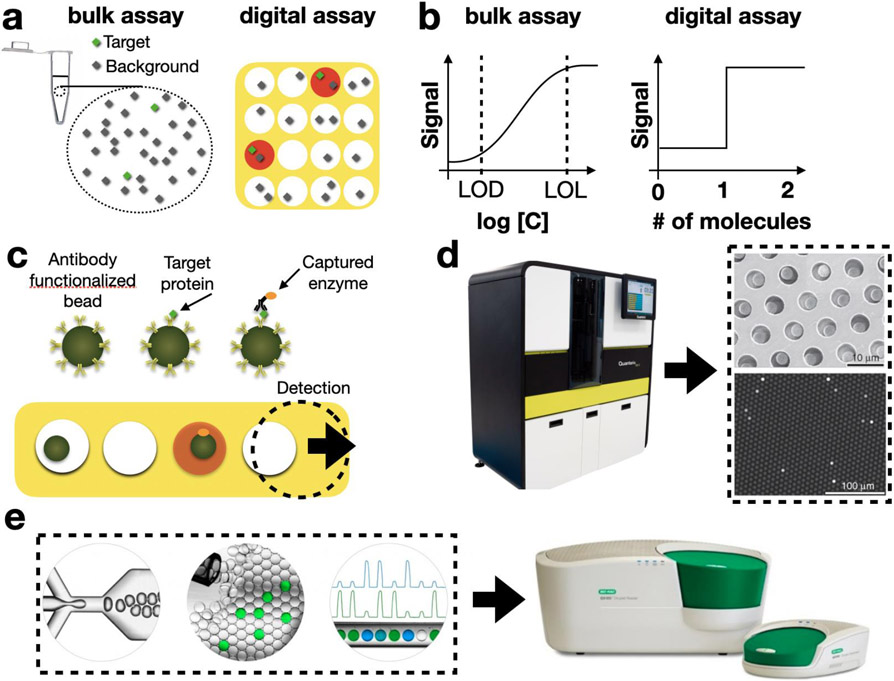
Microfluidic diagnostic chips promise to shrink parts of a medical lab onto a device small enough to fit in your hand, but one stubborn problem has kept many of them out of clinics: they still depend on the very lab infrastructure they were supposed to replace. In the source article, the central issue is described as the “chip in a lab” problem—the idea that a so-called lab-on-a-chip often needs centrifuges, microscopes, pipettes, and trained operators to work with real clinical samples. That gap matters because patient samples such as blood, saliva, or swabs are messy, variable, and full of material that can interfere with tiny channels and sensors. Devices built at the micro- and nanoscale are especially vulnerable to clogging and bio-fouling, meaning unwanted biological material sticks to surfaces and disrupts performance. The original vision for these systems was much bigger: to make sophisticated diagnostics as accessible and widespread as consumer electronics. Researchers pursued that goal by using fluid channels, sensors, and tiny actuators to manipulate cells and molecules at roughly the same scale where biology naturally operates. But the article makes clear that miniaturization alone is not enough. For microfluidic chips to become practical clinical tools, they must handle raw samples, run reliably with minimal human intervention, and deliver answers without sending patients or specimens back to a conventional lab.
The promise of a lab on a chip
The basic idea behind microfluidics is simple: instead of moving milliliters of liquid through test tubes, move tiny droplets or streams through channels etched into a chip. It is a bit like replacing a city’s wide roads with a carefully designed network of narrow alleys that direct traffic with precision.
That precision is attractive for diagnostics because many important biological targets—cells, proteins, and genetic material—exist at microscopic scales. By working at those same scales, a chip can potentially sort, mix, detect, and measure samples more efficiently than bulk laboratory methods.
Why clinical samples are so hard to tame
The trouble starts when elegant prototypes meet real-world specimens. Clinical samples are not clean demonstration fluids; they can contain cells, debris, mucus, proteins, and other substances that behave unpredictably inside very small channels.
Imagine trying to run chunky soup through a coffee stirrer. That is the practical challenge behind clogging, one of the most common failure modes for microfluidic devices. Bio-fouling adds another layer of difficulty because biological material can coat channel walls or sensing surfaces, changing how the device behaves over time.
The “chip in a lab” problem
The article’s most important point is that many miniaturized diagnostics still rely on full-sized laboratory support. Before a sample can even reach the chip, users may need to separate components with a centrifuge, measure and transfer precise volumes with pipettes, or inspect performance with a microscope.
That dependence undercuts the original value proposition. A device marketed as portable or point-of-care is less useful if it only works when an expert can prepare the sample, monitor the run, and process the output afterward using standard lab equipment.
Why automation matters
One path forward is to build more of that workflow directly into the chip system. In plain terms, the device has to do more of its own housekeeping: prepare the sample, keep fluid moving properly, detect problems, and produce a readable result without constant supervision.
This is where the analogy to electronics becomes useful. Just as silicon chips combine many small components into an integrated circuit, a mature microfluidic diagnostic would need integrated fluid handling, sensing, and control so the whole test works as one coordinated system rather than a fragile collection of parts.
The cost of sending samples back to the lab
The “chip in a lab” problem is not only a design headache; it also slows care. When samples must be transported to specialized facilities for preparation or analysis, total assay time increases, and the speed advantage of miniaturized testing starts to disappear.
That delay can matter clinically. A fast result is often the reason to use a near-patient diagnostic in the first place, whether the goal is triage, infection detection, or monitoring a condition during a single visit rather than over several days.
Designing for the biology, not just the device
The article also points to a deeper lesson: successful clinical chips must be designed around biological reality, not just engineering elegance. Working at the micrometer scale of cells and the nanometer scale of molecular machinery can offer real advantages, but those same scales make systems sensitive to contamination, surface effects, and slight variations in flow.
In other words, shrinking a device does not automatically simplify the job. It often makes control more demanding, which is why robust operation with raw or minimally processed samples has become a central benchmark for the field.
Why This Matters
If researchers can solve these practical barriers, microfluidic diagnostics could extend testing far beyond centralized laboratories. That would not just mean smaller instruments; it could mean faster decisions in clinics, simpler workflows for healthcare staff, and broader access in places where lab infrastructure is limited.
The significance is easy to miss because the problem sounds technical, but it is really about usability. A diagnostic chip only changes care if it works dependably in the hands of ordinary users, with ordinary samples, under ordinary clinical conditions.
What progress will look like
The next advances are likely to come from systems that treat reliability as seriously as sensitivity. A clinically useful chip will need to resist clogging, limit bio-fouling, manage sample variability, and package complicated fluid handling into a format that feels less like running an experiment and more like running a standard medical test.
That is a harder engineering challenge than simply proving a concept in the lab, but it is also the step that determines whether the field reaches its original ambition. The future of microfluidic diagnostics depends not on making chips ever smaller, but on making them independent enough to leave the lab behind.