AI-generated summary by biochip.com, published . Not independently reviewed. Source: Research, by Europe PMC.
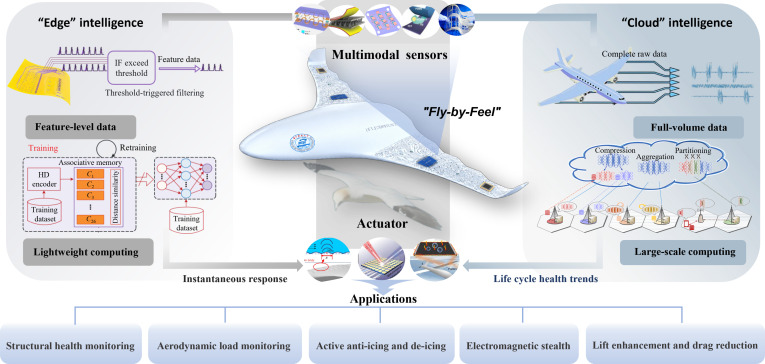
Aircraft are packed with sensors, but most of them are still discrete components bolted onto specific parts of the airframe rather than woven into the structure itself. The idea behind flexible sensing skin is to change that by turning the aircraft surface into a smart, distributed layer that can feel strain, temperature, pressure, vibration, and even damage as it happens. In the source article, researchers describe how combining these soft, lightweight sensor networks with artificial intelligence could help create next-generation aircraft that are more aware of their own condition and surroundings. The concept is often framed as a step toward embodied intelligence, meaning the aircraft would not just compute information centrally, but sense and respond through its physical structure in a more integrated way. That matters because modern aircraft face growing demands for safety, efficiency, autonomy, and lower maintenance costs, all while operating in harsher and more complex environments. A sensing skin could provide continuous, real-time awareness across large surfaces where conventional sensors leave blind spots. The article presents this as both a materials challenge and a data challenge, since useful intelligent behavior depends on building flexible electronics that survive flight conditions and machine-learning systems that can interpret huge streams of noisy sensor data. If those pieces come together, aircraft skins may evolve from passive coverings into active, information-rich systems that support health monitoring, flight control, and autonomous decision-making.
From Isolated Sensors to Smart Surfaces
Traditional aircraft sensing relies on point sensors placed in selected locations, which works well for many tasks but can miss subtle changes developing between those points. A flexible sensing skin aims to spread sensing capability over broad areas, more like a nervous system than a handful of instruments.
That shift matters because aircraft structures experience complex loads, temperature swings, airflow changes, and wear over time. A distributed skin could detect patterns that single sensors might overlook, including early signs of fatigue, impact damage, icing, or abnormal aerodynamic behavior.
What Flexible Sensing Skin Actually Means
The term refers to thin, lightweight, mechanically compliant sensor systems that can conform to curved surfaces without significantly affecting aerodynamics or adding much mass. These systems may include stretchable conductors, soft substrates, multifunctional sensing elements, and embedded communication pathways that allow measurements to be collected across the airframe.
In practice, the skin could monitor variables such as strain, pressure, temperature, and vibration at the same time. That multi-parameter sensing is important because aircraft problems rarely show up in only one signal, and combining different kinds of measurements can create a clearer picture of what is happening.
The AI Piece
Collecting data everywhere is only half the story. The larger challenge is making sense of enormous, continuous streams of information in real time, especially when the data are affected by noise, changing environmental conditions, and normal operational variability.
This is where AI-enabled analysis becomes central. Machine-learning models can be trained to recognize patterns linked to structural damage, flow disturbances, sensor drift, or unusual operating states, potentially allowing the aircraft to distinguish a meaningful warning sign from routine background fluctuations.
Toward Embodied Intelligence
The article connects sensing skin to the broader idea of embodied intelligence, a concept in which sensing, computation, and physical behavior are tightly coupled. Instead of treating the body of the aircraft as a passive shell feeding data to a remote processor, the structure itself becomes part of the intelligence system.
For aviation, that could mean more adaptive flight platforms that continuously assess their own condition and environment while adjusting responses accordingly. In the long term, such systems could support more autonomous aircraft that are better able to manage uncertainty, respond to faults, and optimize performance during flight.
Engineering Challenges Still in the Way
The vision is compelling, but aircraft are unforgiving environments for flexible electronics. Sensor skins must tolerate vibration, moisture, ultraviolet exposure, temperature extremes, mechanical deformation, and long service lifetimes without failing or generating unreliable measurements.
There are also systems-level hurdles. Engineers need durable materials, low-power electronics, robust wiring or wireless links, scalable manufacturing methods, and maintenance strategies that do not become more complicated than the problems the sensors are meant to solve.
Data, Integration, and Trust
Even if the hardware works, integrating sensing skin into aircraft operations raises another layer of complexity. The data must be fused with existing avionics, structural models, and control systems in ways that are secure, interpretable, and certifiable for use in safety-critical settings.
Trust is especially important in aviation. Regulators, manufacturers, and operators will need evidence that AI models remain reliable across changing conditions, rare events, and aging hardware, rather than performing well only in controlled test scenarios.
Why This Matters
If successful, flexible sensing skin could reshape how aircraft are designed, maintained, and operated. Instead of relying mainly on scheduled inspections and sparse sensing, operators could move toward more continuous awareness of structural health and aerodynamic performance, potentially reducing downtime and catching issues earlier.
The broader significance is that this research sits at the intersection of advanced materials, flexible electronics, aerospace engineering, and AI. It points to a future in which vehicles are not just monitored by external instruments but become intrinsically aware systems, with surfaces that sense, learn, and help guide action in real time.
What Comes Next
The path forward will likely involve incremental progress rather than one dramatic leap, with laboratory prototypes moving into wind-tunnel tests, flight demonstrations, and eventually specialized operational use. As materials improve and AI methods become more reliable and interpretable, sensing skin could move from an ambitious research theme to a practical building block for safer, lighter, and more autonomous aircraft.