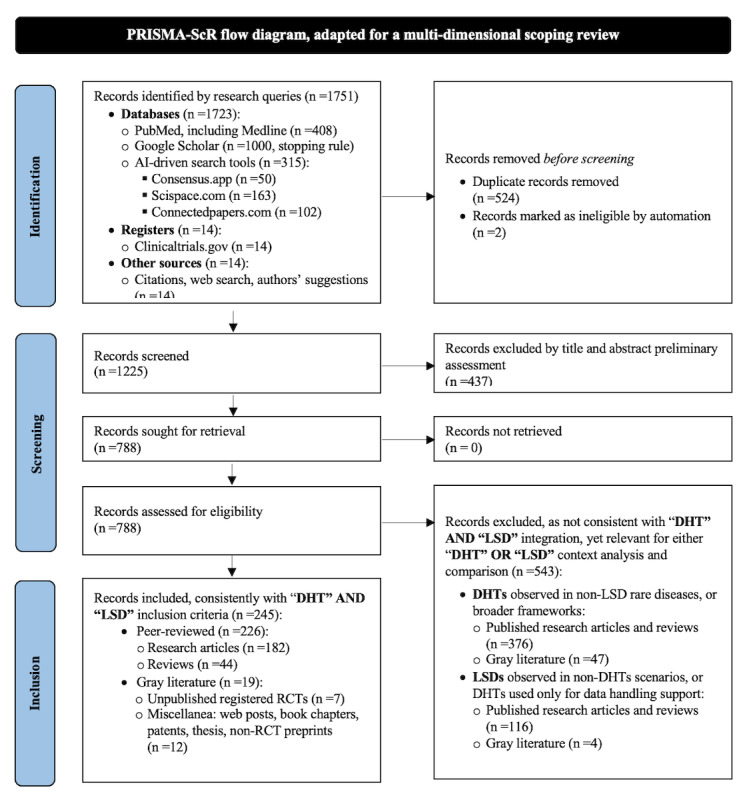
A new scoping review maps how artificial intelligence, connected care, and other digital health technologies are being applied to rare diseases, with special attention to lysosomal storage disorders, a group of inherited conditions caused by problems in the cell’s recycling machinery. Rather than testing one device or one algorithm, the paper steps back and asks a bigger question: what kinds of digital tools are already in use, and where are the gaps? The answer is broad. The review identifies technologies that range from patient-facing tools such as telehealth and engagement platforms to laboratory systems such as digital microfluidics, genomics platforms, bioinformatics software, and decision support systems. It also highlights infrastructure that sits behind the scenes, including electronic health records, registries, health information systems, and blockchain-based ideas for securing data. That matters because rare disease care is often fragmented, with tiny patient populations, delayed diagnoses, and expertise scattered across a few specialist centers. In that setting, digital systems can act like bridges, linking data, clinicians, labs, and patients who might otherwise remain isolated from one another. For lysosomal storage disorders in particular, the review suggests that digital health is becoming less about a single app or test and more about building an ecosystem that supports diagnosis, treatment, monitoring, and research at the same time.
A map of a complex field
The paper is a scoping review, which means it is designed to survey a field rather than combine studies into one pooled result. Think of it as drawing a map before planning a road trip: the goal is to identify the major routes, landmarks, and missing connections.
Using established review frameworks cited in the paper, including work by Arksey and O’Malley and the PRISMA 2020 reporting guidance, the authors organize a messy digital-health landscape into clearer categories. That structure is useful in rare diseases, where tools often emerge in disconnected pockets of clinical care, laboratory science, and research.
Three major buckets of technology
The review groups the field into three broad areas: AI-based systems, connected-care technologies, and other digital health technologies. That last category is important because not every valuable digital tool uses artificial intelligence or direct patient connectivity.
Connected care includes the systems that help people and institutions stay linked over time. The review points to interoperable data-integration systems such as electronic health records, health information systems, disease registries, and emerging health-data spaces, along with patient-engagement platforms and digital therapeutics.
Tools inside the clinic and the lab
Among the “other” digital technologies, the review lists several tools with direct clinical relevance. These include precision medicine platforms, digital microfluidics, high-performance liquid chromatography paired with tandem mass spectrometry, bioinformatics tools, enzyme replacement therapy optimization tools, virtual reality and augmented reality, biomedical imaging, and decision support systems.
Some of these terms sound specialized, but their basic role is straightforward. Digital microfluidics, for example, moves tiny droplets across a surface like a highly automated mini-lab, which can be useful in settings such as newborn screening. The paper cites earlier work suggesting this technology could become important in newborn screening laboratories, where speed, accuracy, and low sample volumes matter.
Likewise, high-performance liquid chromatography and mass spectrometry are lab methods used to separate and identify molecules in biological samples. In rare metabolic disorders, those tools help detect chemical signatures that can point to disease, track progression, or monitor how well a therapy is working.
Why lysosomal storage disorders are a useful test case
Lysosomal storage disorders are a fitting focus for digital-health analysis because they sit at the crossroads of genetics, metabolism, imaging, and long-term care. These disorders are rare, often difficult to diagnose, and may require lifelong monitoring, which creates many opportunities for data-driven support.
They also rely on care pathways that are unusually information-heavy. A patient may need genetic testing, biochemical testing, imaging, specialist consultations, and ongoing treatment such as enzyme replacement therapy, in which a missing or faulty enzyme is supplemented. Digital systems can help organize those pieces, especially when patients are treated across multiple centers.
Data integration may matter as much as AI
One of the review’s most practical insights is that digital progress in rare disease will not come only from smarter algorithms. It may come just as much from better data integration—getting information from clinics, labs, registries, and patient-reported tools to work together.
An everyday analogy is a hospital trying to care for a patient using five notebooks that never get shared. Even the best specialist will struggle in that setup. Interoperable records and registries do not sound flashy, but they can create the foundation on which diagnosis support, treatment optimization, and research become possible.
The review also flags blockchain as a possible enabler for health-data security. In plain terms, blockchain is a way of recording transactions in a distributed, tamper-resistant ledger. In health care, the idea is that it could help manage sensitive data-sharing while preserving trust, though the review presents it as part of an enabling infrastructure rather than a proven standard solution.
Research tools beyond patient care
The digital-health picture in rare disease extends beyond the clinic. The review includes clinical trial simulation tools and computational modeling in its research-and-development category, reflecting the reality that rare disease research often faces small sample sizes and expensive trials.
These tools can act like flight simulators for drug development. Researchers can model disease behavior, explore trial designs, and test assumptions before launching studies in a population where every participant is precious. That is especially relevant in lysosomal storage disorders, where recruiting enough patients for conventional studies can be difficult.
The review also places strong emphasis on multipurpose omics technologies, including genomics, pharmacogenomics, metabolomics, and proteomics. These fields measure genes, drug-response genetics, small-molecule metabolism, and proteins, respectively. Together, they can give a richer picture of disease biology and may help tailor treatment choices more precisely.
Why This Matters
For people with rare diseases, the hardest problem is often not a lack of technology in the abstract. It is the lack of connection between useful technologies. A family may have access to genetic testing, specialist care, remote follow-up, and patient communities, but if those pieces remain siloed, diagnosis can still be delayed and treatment can still feel disjointed.
This review matters because it frames digital health as a coordinated system rather than a stack of gadgets. It suggests that progress in lysosomal storage disorders will depend on combining diagnostic platforms, secure data systems, clinical decision support, and patient-centered tools in ways that fit the realities of rare disease care.
That systems view also helps set more realistic expectations for artificial intelligence. AI may become valuable for pattern recognition, triage, or prediction, but it works best when the underlying data are high quality and well linked. In rare diseases, where data are scarce and scattered, building that foundation may be the most important innovation of all.
Looking ahead, the field seems likely to move toward tighter integration between omics, clinical records, remote care, and treatment monitoring. If that happens, digital health in lysosomal storage disorders could shift from isolated pilots to durable care networks that support earlier diagnosis, more coordinated therapy, and stronger rare-disease research.