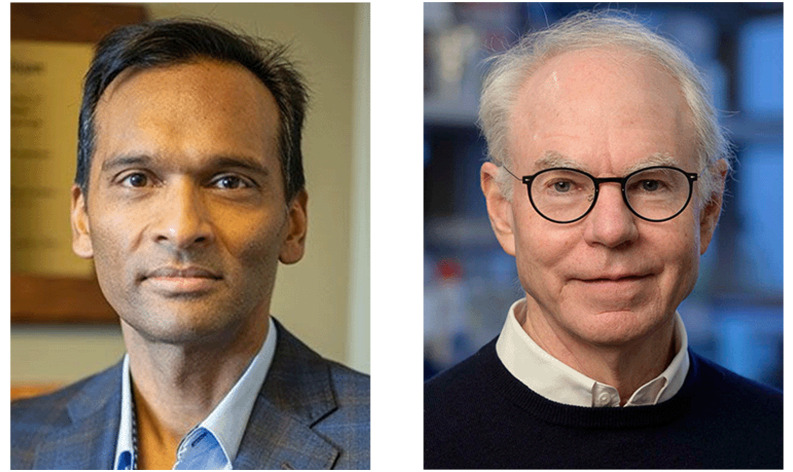
The Harrington Discovery Institute has awarded its 2026 Harrington Prize for Innovation in Medicine to Arul M. Chinnaiyan and Charles L. Sawyers, two physician-scientists whose work changed how doctors understand and treat cancer. The prize recognizes a pair of advances that now feel foundational to modern oncology: identifying gene fusions that help drive prostate cancer, and developing precision medicines that block cancer-causing signals in leukemia and prostate tumors. Chinnaiyan helped uncover the TMPRSS2-ERG gene fusion, a DNA rearrangement that appears in many prostate cancers and gave researchers a clearer molecular handle on the disease. Sawyers, meanwhile, played a central role in building targeted therapies for chronic myeloid leukemia and later advanced drugs aimed at treatment-resistant prostate cancer. Taken together, their work helped push cancer medicine away from one-size-fits-all treatment and toward precision oncology, where therapy is matched to the biology of a patient’s tumor. That shift matters because cancer is not a single disease but a collection of disorders driven by different genetic mistakes. By honoring both men together, the prize highlights how discovery in the lab and drug development in the clinic can reinforce each other and lead to real gains for patients.
A prize for ideas that change care
The Harrington Prize for Innovation in Medicine honors scientists whose work has led to medical advances with clear impact on human health. In this case, the award points to research that did more than add new knowledge. It changed how cancer is classified, tracked, and treated.
That practical impact is what makes the pairing notable. Chinnaiyan’s work helped reveal a major genetic feature of prostate cancer, while Sawyers translated molecular insight into drugs that could overcome resistance, a common reason cancers stop responding to treatment.
How Chinnaiyan reshaped prostate cancer biology
One of Chinnaiyan’s best-known contributions was the discovery of the TMPRSS2-ERG fusion in prostate cancer. A gene fusion happens when pieces of two separate genes become abnormally joined, a bit like splicing together two different instruction manuals and ending up with a new, faulty command.
That fusion gave researchers an important clue about what drives many prostate tumors at the molecular level. Instead of viewing prostate cancer as a mostly uniform disease under the microscope, scientists gained evidence that specific genetic alterations could define subtypes and potentially guide diagnosis and therapy.
Chinnaiyan’s work also helped establish the broader idea that genomic analysis — reading the DNA and RNA changes inside tumors — can reveal actionable patterns. In everyday terms, it is the difference between judging a machine by its exterior and opening the casing to see which parts are broken.
Sawyers and the rise of targeted cancer therapy
Sawyers is widely known for helping develop treatments that go after specific cancer drivers rather than broadly killing fast-growing cells. That strategy is often called targeted therapy, meaning a drug is designed to interrupt a molecular signal the cancer depends on.
His work in chronic myeloid leukemia, a blood cancer driven by an abnormal protein created by the BCR-ABL gene fusion, helped show that this approach could produce dramatic benefit. When resistance emerged, Sawyers also helped push forward next-generation drugs, demonstrating that cancer treatment must adapt as tumors evolve.
He later brought that same logic to prostate cancer, where tumors can learn to keep using androgen receptor signaling even after standard hormone-blocking treatment stops working. Sawyers contributed to the development of therapies that more effectively shut down that pathway, giving patients new options when older treatments fail.
Why honoring both researchers together makes sense
The connection between the two awardees is deeper than a shared focus on cancer. Chinnaiyan’s work clarified the underlying biology of prostate tumors, while Sawyers showed how understanding a tumor’s wiring can lead to smarter drugs.
That is the central engine of precision medicine. First, researchers identify the molecular abnormality; then clinicians and drug developers ask whether that abnormality can be detected, monitored, or attacked. Progress is rarely a straight line, but these two careers illustrate how one advance can set up the next.
Why This Matters
For patients, awards like this are meaningful only if the science behind them changes care. In this case, it did. Gene-based classification of tumors and therapies aimed at specific molecular targets are now routine parts of cancer research and, in many settings, standard medicine.
The broader lesson is that breakthroughs often come in layers. A discovery about a tumor’s genetic structure may sound abstract at first, but it can eventually shape screening tools, lab tests, drug design, and treatment decisions in the clinic.
What comes next
The prize also points forward. Cancer researchers are still working to understand why some tumors respond beautifully to targeted treatment while others resist from the start or find alternate survival routes later.
Future progress will likely depend on the same cycle represented by Chinnaiyan and Sawyers: decode the biology, test the weak points, and keep refining therapies as the disease changes. That approach has already transformed parts of oncology, and it remains one of the clearest paths to better, more durable cancer care.