Messenger RNA vaccines, the same basic technology that helped the world respond quickly to COVID-19, may also become a new tool against antibiotic-resistant bacteria. A new review argues that this approach could help researchers design vaccines faster for pathogens that are increasingly hard to treat with existing drugs. The idea is simple in concept: instead of injecting a weakened germ or a purified protein, scientists deliver genetic instructions that prompt the body’s own cells to briefly make selected bacterial proteins and train the immune system to recognize them. In practice, though, bacterial targets are much trickier than many viral ones. Bacteria have more complex surfaces, can change how they display key molecules, and often infect tissues such as the lungs where immune protection depends on the right response in the right place. The review points to early preclinical progress against Mycobacterium tuberculosis, Pseudomonas aeruginosa, and Streptococcus pneumoniae, while also laying out the barriers that still stand between promising lab results and real-world vaccines. Those barriers include choosing the right antigens, improving lipid nanoparticle delivery systems, and generating long-lasting immunity that is strong without being misdirected. Taken together, the paper presents bacterial mRNA vaccines not as a finished solution, but as a fast-moving research frontier with real potential to blunt the growing threat of antimicrobial resistance.
Why researchers are looking at mRNA for bacteria
The review starts from a pressing problem: antimicrobial resistance, or AMR, is making standard antibiotics less reliable. As more bacteria evolve ways to survive treatment, prevention becomes more important, and vaccines can reduce infections before drugs are even needed.
mRNA offers an appealing route because it is programmable. Think of it like sending a temporary recipe into the body rather than manufacturing the entire meal in advance. Scientists can change that recipe relatively quickly when they identify a better target, which could speed up vaccine development for difficult bacterial pathogens.
Why bacterial vaccines are harder than viral ones
The review makes clear that bacteria are not just bigger versions of viruses. They are structurally more complicated, with diverse outer coatings, secreted toxins, and multiple ways of evading immune attack. That complexity makes it harder to decide which bacterial component should serve as the vaccine target.
For many bacterial infections, protection also depends on a specific kind of immune response. The paper highlights the importance of Th1 and Th17 responses, two branches of the immune system that help the body fight microbes living inside cells or colonizing mucosal surfaces such as the airways. In plain terms, it is not enough to raise antibodies alone; the vaccine may need to mobilize several arms of immunity at once.
What has improved in vaccine design
According to the review, recent progress has come from three linked areas: antigen design, mRNA engineering, and delivery technology. Antigen design means selecting the bacterial proteins or protein fragments most likely to trigger useful immunity. mRNA engineering involves tuning the genetic message itself so it remains stable enough, gets translated efficiently inside cells, and avoids unwanted inflammatory noise.
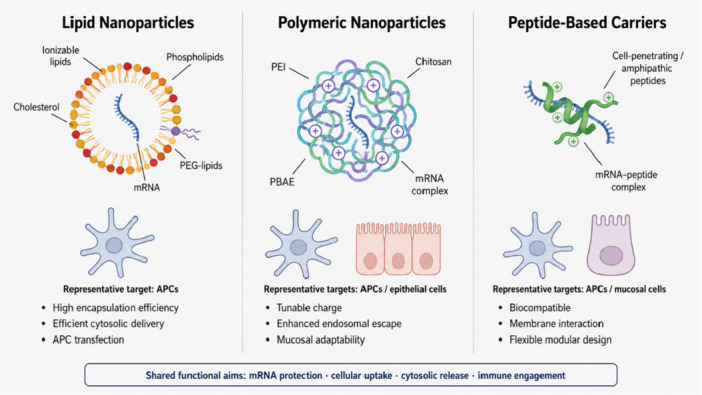
The third area is delivery, especially through lipid nanoparticles or LNPs. These are tiny fat-based spheres that package the mRNA and help ferry it into cells, much like a padded envelope protecting a fragile document. Without that envelope, the message can be degraded quickly and may never reach the tissues where it needs to work.
Early signs from preclinical studies
The review summarizes encouraging preclinical work in several major pathogens. In tuberculosis, caused by Mycobacterium tuberculosis, mRNA approaches are being explored because the pathogen can hide inside host cells, making strong cellular immunity especially important. That makes it a logical test case for mRNA platforms designed to drive the kinds of T-cell responses that conventional vaccine methods do not always achieve well.
Work against Pseudomonas aeruginosa is also notable because this bacterium is a frequent cause of hard-to-treat hospital infections and poses a serious risk for people with weakened immune systems or chronic lung disease. Streptococcus pneumoniae, another pathogen highlighted in the review, remains a major cause of pneumonia and other invasive infections, and broader or more adaptable vaccine strategies could help address strains not fully covered by current approaches.
The biggest scientific hurdles still ahead
Despite the progress, the review is careful not to oversell the field. One major challenge is complex antigen expression. A bacterial protein that looks promising on paper may not fold correctly, may not be displayed in the most useful form, or may not reflect how the pathogen presents itself during a real infection.
Another challenge is mucosal targeting, which means getting immunity to the body surfaces where many bacterial infections begin, especially the respiratory tract. A vaccine delivered into the bloodstream does not automatically create strong defenses in the lungs or nasal passages. For pathogens that colonize those sites, location matters almost as much as strength.
The review also points to the problem of immune durability. In other words, even if a vaccine works well at first, researchers need to know whether protection lasts and whether booster strategies will be required. Durable protection is particularly important if mRNA vaccines are to become practical tools against widespread bacterial threats.
How AI and synthetic biology could help
One of the most forward-looking parts of the review is its focus on artificial intelligence-guided antigen discovery. AI can help sift through large bacterial genomes and protein datasets to identify targets that are conserved across strains, likely to be visible to the immune system, and less likely to mutate away. That does not replace laboratory testing, but it can make the search more efficient.
The authors also point to synthetic biology, the engineering-minded branch of biology that builds and redesigns biological systems. In this context, synthetic biology could help researchers assemble multi-part vaccine constructs, combine several antigens in one shot, or fine-tune how those antigens are produced in the body. Paired with next-generation delivery systems, those tools could make bacterial mRNA vaccines more targeted and more practical.
Why This Matters
This review matters because it reframes mRNA vaccines as more than a pandemic-era success story. It suggests they could become part of a broader strategy to reduce reliance on antibiotics by preventing infections that are increasingly difficult to treat once they take hold. That is a significant shift in thinking, especially as drug-resistant bacteria continue to spread in hospitals and communities.
Just as important, the paper shows that the main obstacles are becoming clearer. Researchers now have a better map of what needs to improve: better antigen choices, smarter delivery to mucosal tissues, and immune responses that are both durable and well balanced. If those pieces come together, mRNA could offer a flexible platform for bacterial vaccines that has been difficult to build with older methods.
What comes next
The path from preclinical promise to approved vaccine will still be long. Researchers will need to show that these candidates can work consistently across different bacterial species, produce meaningful protection in relevant models, and eventually prove safe and effective in human trials. But the review makes the direction of travel clear: by combining mRNA engineering, improved lipid nanoparticles, AI-assisted target selection, and synthetic biology, the field is steadily building a toolkit that may one day turn fast vaccine design into a practical defense against antimicrobial resistance.