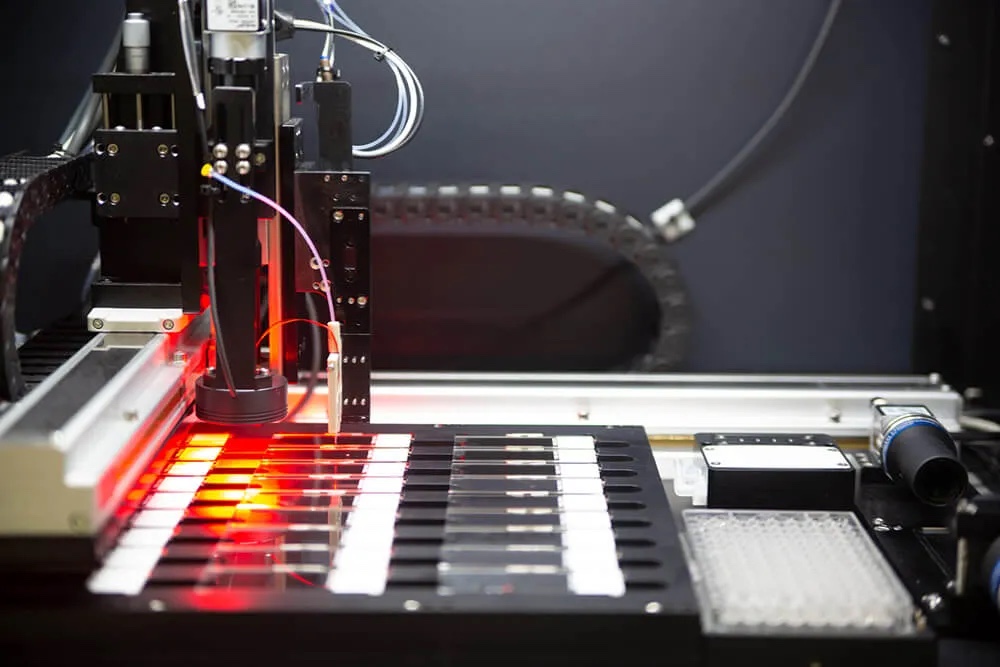
Biochip array technology is designed to do many lab tests at once on a single, very small device, and that promise is why it draws so much attention in diagnostics. Instead of running one assay per tube or well, a biochip can hold multiple tiny discrete test regions, or DTRs, each set up to look for a different target. The source article from BioDot describes the approach as a multiplex testing platform built on the logic of ELISA, short for enzyme-linked immunosorbent assay, a common lab method used to detect proteins and other biological molecules. In practice, that means one chip, one sample, and one set of reagents can potentially produce many answers at the same time. The appeal is easy to see: less sample is consumed, fewer reagents are needed, and labs may be able to reduce cost and save time. BioDot also notes that current chips commonly contain around 25 test regions, with two reserved for internal quality control, allowing up to 23 tests on a single chip. While the piece is more of a technology overview than a report of a single experiment, it points to a clear trend in diagnostics: packing more information into smaller, more efficient testing formats. If researchers can push the number of test regions even higher, as the article suggests, biochips could make multiplex testing far more routine across research and clinical workflows.
What the technology is trying to solve
Traditional diagnostic testing often works like ordering separate dishes one by one. If a clinician or researcher wants to measure many biomarkers, they may need multiple wells, multiple reagents, and sometimes multiple aliquots of the same sample.
That becomes a problem when sample volume is limited, which is common in clinical settings. A blood draw from a newborn, a biopsy sample, or a carefully prepared research specimen does not leave much room for waste.
How a biochip array works
BioDot describes biochip array technology as a multi-analyte testing method based on ELISA. In plain terms, ELISA is a biochemical assay that uses binding reactions and signal generation to show whether a specific molecule is present, a bit like putting labeled locks and keys together and reading which ones click.
On a biochip, those reactions are miniaturized and arranged into separate test spots. Each discrete test region acts as its own tiny assay location, so one chip can run a panel of tests in parallel rather than sequentially.
Why the number of test regions matters
The source says a single biochip generally contains 25 test regions. Two of those are kept for internal quality control, leaving up to 23 regions available for actual testing.
That quality control step matters because multiplexing only helps if the results are trustworthy. Reserving part of the chip for checks is like keeping a built-in reference ruler on the same page as the measurements; it helps labs confirm that the chemistry ran as expected.
Where the efficiency gains come from
The main advantage of this setup is consolidation. Instead of repeating similar preparation steps again and again for separate assays, the chip format bundles many measurements into one run.
According to the source, that can preserve sample and reduce reagent use, which in turn can lower the cost of diagnosis. In a busy lab, those savings can add up not just in materials but also in workflow simplicity, because fewer separate tests need to be assembled, handled, and interpreted.
Applications across testing and research
BioDot frames the technology as useful across clinical trials, research studies, DNA screening, and routine immunoassay work. An immunoassay is a test that uses the immune system's recognition machinery, such as antibodies binding to a target, to detect a molecule of interest.
That breadth makes sense because many fields need the same thing: reliable measurement of multiple biological signals from limited material. A multiplex platform is especially attractive when researchers want a broader view of what is happening in a sample rather than a single yes-or-no readout.
Why miniaturization changes the economics
The source emphasizes the “extreme discrete size” of biochips, and that small footprint is central to their appeal. Tiny test regions require less physical space and can shrink the amount of chemistry needed for each individual assay.
Think of it as the difference between testing ingredients in 23 full-size mixing bowls versus 23 droplets arranged on a compact tray. The scientific principle stays the same, but the smaller format can make the process more efficient and easier to scale.
The push toward higher-density chips
One of the most forward-looking points in the article is the idea that researchers are trying to develop biochips with up to 100 discrete test regions. If that happens, the jump would not just be incremental; it would significantly expand how much information a single run could deliver.
A higher-density chip could let labs screen wider biomarker panels from one specimen and compare many targets side by side under the same conditions. That is useful scientifically because it reduces variation introduced when tests are split across separate runs.
Why This Matters
Multiplex testing matters because biology is rarely simple. Many diseases, treatment responses, and research questions involve patterns across multiple molecules, not a single marker in isolation.
Biochip arrays are one way to capture that complexity without demanding more blood, more tissue, or more time from the lab. If the technology continues to mature, it could help make testing more efficient while also giving clinicians and researchers a richer picture from the same sample.
What comes next
The BioDot piece presents biochip arrays as an enabling platform rather than a finished endpoint. The real question is how far developers can push density, quality control, and reliability while keeping the system practical for everyday use.
If future chips can indeed support far more test regions without sacrificing performance, multiplex diagnostics could become less of a specialized tool and more of a standard lab format. That would not replace every conventional assay, but it could shift a growing share of testing toward smaller devices that return more answers from less material.