AI-generated summary by biochip.com, published . Not independently reviewed. Source: Biosensors & bioelectronics, by Anne Yau; Zizheng Wang; Nadya Ponthempilly; Yi Zhang; Xueju Wang; Yupeng Chen.
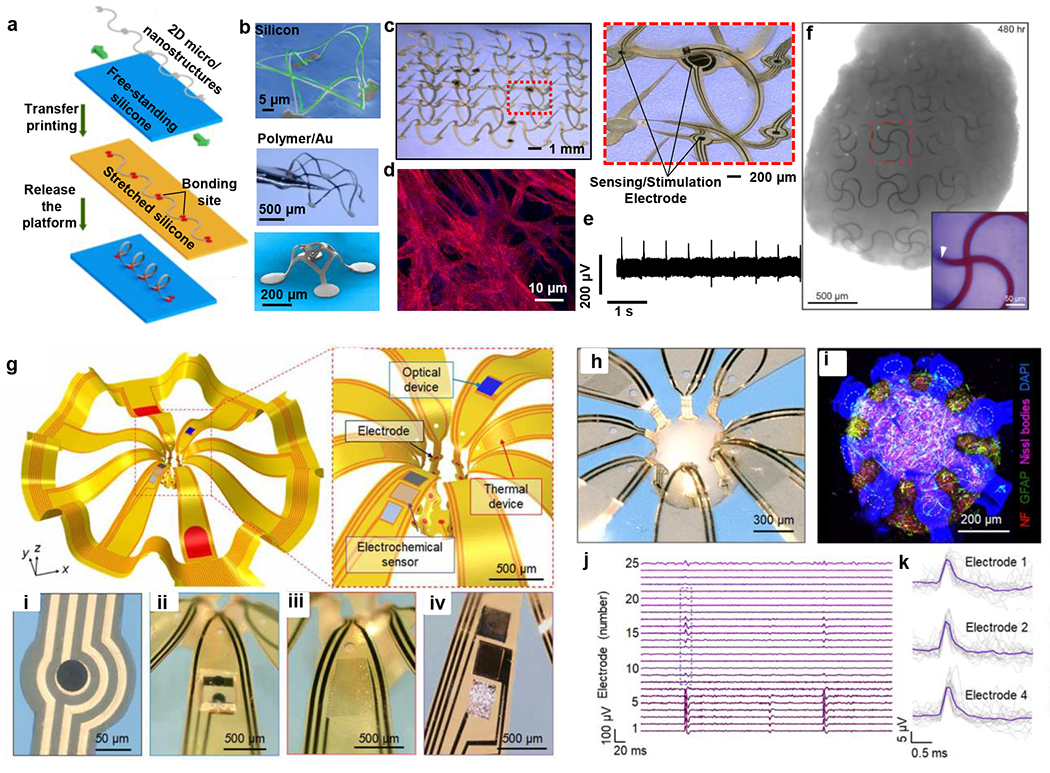
Biosensor-integrated tissue chips are emerging as a practical way to study how human organs behave not just in the lab, but also in space. The core idea is simple: build a tiny device that holds living cells in a carefully controlled microenvironment, then add built-in sensors that can continuously measure what those cells are doing. In the source article, the focus is on how this combination could make tissue-chip experiments more reliable during spaceflight, where launch vibration, landing stress, and microgravity can all change how cells behave. The authors also point to a more specific use case, lung-on-a-chip systems, which try to mimic breathing, pressure changes, and gas exchange in a miniature format. On Earth, these platforms already help researchers watch biological responses in real time rather than relying only on end-point tests after an experiment is over. In space, that real-time monitoring becomes even more valuable because researchers cannot constantly intervene or troubleshoot once a payload has launched. The article argues that improving chip durability and sensor performance for orbit could accelerate both astronaut health research and everyday biomedical work on Earth. In other words, designing chips that survive space may also produce tougher, smarter tools for drug testing, disease modeling, and organ research back on the ground.
How a tissue chip works
A tissue chip is a small engineered device, often built with microfluidics, meaning networks of tiny channels that move liquids in a controlled way. A useful analogy is a miniature plumbing system for cells: fluids deliver nutrients, remove waste, and expose cells to carefully timed chemical or mechanical signals.
These systems are often called organ-on-a-chip devices when they reproduce some key feature of an organ, such as the stretch of lung tissue during breathing or the barrier function of blood vessels. They do not replace the full organ, but they can capture a biologically important slice of its behavior in a more realistic way than a flat dish of cells.
What biosensors add
A biosensor is a detector that translates a biological or chemical change into a readable signal. In practice, that can mean tracking shifts in oxygen, acidity, pressure, electrical activity, or the presence of molecules released by stressed or injured cells.
The source describes biosensors as a way to alert researchers to changing conditions inside the chip and collect data as those changes unfold. That matters because biology is dynamic: instead of taking a snapshot at the end of a study, scientists can watch a cascade of events in real time and see when a response starts, peaks, or fades.
Why space makes this harder
Sending living systems into space introduces complications that ordinary laboratory experiments do not face. The article highlights environmental changes in space itself, along with vibration and mechanical stress during launch and landing, as factors that can create side effects or distort results.
Think of it like transporting a delicate greenhouse through an earthquake and then expecting the plants to grow normally in a new climate. If the device, its fluid flow, or its sensors are not robust enough, researchers may struggle to tell whether a biological response came from microgravity or from the rough trip getting there.
Designing chips for microgravity
To be useful in orbit, tissue chips need to maintain stable cell culture conditions despite altered gravity and limited hands-on access. The source suggests that future devices should be built to withstand the rigors of launch and touchdown as a standard requirement, not as an afterthought.
Biosensors can help by acting as an early warning system inside the device. If cell behavior, fluid movement, or chemical balance shifts unexpectedly, the chip can record those signals immediately, giving researchers a clearer picture of what happened and when it happened.
Lung-on-a-chip as a test case
The article gives particular attention to lung-on-a-chip systems. These devices aim to reproduce important features of the lung, including pressure changes, ventilation-like motion, and gas exchange, so researchers can study how lung tissue responds under controlled conditions.
That makes the lung a compelling target for space research. Breathing is tightly linked to pressure, fluid balance, and mechanical movement, all of which may be altered in microgravity, so a sensor-equipped lung chip could help scientists separate normal tissue behavior from space-induced stress.
Why real-time data matters
One of the strongest points in the source is that biosensors allow continuous monitoring of the cells within the microchip. This kind of readout is especially useful when researchers want to capture a sequence of biological events rather than a single final result.
For example, if cells begin to show signs of stress, release signaling molecules, or respond to a change in pressure, sensors can capture that progression as it happens. On a space mission, where experiment time is precious and opportunities for repeat testing are limited, that added visibility can make the difference between a puzzling result and an interpretable one.
Controlling the cell environment
The source also notes that biosensors can be used to adjust concentration gradients, which are differences in the amount of a substance from one place to another. In the body, those gradients help guide cell behavior, much like a scent trail can guide someone toward its source.
Inside a tissue chip, researchers can tune microchannel flow dynamics and channel orientation to influence what cells experience during a study. That level of control is important on Earth and in space because small shifts in flow or exposure can change how cells grow, communicate, and respond to stress.
Why This Matters
The bigger message is that space-ready tissue chips are not just niche tools for astronauts. If researchers can build devices that keep cells healthy, stable, and measurable under the harsh constraints of spaceflight, those same engineering advances could improve biomedical research everywhere.
Better sensors, tougher chip designs, and smarter control of microfluidic systems could make organ-on-a-chip studies more reproducible and more informative for drug testing and disease modeling on Earth. The translation works both ways: ground-based studies refine the technology, and space experiments push it to become more resilient and precise.
What comes next
The source calls for deeper studies of pressure changes, ventilation, and gas exchange in lung tissue chips on Earth to test whether these systems are truly feasible for space use. That is a sensible next step, because a reliable orbital experiment depends on understanding how the device behaves under well-characterized conditions before it ever leaves the ground.
As biosensors become more integrated into tissue chips, the line between experiment and monitoring system will keep shrinking. The likely outcome is a new generation of compact living models that can report on their own condition continuously, helping scientists study human biology in places as familiar as the lab bench and as unusual as low Earth orbit.