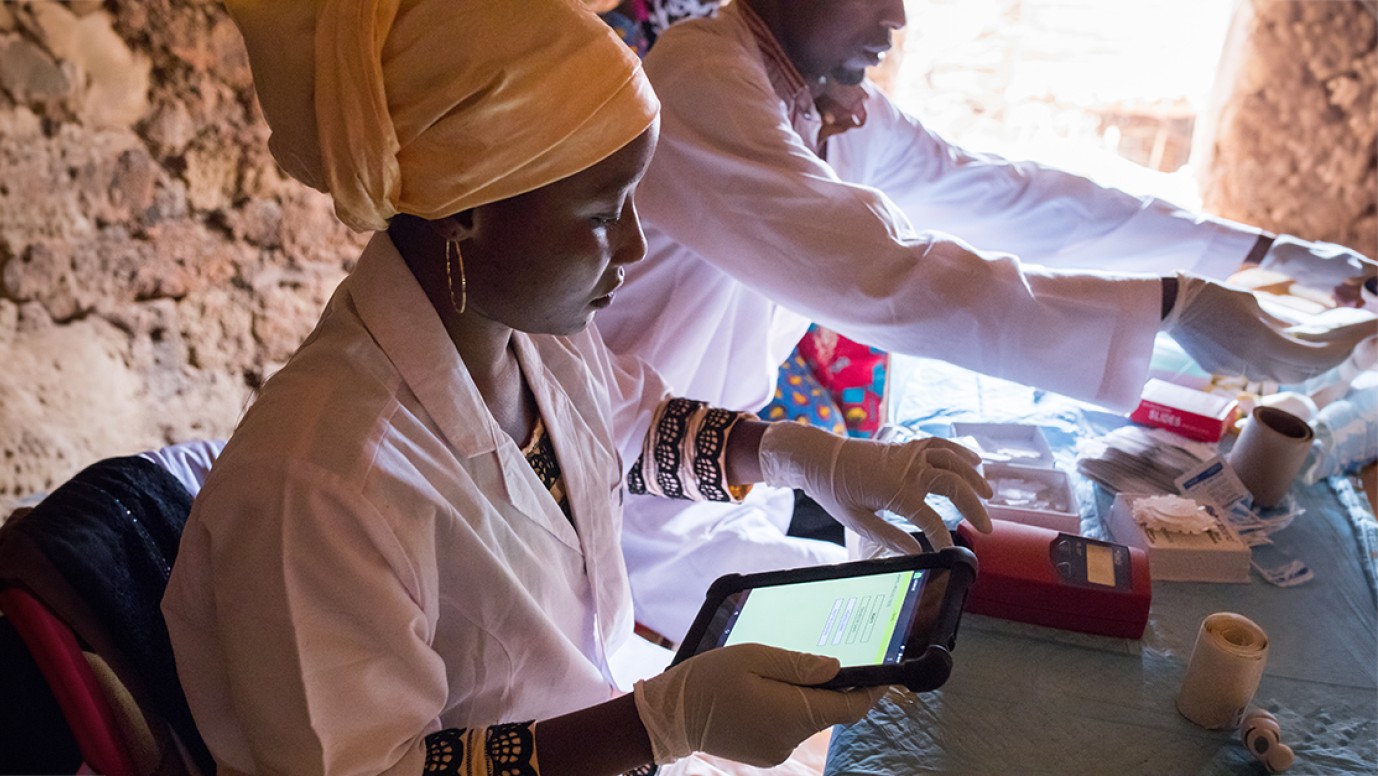
A new call for innovation is arguing that the biggest gains in infectious disease diagnosis may come not from making today’s tests a little better, but from redesigning them around cost, speed, and real-world use. The focus is especially sharp in India, where patients with fever or respiratory symptoms are often treated based on likely causes rather than confirmed ones because the right tests are too slow, too fragmented, or too expensive. The proposal highlights a cluster of emerging tools — including novel sensing methods, paper-based diagnostics, microfluidic platforms, and software-defined diagnostics that use code to interpret signals instead of complex hardware. It also points to artificial intelligence, or AI, as a way to simplify screening and help deliver results in places with limited lab infrastructure. At the center of the effort is a practical goal: create systems that can work in decentralized, low-resource settings, give actionable answers during a single patient visit, and drive the cost of testing toward about INR100, or roughly $1, per test. One priority area is syndromic testing, which means checking for several likely infections at once when symptoms overlap and do not clearly point to a single disease. That matters because illnesses such as malaria, typhoid, dengue, scrub typhus, leptospirosis, and other circulating pathogens can look similar early on, yet need very different responses. If these new platforms can combine low cost with broad detection and simple operation, they could help close one of the biggest blind spots in infectious disease care.
Why the Current Model Misses So Much
In many clinics, a patient arrives with fever, body aches, or cough, and the first decision is made before a lab result exists. That is partly because the available tests are often organized one disease at a time, while real patients show up with symptoms that fit many possibilities.
The source material argues that this fragmented approach leaves a large diagnostic gap in India’s infectious disease landscape. People with undifferentiated febrile illness — a fever without an obvious cause — are often treated empirically for malaria or typhoid, even when other infections may be responsible.
That matters because several pathogens can circulate at the same time and produce overlapping symptoms. According to the source, Indian studies have repeatedly shown substantial etiological overlap, frequent co-infections, and many cases in the community where no pathogen is ever confirmed.
The Case for Syndromic Panels
A syndromic panel is a test that looks for a group of pathogens associated with a symptom pattern rather than chasing one suspected disease after another. A simple way to think about it is like checking every likely fuse in a breaker box at once instead of flipping one switch, then another, while the power stays out.
For clinicians, that kind of panel could be especially useful for acute respiratory syndromes and unexplained fever, where timing matters. The sooner the likely cause is identified, the sooner treatment, isolation, follow-up, or outbreak response can be adjusted.
The source emphasizes that delayed recognition does not just affect individual patients. Pathogens that go undetected early can continue spreading through communities, allowing outbreaks to grow before health systems see a clear signal.
Technologies Designed Around Cost
The striking idea in the document is that cost is not a side issue. It is the design constraint that should shape the technology from the start. A test that performs well only in a central lab, or only with expensive disposable cartridges, may never reach the scale needed for population-level screening.
That is why the proposal highlights paper-based platforms and microfluidics. Paper-based tests use low-cost materials to move and react with small samples, while microfluidic devices guide tiny volumes of liquid through miniature channels, almost like plumbing shrunk onto a chip.
It also points to software-defined diagnostics, where more of the intelligence sits in software rather than specialized hardware. In practice, that could mean a simpler physical device that becomes more capable through signal processing, updates, and data interpretation instead of costly mechanical complexity.
Making Tests Work Outside Ideal Conditions
Low-cost diagnostics are only useful if they survive the places where they are needed most. The source repeatedly stresses that new systems should work in low- and middle-income country, or LMIC, settings marked by heat, dust, intermittent power, and limited infrastructure.
That requirement changes many engineering decisions. Reagents — the chemicals that make the test work — should ideally be thermostable, meaning they remain effective without strict refrigeration, and the device itself should tolerate temperature swings and rough handling.
Ease of use is just as important. The target is for minimally trained users in decentralized settings to run the test and get rapid, actionable results during a single patient encounter, reducing the need for return visits that many patients may never make.
Why Reusable Hardware Could Matter
One of the more practical ideas in the source is to reduce dependence on disposable consumables. In many testing models, the instrument is only part of the cost; the steady stream of single-use cartridges, plastic parts, and cold-chain supplies can make each test too expensive for broad screening.
The document instead favors durable, reusable hardware with negligible incremental cost per person screened. That means the machine does the heavy lifting over time, while the marginal cost of each additional test stays very low.
The explicit benchmark is ambitious: a credible path to around INR100, or about US$1, per test, and in some device-based screening cases, near-zero incremental cost per person. Hitting that threshold could open the door to routine use in primary care, community programs, and outbreak surveillance rather than restricting testing to selected cases.
Where Artificial Intelligence Fits
AI appears in the source not as a replacement for biology, but as a way to make diagnostics leaner and more scalable. If a sensor produces a subtle signal, AI-based analysis may help classify patterns, improve interpretation, or support software-only screening models that avoid adding more hardware.
The promise is similar to what smartphone software did for cameras: instead of relying only on better physical components, computation helps extract more value from simpler inputs. In diagnostics, that could lower equipment costs while still supporting clinically useful decisions.
Still, the usefulness of AI depends on the quality of the underlying data and the context in which the tool is deployed. In decentralized care settings, the real test is whether software makes diagnosis faster, simpler, and more reliable for frontline users.
Why This Matters
The larger issue here is not just test performance in the abstract. It is whether health systems can identify the right infection early enough, cheaply enough, and widely enough to change what happens next for both patients and communities.
When several diseases present with the same early symptoms, a narrow testing strategy can waste time and hide outbreaks. A low-cost syndromic platform could help clinicians move beyond guesswork, improve treatment choices, and create a clearer picture of what is actually circulating.
That kind of visibility is especially valuable in places where infections overlap seasonally and geographically. Better detection can support everything from antibiotic stewardship to public health surveillance, all while reducing the risk that important cases remain invisible.
The source describes an opportunity to rethink diagnostics from first principles: design for the clinic without a full lab, the health worker with limited training, and the patient who may only be seen once. If developers can meet those constraints while delivering broad, fast, affordable detection, the result would not simply be a cheaper test. It would be a different model of screening and diagnosis, one built for scale from the beginning.