AI-generated summary by biochip.com, published . Not independently reviewed. Source: Cancers, by Europe PMC.
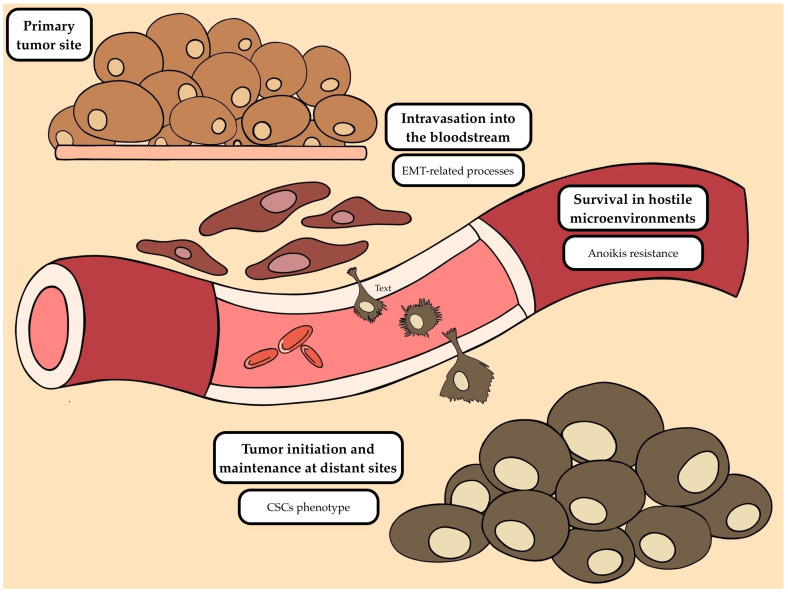
Soft tissue sarcoma is not one disease but a diverse family of cancers that arise in muscles, fat, connective tissue, and related structures, which makes it especially hard to track and treat. One of the biggest clinical challenges is figuring out which patients are likely to relapse, spread disease to distant organs, or respond poorly to therapy before those changes are obvious on scans. That is why researchers have been paying closer attention to circulating tumor cells, or CTCs, which are cancer cells that break away from a primary tumor and travel through the bloodstream. In theory, these cells offer a kind of liquid biopsy: a way to monitor cancer using blood rather than repeated tissue sampling. In practice, though, sarcoma has proved more difficult than many epithelial cancers because its biology is different and the standard tools for detecting CTCs do not always work well. The current evidence suggests that CTCs could become useful for prognosis, disease monitoring, and perhaps treatment selection, but the field is still technically immature. What is emerging is a picture of genuine promise paired with a need for better methods, larger studies, and more consistent standards before CTC testing can become routine in sarcoma care.
Why Sarcoma Is a Hard Target
Soft tissue sarcomas are rare and highly heterogeneous, meaning they include many subtypes with distinct genetics, behavior, and clinical trajectories. That diversity makes it difficult to develop one blood-based test that performs reliably across all patients.
Many existing CTC platforms were originally designed for common carcinomas such as breast, prostate, and colon cancer. Those systems often rely on epithelial markers, molecular features found on cells from epithelial tissues, but sarcomas are mesenchymal tumors, so they may not display those markers in a useful way.
What Circulating Tumor Cells Could Offer
The attraction of CTCs is straightforward: if tumor cells are detectable in blood, they may provide a real-time snapshot of disease activity. That could help clinicians estimate metastatic risk, monitor whether treatment is working, and possibly detect recurrence earlier than imaging alone.
Because blood draws can be repeated over time, CTC analysis may reveal how a tumor evolves during chemotherapy, radiation, or targeted treatment. This serial monitoring is especially appealing in sarcoma, where tissue biopsies can be invasive and may not capture the full complexity of a changing tumor.
What the Evidence Shows So Far
Current studies suggest that CTCs can indeed be found in at least some patients with soft tissue sarcoma, and in several reports their presence has been associated with more advanced disease or worse outcomes. Researchers have examined whether CTC counts correlate with tumor burden, metastatic spread, progression-free survival, or overall survival, with some encouraging signals.
Still, the published evidence remains limited by small cohorts, varied sarcoma subtypes, and different detection technologies. As a result, it is difficult to compare results across studies or define a single clinically meaningful threshold for what constitutes a high-risk CTC level.
The Technical Bottleneck
A major issue is that there is no universally accepted method for isolating and identifying CTCs in sarcoma. Some approaches use physical properties such as cell size or deformability, while others use antibody-based capture or molecular assays that look for tumor-associated RNA or DNA signals.
Each strategy comes with tradeoffs. Marker-based methods may miss sarcoma cells that do not express the chosen target, while size-based methods can capture non-tumor cells and reduce specificity, meaning they may generate false positives unless carefully validated.
Beyond Counting Cells
One of the most interesting directions in the field is the shift from simply counting CTCs to characterizing them in more detail. Researchers want to know which genetic alterations, surface proteins, or phenotypic traits these cells carry, because that information could say more about how aggressive the disease is and which therapies might work.
In principle, CTC profiling could help distinguish indolent disease from tumors that are biologically primed to metastasize. It may also offer insight into treatment resistance, especially if blood samples collected over time show that the CTC population is changing under therapeutic pressure.
How CTCs Fit With Liquid Biopsy
CTCs are only one part of the broader liquid biopsy landscape, which also includes circulating tumor DNA, exosomes, and other blood-based biomarkers. In sarcoma, where no single biomarker has yet emerged as dominant across all subtypes, combining these signals may ultimately be more powerful than relying on CTCs alone.
A multimodal strategy could be particularly useful because different sarcomas shed different kinds of biological material into the blood. In some cases, tumor DNA may be easier to detect than whole cells; in others, intact CTCs may provide richer information because they preserve cellular structure and allow direct molecular analysis.
What Needs to Happen Next
For CTCs to move into everyday sarcoma practice, the field needs larger prospective studies that enroll well-defined patient groups and use harmonized protocols. Researchers also need to show not just that CTCs are measurable, but that acting on CTC results improves clinical decisions and patient outcomes.
That means establishing when blood should be drawn, which platform should be used, how CTC-positive results should be interpreted, and whether those findings add value beyond imaging and standard pathology. Without that level of rigor, CTCs will remain intriguing research tools rather than practical clinical tests.
Why This Matters
Soft tissue sarcoma patients often face uncertainty because these cancers can behave unpredictably, even when they appear localized at diagnosis. A reliable blood-based marker that helps forecast relapse or monitor response could reduce that uncertainty and support more personalized care.
If validated, CTC testing could help identify patients who need closer surveillance, earlier systemic therapy, or more aggressive follow-up after surgery. Just as important, it might spare lower-risk patients from unnecessary interventions by providing a clearer sense of who is and is not likely to progress.
The broader significance is that sarcoma has long lagged behind more common cancers in biomarker development, partly because its rarity makes large studies harder to conduct. Work on circulating tumor cells reflects a larger push to bring precision oncology tools to diseases that have historically had fewer data and fewer tailored monitoring options. The evidence so far does not support routine clinical use yet, but it does support continued investment in method development and carefully designed trials. If those efforts succeed, CTCs could become one piece of a much more dynamic way to follow sarcoma over time. Rather than relying mainly on occasional scans and static pathology, clinicians may eventually be able to use blood-based signals to track disease in near real time. For patients, that would mean cancer care that is less reactive and more informed by the biology actually unfolding inside the body.