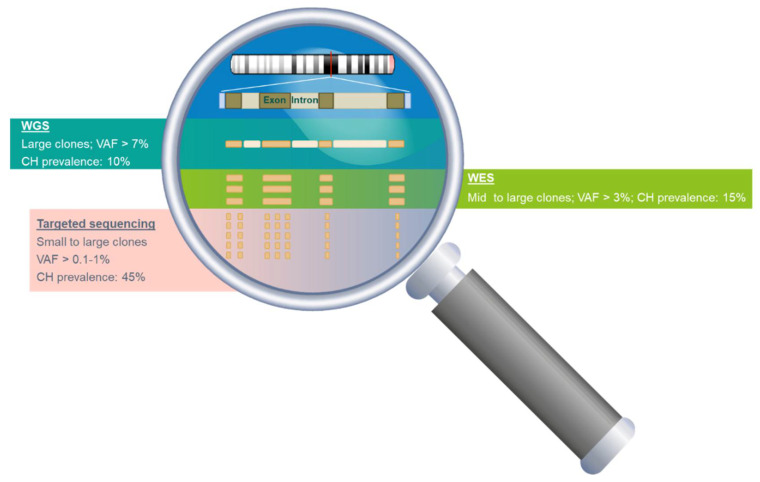
Clonal hematopoiesis has become one of the most important complications in the interpretation of liquid biopsy tests, because not every cancer-linked mutation found in blood actually comes from a tumor. In this review, the authors explain how mutations that arise in blood-forming stem cells, often called clonal hematopoiesis of indeterminate potential or CHIP, can look like tumor signals and create biological noise in circulating DNA assays. At the same time, those same mutations may carry clinical meaning of their own, especially in people exposed to chemotherapy or at risk of blood cancers and cardiovascular disease. The central message is simple: what first appeared to be a testing nuisance may also be a warning sign. CHIP is generally defined as the presence of mutations in blood-cell clones without obvious blood cancer, usually detected at a variant allele frequency, or VAF, of at least 2%, meaning the mutation appears in at least a small but measurable share of DNA fragments. The review highlights evidence that cancer patients who already carry CHIP mutations before treatment are more likely to develop therapy-related myeloid neoplasms after chemotherapy. It also points to certain genes, especially TP53 and other DNA damage response genes, as particularly important because clones carrying those mutations may survive treatment better than normal blood-forming cells. Taken together, the paper argues that liquid biopsy needs to separate tumor DNA from blood-cell DNA more carefully, while clinicians may also need to treat CHIP as a clinically relevant finding rather than a mere artifact.
Why blood tests can misread the source of a mutation
A liquid biopsy works a bit like scooping water from a river to learn what is happening upstream. Researchers analyze fragments of DNA circulating in blood, hoping to detect mutations shed by a tumor without needing an invasive tissue biopsy.
The catch is that blood contains DNA from more than one source. Some of those fragments come not from cancer cells in a solid tumor, but from ordinary blood cells that have picked up mutations and expanded into a clone over time, which is exactly what clonal hematopoiesis describes.
What CHIP means in practice
The review draws an important distinction between CH, meaning any clonal outgrowth of blood-forming cells, and CHIP, which usually refers to mutations in driver genes associated with blood cancers found in people who do not have symptoms of a hematologic malignancy. That distinction matters because the term CHIP implies a specific kind of mutation pattern with recognized clinical risk.
The authors note that these mutations are typically identified in white blood cell DNA and require a minimum VAF of 2% to meet the standard definition. Think of VAF as a vote count in a sample: if at least 2% of the DNA reads carry the mutation, the clone is large enough to be formally recognized as CHIP.
From background noise to a biological signal
For years, one major concern was that CHIP could confound liquid biopsy results by making clinicians think they were seeing tumor-derived mutations when they were actually seeing blood-derived ones. That is especially relevant for genes that can appear in both solid tumors and blood-cell clones.
But the review argues that dismissing these findings as noise misses the bigger story. A blood-derived mutation may not help identify a solid tumor, yet it can still reveal something meaningful about the patient's future risk, treatment tolerance, or disease biology.
Why chemotherapy changes the equation
One of the clearest clinical implications discussed in the review involves therapy-related myeloid neoplasms, or t-MN, a group of blood cancers that can emerge after exposure to chemotherapy. Several studies cited by the authors suggest that cancer patients who already carry CHIP mutations before starting chemotherapy are more likely to develop t-MN than patients without CHIP.
The proposed mechanism is straightforward. Chemotherapy acts as a form of external selection pressure, killing many cells but allowing some mutated blood-forming stem cells to survive and expand, giving CHIP-positive clones an opportunity to outgrow cells without those mutations.
The importance of clone size and gene choice
Not all CHIP findings appear to carry the same weight. The review notes that a higher number of CHIP mutations and a higher VAF are both associated with greater risk of developing therapy-related disease, suggesting that both clone diversity and clone size matter.
The specific gene also matters. Patients who later developed t-MN showed a higher prevalence of mutations in DNA damage response genes, including TP53, a gene often described as a genomic quality-control system because it helps cells respond when DNA is damaged.
Why TP53 stands out
TP53 receives special attention because its early mutation in clonal hematopoiesis may help explain why some patients with therapy-related acute myeloid leukemia or myelodysplastic syndrome respond poorly to chemotherapy. If cells already carry defects in the machinery that senses and reacts to DNA injury, they may be more likely to survive treatment that is supposed to destroy them.
An everyday analogy helps here: if chemotherapy is like a storm designed to knock down weak structures, a TP53-mutant clone may survive not because it is healthier, but because the usual safety rules no longer apply. In biological terms, those altered stem-cell clones may resist damage checkpoints and continue expanding after treatment.
What clinicians may need to do differently
The review does not argue that every person with CHIP needs immediate intervention. Instead, it points toward more careful monitoring and better interpretation, especially in oncology settings where liquid biopsy results can influence major decisions.
For patients with cancer, the presence of CHIP before treatment could eventually become part of risk assessment for chemotherapy-related complications. The authors suggest that future studies should examine the overall clinical benefit of chemotherapy in CHIP carriers and pair that with long-term follow-up, rather than treating CHIP as an incidental lab finding.
Why This Matters
This review matters because it reframes a common sequencing complication as a clinically useful signal. In liquid biopsy, separating tumor DNA from blood-cell DNA is essential for accuracy, but once a CHIP mutation is identified, it may also offer a window into future risk for blood malignancy or cardiovascular disease.
That has implications for both laboratory design and patient care. Tests may need paired analysis of white blood cells to avoid false tumor calls, while clinicians may need to think more carefully about surveillance strategies in patients whose blood already contains expanding mutant clones.
The next stage for liquid biopsy
The larger lesson is that better cancer diagnostics often come from understanding biology, not just improving machines. As liquid biopsy becomes more widely used, the challenge will be to distinguish what is irrelevant from what is merely unexpected. CHIP sits squarely in that gap: it can confuse a test result, but it can also reveal how a patient's blood system has been shaped by age, mutation, and treatment pressure. Future work will need to show when acting on that information improves outcomes, but the review makes a strong case that clonal hematopoiesis should no longer be ignored.