AI-generated summary by biochip.com, published . Not independently reviewed. Source: Frontiers in Neurology, by Europe PMC.
A new research analysis is mapping how a common form of RNA chemistry may shape the aftermath of spinal cord injury, a condition in which damage to the spinal cord disrupts movement, sensation, and autonomic function. The study focuses on m6A RNA methylation, a reversible chemical mark placed on RNA molecules that helps cells control which genes are translated into proteins and when. By looking at m6A-related genes alongside patterns in the immune microenvironment—the mix of immune cells and inflammatory signals surrounding injured tissue—the researchers aimed to understand why spinal cord injury can trigger such complex and lasting biological changes. Their analysis suggests that RNA regulation and immune activity are tightly linked, rather than acting as separate processes. That matters because inflammation after spinal cord injury can be both helpful and harmful: it may clear debris early on, but prolonged immune activation can worsen damage and hinder repair. Studies like this do not offer an immediate treatment, but they can identify molecular targets that may guide future diagnostics or therapies. In practical terms, the work adds another layer to the growing picture of spinal cord injury as not just a mechanical injury, but a dynamic disease process involving gene regulation, immunity, and tissue remodeling.
What the study set out to examine
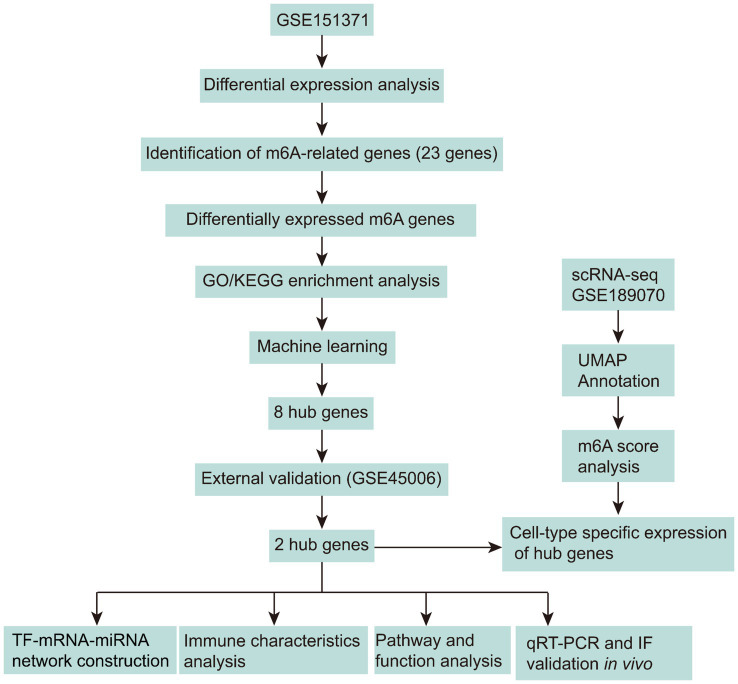
The researchers performed a comprehensive analysis of genes involved in m6A regulation in spinal cord injury. m6A, short for N6-methyladenosine, is one of the most common chemical modifications found on messenger RNA, the intermediate molecule cells use to carry genetic instructions from DNA to the protein-making machinery.
These modifications are controlled by three broad groups of proteins. So-called “writers” add the mark, “erasers” remove it, and “readers” interpret it, influencing how stable an RNA molecule is, how efficiently it is translated, and how a cell responds to stress.
Why m6A matters in spinal cord injury
Spinal cord injury unfolds in phases. There is the initial trauma, followed by a cascade of secondary damage that includes inflammation, oxidative stress, cell death, and scar formation; this second phase is where many researchers hope new therapies can make a difference.
Because m6A regulation affects how cells rapidly adjust gene expression, it is a plausible player in this secondary injury process. Neurons, support cells, and infiltrating immune cells all need to switch genes on and off in a coordinated way after injury, and RNA modifications can influence that response at high speed.
Connecting RNA regulation to the immune microenvironment
A major contribution of the study is its effort to connect m6A regulators with the immune microenvironment. In this context, that term refers to the local ecosystem of immune cells, signaling molecules, and tissue interactions present in and around the damaged spinal cord.
After injury, immune cells such as macrophages, microglia, and other inflammatory populations can flood the area. Some of these cells help remove damaged material and support repair, while others release signals that prolong inflammation and contribute to neuronal loss and scar formation.
By analyzing m6A-related genes together with immune features, the researchers were looking for coordinated patterns rather than isolated biomarkers. That is an important distinction, because spinal cord injury is driven by networks of interacting pathways, and single-gene explanations often fail to capture the full biology.
What this kind of analysis can reveal
Although the raw source provided here does not include the full dataset details, studies of this type typically use gene-expression profiles to compare injured and uninjured tissue and then identify which m6A regulators are altered. Researchers may also apply computational tools to estimate the abundance of different immune cell types from those same gene-expression signals.
From there, they can ask whether particular m6A regulators rise or fall alongside inflammatory pathways, immune-cell infiltration, or tissue-repair signatures. If strong correlations appear, those genes become candidates for deeper functional testing in animal models or future human samples.
This approach does not prove cause and effect on its own. But it can narrow a very large search space, helping scientists focus on the regulators most likely to matter biologically or clinically.
A step toward better biomarkers and therapies
One reason this research is compelling is that spinal cord injury still lacks many reliable molecular markers that can forecast how an individual patient will progress. If m6A regulators are consistently associated with distinct immune states, they could eventually help classify injuries more precisely or predict which patients are most likely to benefit from specific anti-inflammatory or regenerative strategies.
There is also therapeutic interest. In principle, if a particular writer, eraser, or reader protein is driving harmful inflammation or blocking repair, it may be possible to design drugs or gene-based interventions that adjust that pathway—though that remains a long-term goal, not an immediate clinical application.
Why This Matters
Spinal cord injury research has increasingly moved beyond the idea that recovery depends only on preventing the initial mechanical damage. Scientists now recognize that what happens in the hours, days, and weeks afterward—the immune response, the survival of neurons and glia, and the activation of repair pathways—can shape long-term outcomes just as powerfully.
This study fits into that broader shift by highlighting RNA-level regulation as part of the story. If m6A methylation helps govern the balance between destructive and restorative immune responses, it could become an important bridge between basic molecular biology and future precision treatments for spinal cord injury.
What comes next
The next challenge is validation. Computational analyses are useful for generating hypotheses, but researchers will need experimental studies to show exactly how specific m6A regulators influence immune cells, neuronal survival, axon regeneration, and scar formation in living systems.
Even so, the work points in a promising direction. By combining epigenetic-style RNA regulation with immune profiling, the study reinforces a central idea in modern neurotrauma research: meaningful advances may come from understanding the injured spinal cord as an evolving biological environment, not just a damaged piece of tissue.