Creative Biolabs is offering customized circulating tumor cell, or CTC, detection systems built on microfluidics, a technology that moves tiny amounts of liquid through channels thinner than a human hair. The company’s pitch centers on a practical problem in cancer care: tumor cells that break away from a primary tumor and enter the bloodstream are rare, hard to isolate, and potentially valuable as a minimally invasive way to track disease. According to the source, its platform includes several chip designs aimed at pulling those cells out of blood more efficiently, including an HTMSU device with an integrated platinum conductivity sensor, a CTC chip that uses micropore geometry and fluid flow to improve antibody-based capture, and a GEDI chip designed to reduce unwanted white blood cell sticking. In plain terms, these chips act a bit like highly selective fishing nets, each engineered to grab unusual cells while letting most ordinary blood cells pass by. The company says the systems can support applications ranging from diagnosis and prognosis to drug screening and gene mutation detection, all tied to the study of metastasis, the spread of cancer from one part of the body to another. The source frames CTC cluster analysis as especially important because groups of circulating tumor cells may offer clues about how metastasis happens. While the page is a company platform description rather than a peer-reviewed study, it still describes a specific technology offering and the design logic behind it. That makes it a useful snapshot of how microfluidic biochips are being positioned as tools for turning a blood sample into a window on cancer biology.
How the platform is supposed to work
CTC detection starts with a difficult numbers problem. Tumor cells circulating in blood are extremely scarce compared with normal blood cells, so a useful device has to find a few suspicious cells in a crowded sample without losing them or contaminating the result.
Microfluidics is well suited to that task because it gives engineers tight control over how cells move. Instead of processing blood in large tubes, these systems guide it through carefully designed microchannels where flow speed, channel shape, and surface chemistry can all be tuned to increase the odds of catching rare cells.
The HTMSU approach
One of the systems named on the page is the high-throughput micro sampling unit, or HTMSU. Creative Biolabs describes it as a microchip-based device that separates CTCs from blood by targeting unique membrane proteins with surface-immobilized monoclonal antibodies, which are lab-made antibodies designed to recognize a specific molecular target.
A useful analogy is Velcro: if the antibody on the chip matches a protein on the tumor cell surface, the cell is more likely to stick as blood flows by. The source also says the HTMSU uses multiple parallel, high-aspect-ratio microchannels, meaning many long, narrow channels working at once, which is intended to support higher-throughput processing than a single small channel could manage.
Sensing with conductivity
The company also highlights an HTMSU microfluidic device that detects the unique electrical characteristics of CTCs through an integrated platinum conductivity sensor. Conductivity sensors measure how easily electricity passes through a material or sample, and platinum is commonly used because it is stable and conductive.
That matters because tumor cells may differ from surrounding blood cells not only by the proteins on their surfaces, but also by measurable physical or electrical properties. In effect, this adds a second layer of screening: the device is not just trying to capture cells, but also to distinguish them using a built-in electrical readout.
Using geometry to improve capture
Another chip described by Creative Biolabs promotes cell adhesion to antibodies through the geometric arrangement of micropores and the control of fluid flow velocity. That sounds technical, but the basic idea is familiar: shape the path correctly and objects have more chances to bump into the right surface and stick.
In a blood-processing chip, that can make a big difference. If cells move too fast, targets may slip by; if the geometry is poorly designed, the system may capture too few tumor cells or trap too many normal ones, weakening the value of the test.
The GEDI chip and cleaner separation
The page also mentions a geometrically enhanced differential immunocapture, or GEDI, chip. Its stated goal is to minimize non-specific leukocyte adhesion, meaning it tries to stop ordinary white blood cells from sticking to the capture surface when they are not supposed to.
That is an important engineering challenge because false capture creates noise. If too many leukocytes remain mixed with the target cells, downstream analysis such as mutation testing or drug response studies becomes less reliable, much like trying to hear a whisper in a crowded room.
What the company says these systems are for
Creative Biolabs connects its CTC detection systems to several cancer-related uses. The source specifically points to tumor diagnosis, prognosis, drug screening, gene mutation detection, and anti-metastasis treatment as areas that could benefit from effective CTC separation and detection.
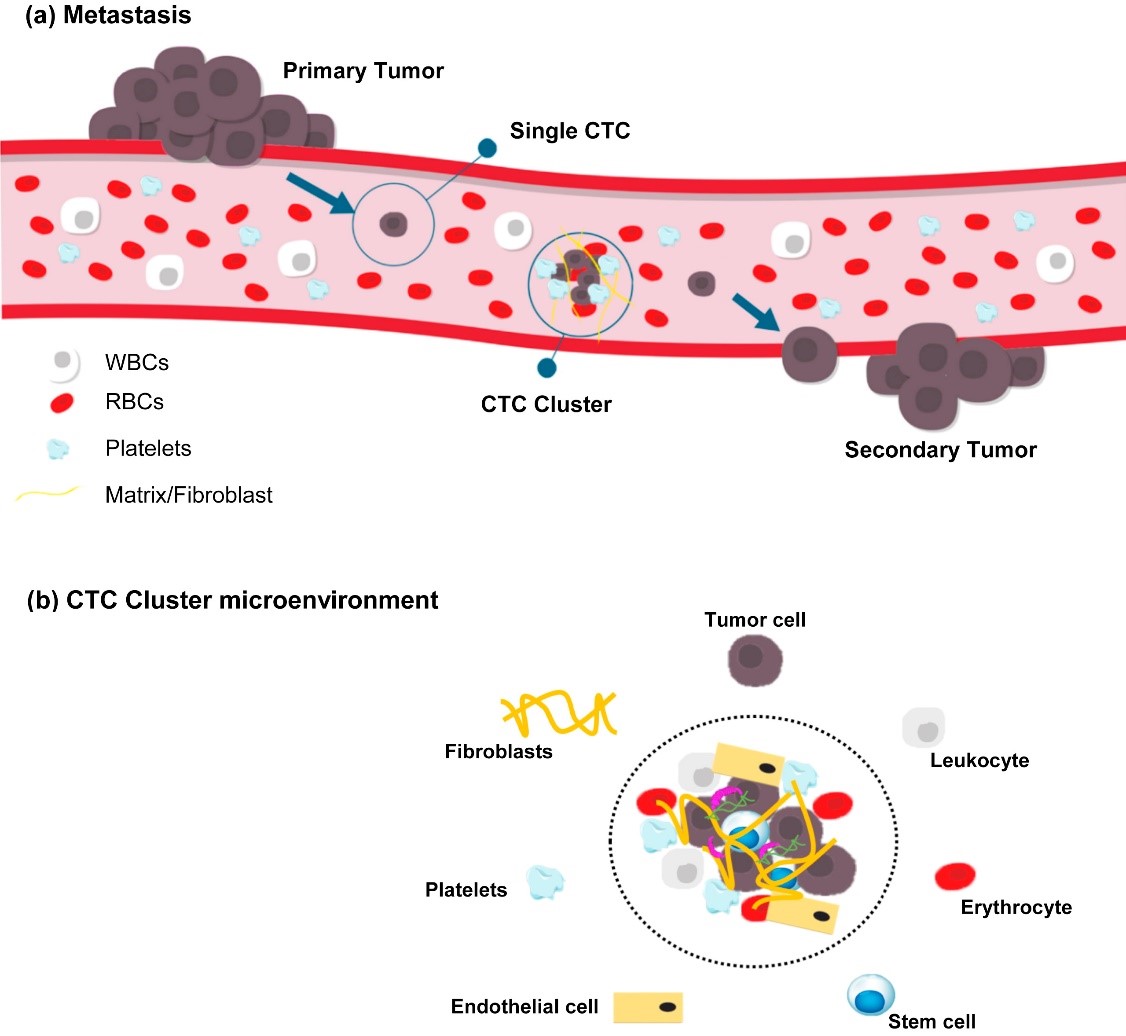
The page also emphasizes CTC clusters, groups of circulating tumor cells traveling together. Researchers have become interested in these clusters because they may behave differently from single cells and could shed light on the mechanisms of metastasis, which remains one of the central problems in cancer biology.
Why This Matters
The appeal of CTC testing is that it could provide information from a simple blood draw rather than a surgical tissue biopsy. This is often described as a liquid biopsy, a less invasive way to sample signs of cancer and potentially repeat testing over time as the disease changes.
For patients and clinicians, that promise is practical, not abstract. If a platform can reliably isolate rare tumor cells and keep contamination low, it may help track treatment response, look for actionable mutations, or study why some cancers spread more aggressively than others.
What to watch next
The source is a technology platform page, so it outlines capabilities more than it proves performance. The next questions for any buyer, researcher, or clinician would be about validation: how well each chip performs in real blood samples, what capture rates and purity levels it achieves, and how reproducible the results are across different cancers.
Even so, the platform reflects a broader shift in biochip design. Instead of relying on a single trick, newer CTC systems increasingly combine antibody targeting, fluid mechanics, and physical sensing in the same device, with the aim of turning a rare-cell hunt into a more routine lab workflow.