Source: Proceedings of the National Academy of Sciences of the United States of America, by Olga Troyanskaya; Shirley Tilghman (August 26, 2026). AI-generated summary by biochip.com, published . Not independently reviewed.
Key takeaways
- David Botstein died February 27, 2026, after a career spanning bacterial, yeast, human, and computational genetics.
- Botstein and collaborators used RFLPs as inherited DNA landmarks, enabling searches for genes involved in cystic fibrosis and Huntington's disease.
- This memorial is not new experimental work and does not assess the current clinical performance of genetic technologies.
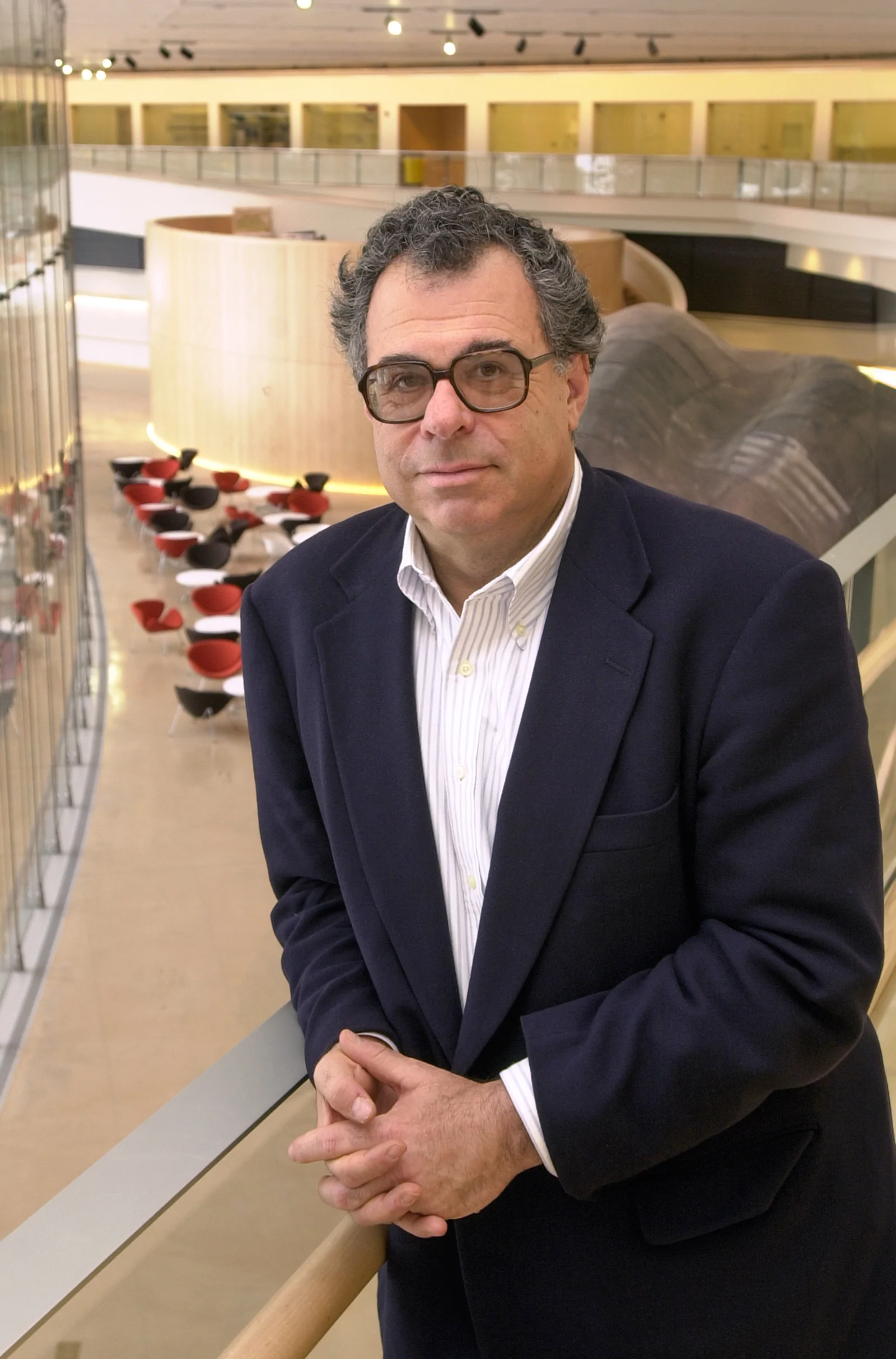
David Botstein, the geneticist whose ideas helped turn the human genome into a map that researchers could navigate, died February 27, 2026, in Palo Alto, California. He was 83. Botstein is especially known for showing that naturally occurring DNA differences could serve as signposts for locating disease-related genes, a principle that helped set the stage for the Human Genome Project. His work also advanced the study of bacteria and yeast, contributed to the development of DNA microarrays, and helped establish ways to interpret the enormous datasets those tools produced. Across these projects, he pursued a consistent goal: develop methods that make complex biology understandable. He paired that technical ambition with a major commitment to education, creating rigorous curricula intended to prepare students for scientific careers. Colleagues Olga Troyanskaya and Shirley Tilghman remembered him as a warm, intellectually energetic mentor whose enthusiasm shaped the people around him. His scientific legacy reaches from basic experiments on gene function to the tools used to connect inherited DNA variation with human disease.
Finding Function Through Genetic Disruption
Botstein was born September 8, 1942, in Zurich, Switzerland, to two Polish physicians. His family emigrated to the United States in 1949 and settled in New York City, where he grew up debating science, politics, and music with his parents and siblings, Leon and Eva. He attended the Bronx High School of Science, earned a biochemistry degree from Harvard University in 1963, and developed a lasting interest in genetics during postgraduate studies at the University of Michigan.
At the Massachusetts Institute of Technology, Botstein studied a virus called Salmonella phage P22, which infects Salmonella bacteria. He used mutations, changes in genetic material, to investigate how genes work together. The logic resembles disabling one part of a machine, then looking for a second change that allows the machine to operate again: that second change can reveal which components normally interact.
In particular, Botstein recognized that conditional lethal mutations could act as powerful investigative tools. These are mutations that kill a cell or virus only under certain conditions, allowing researchers to switch a gene defect on or off experimentally. By studying mutations that suppressed, or compensated for, another mutation, he could identify genes involved in the same protein complex and place genes in their likely order within a biological pathway.
Building a Community Around Yeast Genetics
In the early 1970s, Botstein shifted attention to budding yeast, a single-celled organism that has long served as a practical model for studying fundamental cell biology. He developed genetic approaches to investigate actin and tubulin, proteins that form the cell's internal scaffold and help organize its shape, movement, and division. The same general strategy applied: use carefully designed genetic changes to expose the hidden relationships among cellular parts.
Botstein also helped organize the field he was studying. With Gerry Fink, he founded the annual yeast meeting at Cold Spring Harbor in 1975, creating a continuing forum for researchers working on the organism. He also helped establish shared naming standards for yeast mutants, an unglamorous but essential task that lets scientists compare findings without confusing one gene or strain for another.
DNA Variation as a Set of Genomic Landmarks
Botstein's best-known contribution came from a deceptively simple insight about human DNA. Together with Ron Davis, Mark Scolnick, and Ray White, he showed that small inherited DNA differences could be used as markers for positions in the genome. It was like locating an address in an unfamiliar city by following a series of distinctive landmarks, except the city was the roughly 3 billion DNA bases in the human genome.
The markers were called restriction fragment length polymorphisms, or RFLPs. Restriction enzymes are proteins that cut DNA at particular sequences, and a DNA difference can create or remove one of those cutting sites. As a result, the same enzyme produces DNA fragments of different lengths in different people, providing a detectable inherited marker.
Researchers could track whether a particular RFLP was inherited alongside a disease within families, a pattern known as cosegregation. If the marker and disease repeatedly traveled together through generations, the disease-related gene was probably nearby on the same chromosome. This approach made it possible to narrow the search for genes linked to breast cancer, cystic fibrosis, and Huntington's disease, and it supplied a conceptual foundation for later genome mapping and sequencing efforts.
From Microarrays to Data-Driven Biology
RFLPs were eventually replaced by newer ways to measure genetic variation, but the underlying idea endured: variation across genomes can guide researchers toward biologically meaningful locations. Botstein also codeveloped DNA microarrays, chips that allow scientists to measure many genes at once. Like checking the status of thousands of light switches simultaneously rather than entering one room at a time, microarrays made broad patterns of gene activity visible in a single experiment.
Generating that much information created another challenge. Botstein contributed to the algorithms, or step-by-step computational methods, needed to extract useful biological insight from microarray data. That combination of experimental tools and quantitative interpretation reflected his wider view of genetics: measuring biology matters most when the measurements can be turned into an explanation.
Why This Matters
Modern genetics often feels routine because researchers can now scan genomes, compare DNA variants, and search for disease associations at extraordinary scale. Botstein helped establish the intellectual machinery behind that work. His RFLP strategy showed that inherited variation was not simply background noise, but a usable map for connecting DNA with traits and disease.
His earlier work with bacteria and yeast offered a complementary lesson. A gene rarely acts alone, and carefully designed mutations can uncover the networks of genes and proteins that produce a biological function. Genome-scale genetic interaction screens now extend that idea across thousands of genes, but their logic traces back to the experimental approaches Botstein developed.
Botstein's influence also rested on teaching and scientific community-building, not only on individual discoveries. By developing curricula and supporting shared standards and meetings, he helped make genetics a more collaborative discipline. The methods he championed continue to evolve, while the questions that drove him remain the same: how do genes work together, and how can better tools make those relationships clear?