Source: Springer Science and Business Media LLC, by Harry Felton; Robert Hughes. AI-generated summary by biochip.com, published . Not independently reviewed.
Key takeaways
- University of Bristol researchers developed a low-cost 3D-printing method for soft-lithography molds used to fabricate microfluidic diagnostic devices.
- The team produced 100-micron-wide microchannel scaffolds and said printing 1,000 cost about the same as loose change.
- The fabrication method still requires diagnostic chemistry, sample handling, quality control, clinical validation and regulatory pathways before patient use.
A team at the University of Bristol says it has found a much simpler way to make the tiny fluid channels that sit at the heart of many rapid diagnostic tests. These microfluidic devices move minuscule amounts of liquid through carefully designed pathways, allowing a lab-style analysis to happen on a small chip instead of in a full laboratory. That matters because lab-on-a-chip systems are widely seen as a route to faster, cheaper diagnosis for infectious diseases and other conditions, especially in places where access to conventional lab infrastructure is limited. The Bristol researchers developed an alternative method for producing the soft moulds used to fabricate these devices, replacing more specialized manufacturing steps with low-cost 3D printing and open-source design resources. According to the team, the process is quick, reliable, and cheap enough to be done with equipment found in homes, schools, or basic workshops. If that claim holds up in wider use, it could lower one of the biggest practical barriers in the field: the difficulty and cost of prototyping and producing custom chips. The work points to a future in which researchers, clinicians, and even educators can build diagnostic tools more easily, speeding both innovation and access. In short, the advance is less about inventing a single new test and more about making the entire pipeline for building tests far more accessible.
A bottleneck in lab-on-a-chip manufacturing
Lab-on-a-chip technology has long promised to shrink complex medical testing into portable devices that can deliver results quickly. But while the concept is elegant, the manufacturing process behind these chips can be surprisingly demanding, often relying on specialized facilities, expensive equipment, and trained staff.
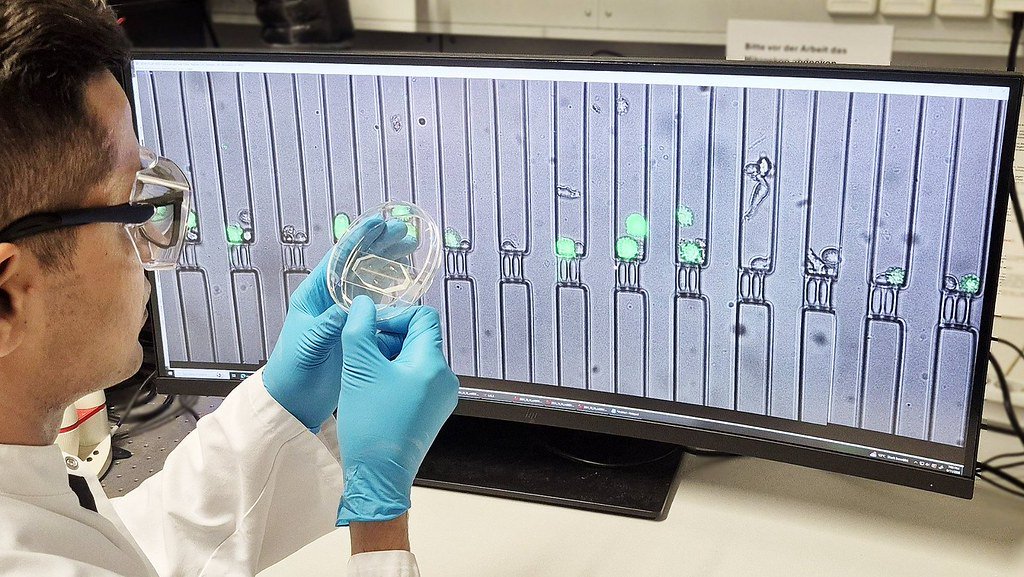
One key step involves creating a mould, often through a process called soft lithography. In simple terms, that means making a patterned template that can be used to form the tiny channels through which fluids flow. Those channels may be only around 100 microns wide, roughly the width of a human hair, so precision matters.
What the Bristol team changed
The Bristol researchers developed an alternative way to produce these moulds using straightforward, inexpensive 3D printing. Instead of depending on more complex fabrication pipelines, they used printable microchannel scaffolds and open-source resources to create a process the team described as fast, reliable, and cost-effective.
The scale of the work is part of what makes it notable. The researchers highlighted 100-micron-wide 3D-printed microchannel scaffolds and said the cost to print 1,000 of them was comparable to loose change. That does not mean a full diagnostic product appears instantly, but it does suggest that one of the most fiddly and expensive early-stage steps can be made dramatically cheaper.
Why low-cost fabrication matters
In medical technology, the gap between a promising idea and a usable device is often created by manufacturing, not science alone. A research group may know what kind of fluid channel geometry it wants for a test, but building and refining that design can take time, money, and access to specialized labs.
A low-cost method changes that equation. If prototypes can be made quickly with basic tools, teams can test more designs, iterate faster, and move promising concepts forward without waiting for scarce facility time. That could be especially valuable for point-of-care diagnostics, tests designed to be used near the patient rather than sent away to a central lab.
Potential impact in lower-resource settings
The strongest case for this approach may be in regions where rapid diagnosis is urgently needed but technical infrastructure is limited. Delays in diagnosis can worsen disease spread, increase mortality, and make treatment less effective, particularly for conditions where time matters.
The Bristol team said easier fabrication could accelerate the development and uptake of on-chip diagnostics in places where quick answers are desperately needed. By reducing the expertise and equipment required, the method may make it more realistic for local researchers, clinics, or partner organizations to adapt and produce devices tailored to specific public health needs.
More than a research tool
Co-author Harry Felton emphasized how unusually accessible the process is, saying devices can be fabricated using everyday domestic or educational appliances at negligible cost. That kind of statement stands out in a field often associated with clean rooms, precision instruments, and advanced engineering workflows.
The researchers also said the method could appeal beyond professional laboratories. Co-author Andrea Diaz Gaxiola noted that the technique is suitable for hobbyists and educational use as well, opening the door for students and early-stage innovators to experiment with microfluidic design in a hands-on way.
Why This Matters
This story matters because it addresses a quiet but important problem in health technology: not just how to invent a diagnostic test, but how to make the tools for building those tests widely available. Medical innovation often gets stuck when the underlying engineering is too expensive or too specialized for broad use.
By pushing microfluidics toward a more open, low-cost model, the Bristol work could help democratise a technology platform that has enormous potential. Faster prototyping can speed research, cheaper fabrication can widen participation, and simpler production can make diagnostics more realistic in clinics, classrooms, and communities that have historically been left out.
What comes next
The bigger challenge now is translating an easier fabrication method into real-world diagnostic devices that are robust, validated, and clinically useful. Manufacturing one part of the chip cheaply is an important step, but tests still need chemistry, sample handling, quality control, and regulatory pathways before they can reach patients.
Even so, enabling many more people to make and test microfluidic devices could have a multiplier effect across the field. If researchers and clinicians can build ideas faster and at lower cost, the pace of practical innovation may increase, bringing rapid diagnostic tools closer to the places that need them most.
Topics: Lab-on-a-chip · Microfluidics · Diagnostics & precision medicine
Start here: Microfluidics explained
Related articles
- Multifunctional microfluidic chip for cancer diagnosis and treatment
- Smartphone-powered microchip for at-home diagnostic testing
- Recent Progress in Lab-on-a-Chip Technology and Its Potential Application to Clinical Diagnoses
- Microfluidics-based strategies for molecular diagnostics of infectious diseases