AI-generated summary by biochip.com, published . Not independently reviewed. Source: Pharmaceutics, by Europe PMC.
A new line of cancer drug delivery research is turning to an unexpected source: plants. In this study, researchers examine plant-derived extracellular vesicles, tiny membrane-wrapped particles naturally released by fruits, vegetables, and other plant tissues, and explore how engineering them could make cancer treatment more precise. The central idea is simple but powerful: use these naturally biocompatible particles as delivery vehicles that can carry drugs, RNA, or imaging agents directly to tumors while reducing damage to healthy tissue. That matters because one of oncology’s oldest problems is not just finding effective therapies, but getting them to the right place in the body at the right dose. Compared with many synthetic nanoparticles, plant vesicles may offer lower toxicity, easier large-scale production, and better stability in the digestive tract, opening possibilities for both injectable and oral therapies. The article frames these vesicles as a promising platform rather than a finished product, highlighting advances in how they can be isolated, modified, and aimed at cancer cells. Taken together, the work suggests that engineered plant vesicles could become a practical bridge between natural biological systems and highly targeted cancer medicine.
What Plant-Derived Vesicles Are
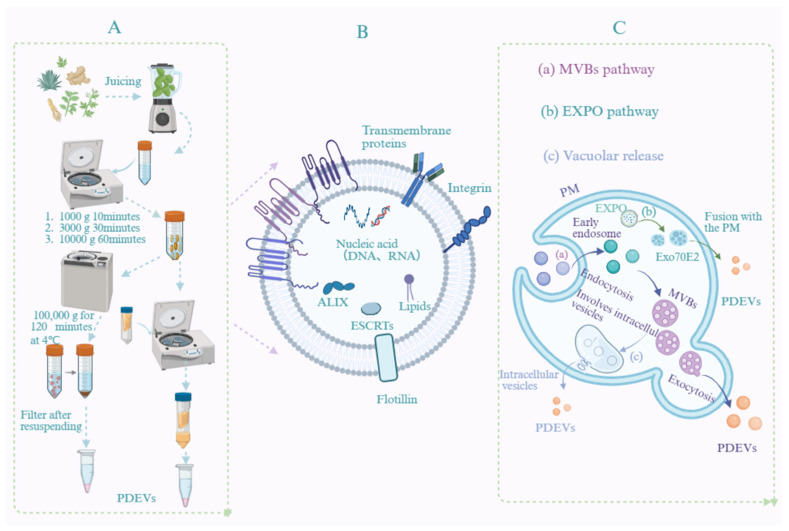
Extracellular vesicles are microscopic sacs that cells release to communicate with other cells. They carry cargo such as proteins, lipids, and genetic material, and in animals they have already drawn major interest as potential drug carriers.
Plants produce similar particles, and researchers are increasingly studying whether these vesicles can be harvested and repurposed for medicine. Because they come from edible or widely available plant sources, they may offer a safer and more accessible starting material than some lab-built delivery systems.
Why Researchers Are Interested in Cancer Therapy
Cancer treatment often suffers from a targeting problem: a drug can kill tumor cells but also harm healthy organs. That is why scientists keep searching for carriers that can shield a drug, move through the body efficiently, and release the cargo mainly where it is needed.
Plant-derived vesicles look attractive on several fronts. They appear to have good biocompatibility, meaning the body may tolerate them relatively well, and they can potentially cross biological barriers that are difficult for conventional therapies. Some reports also suggest they can survive conditions that would degrade more fragile payloads, making them especially interesting for nucleic acid drugs such as small RNA molecules.
How the Vesicles Can Be Engineered
The key advance discussed in the study is not merely using natural vesicles as-is, but engineering them to improve performance. Researchers can load them with anti-cancer drugs, gene-silencing molecules, or other therapeutic agents, then modify their surfaces so they are more likely to bind to tumor cells.
Surface engineering usually means attaching targeting molecules that recognize markers found more often on cancer cells than on normal cells. In practice, this could help the vesicles accumulate at a tumor site, increasing the local concentration of the treatment while reducing side effects elsewhere in the body.
What Makes Plant Vesicles Different From Synthetic Nanoparticles
Synthetic nanoparticles have been studied for years, but they often face tradeoffs involving toxicity, immune reactions, and manufacturing complexity. Plant vesicles may avoid some of those problems because they are naturally assembled by living cells and already contain membranes and biomolecules suited to biological environments.
Another advantage is scalability. If vesicles can be reliably isolated from common plant materials, production could eventually be less expensive than manufacturing some highly specialized nanocarriers from scratch, though standardization remains a major challenge.
The Technical Hurdles
Despite the excitement, the field is still early. One obstacle is purification: isolating vesicles consistently from plant tissues without contamination from other plant components is difficult, and different extraction methods can produce very different materials.
There is also a characterization problem. To become credible drug platforms, plant vesicles need clear quality controls for size, composition, stability, targeting efficiency, and cargo loading, as well as better agreement across labs on how these particles should be defined and measured.
What the Study Says About Clinical Potential
The article presents engineered plant-derived vesicles as a flexible therapeutic platform with applications beyond simple drug delivery. In principle, they could carry chemotherapy agents, RNA therapies, immune-modulating molecules, or even contrast agents for imaging, allowing them to support diagnosis and treatment in the same framework.
That versatility is especially appealing in oncology, where tumors vary widely and often evolve resistance. A modular delivery system that can be retuned for different cancers or combined with multiple payloads could be valuable, especially if it proves easier to tolerate than existing options.
Why This Matters
The importance of this work is not that plant vesicles have already solved cancer therapy, but that they expand the toolkit in a meaningful way. Cancer medicine increasingly depends on targeted delivery, and every improvement in getting the right molecule to the right cells can potentially improve efficacy while lowering toxicity.
There is also a broader lesson here about bioengineering. Instead of building every medical technology from synthetic materials, researchers are learning how to adapt natural systems that evolution has already optimized for packaging and transport, which may lead to therapies that are both smarter and more practical.
What Comes Next
The next phase for the field will likely focus on standard methods, stronger animal data, and eventually human studies that test safety, dosing, and real tumor-targeting performance. If those hurdles can be cleared, engineered plant-derived extracellular vesicles could move from an intriguing research concept to a new class of biologically inspired cancer therapeutics.