AI-generated summary by biochip.com, published . Not independently reviewed. Source: Frontiers in Immunology, by Europe PMC.
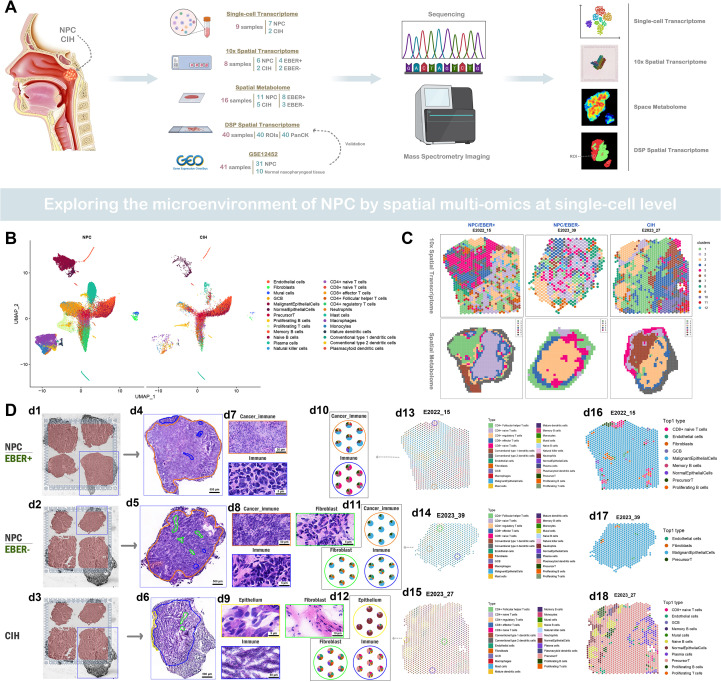
A new study takes a close look at how glycerophospholipid metabolism—the set of chemical processes cells use to build and remodel key membrane fats—may shape the behavior of nasopharyngeal carcinoma, a cancer that arises in the upper part of the throat behind the nose. Rather than focusing only on tumor cells themselves, the work examines how malignant epithelial cells interact with a specific group of nearby support cells called fibroblasts. The researchers highlight a fibroblast population marked by expression of CCL11, an immune-signaling molecule also known as eotaxin-1, suggesting these cells may help create a tumor-friendly environment. That matters because cancers do not grow in isolation: they depend on a surrounding ecosystem of structural cells, immune cells, and chemical signals often referred to as the tumor microenvironment. By linking altered lipid metabolism to communication between tumor cells and CCL11-expressing fibroblasts, the study points to a more connected view of disease progression. It suggests that changes in how cancer cells handle membrane lipids may influence, and be influenced by, neighboring stromal cells—the non-cancer cells that make up connective tissue. The result is a picture of nasopharyngeal carcinoma as a metabolic and cellular partnership rather than a problem confined to malignant cells alone. That broader perspective could eventually help researchers identify new biomarkers or treatment targets aimed at both the tumor and its support network.
A metabolic lens on nasopharyngeal carcinoma
Nasopharyngeal carcinoma, often shortened to NPC, is a distinctive head and neck cancer with strong links to Epstein-Barr virus infection, geography, and local tissue biology. Even so, many of the mechanisms that drive tumor growth, spread, and treatment resistance remain only partly understood.
The new work centers on glycerophospholipids, a major class of fats that form cell membranes and also take part in signaling. Because rapidly dividing cancer cells constantly build new membranes and rewire communication pathways, disruptions in lipid metabolism can have outsized effects on how aggressively a tumor behaves.
The importance of the tumor neighborhood
One of the most important shifts in cancer research over the past decade has been the recognition that tumors are communities, not just masses of mutant cells. In NPC, as in many cancers, surrounding fibroblasts can reshape the extracellular matrix—the structural scaffold around cells—while also releasing molecules that influence inflammation, immunity, and growth.
The study specifically draws attention to CCL11-expressing fibroblasts. CCL11 is a chemokine, meaning a small signaling protein that helps guide the movement and behavior of cells, especially immune cells. When fibroblasts produce it inside a tumor, they may be doing more than passively supporting tissue structure; they may be actively helping to direct the local biology of the cancer.
How lipid metabolism and fibroblasts may connect
The central idea is that malignant epithelial cells and CCL11-positive fibroblasts may engage in a two-way relationship tied to glycerophospholipid metabolism. Tumor cells with altered lipid pathways may release metabolites, membrane components, or signaling factors that reprogram nearby fibroblasts, while fibroblasts may return the favor by secreting cues that reinforce tumor survival and invasion.
This kind of feedback loop would fit a growing body of cancer research showing that metabolism is not just an internal feature of single cells. It can become a shared property of the microenvironment, where one cell type’s waste product, nutrient demand, or secreted signal changes the behavior of another cell type nearby.
Why CCL11 stands out
CCL11 is best known for attracting eosinophils, a type of immune cell involved in allergy and inflammation, but its role in cancer has been less straightforward. Depending on context, chemokines like CCL11 can alter immune cell recruitment, blood vessel growth, and tissue remodeling, all of which can affect whether a tumor remains contained or becomes more invasive.
By identifying fibroblasts that express CCL11 in NPC, the study suggests that not all fibroblasts in a tumor are equivalent. That is an important point because fibroblasts are often discussed as a single category, when in reality they can exist in several subtypes with very different functions—some potentially restraining disease, others promoting it.
What the findings may mean biologically
If glycerophospholipid metabolism is tightly linked to these fibroblast interactions, it could help explain several hallmark features of aggressive cancer. Membrane lipids influence how cells move, how receptors cluster on the cell surface, and how signaling cascades are switched on and off, so metabolic changes here could directly support invasion and metastasis.
At the same time, fibroblast-derived CCL11 and related signals could shape the immune landscape around the tumor, potentially making it easier for malignant cells to avoid destruction. In practical terms, that means metabolic rewiring and stromal signaling may be working together rather than representing separate layers of disease biology.
Research and treatment implications
Studies like this can open several paths for follow-up work. Researchers may want to test whether glycerophospholipid-related genes or lipid signatures can help classify patients by risk, predict response to therapy, or identify tumors that depend heavily on fibroblast support.
There is also a therapeutic angle. If NPC cells rely on a metabolic partnership with CCL11-expressing fibroblasts, treatment strategies could aim to interrupt that partnership—either by targeting enzymes in lipid metabolism, blocking chemokine signaling, or combining these approaches with immunotherapy or radiation.
Why This Matters
The broader significance of the study is that it moves beyond a tumor-cell-only model of cancer. In NPC, where outcomes can vary widely and resistance remains a clinical problem, understanding how malignant epithelial cells cooperate with stromal fibroblasts may reveal vulnerabilities that are invisible when each cell type is studied alone.
It also reflects a larger trend in oncology toward integrating metabolism, cell state, and microenvironment into one framework. For patients, that could eventually translate into more precise biomarkers and combination treatments designed not just to attack the cancer, but to dismantle the ecosystem that helps it survive.
What comes next
The next step will be to determine how strong and causal these proposed interactions really are in patient samples and experimental models. If future work confirms that glycerophospholipid metabolism and CCL11-expressing fibroblasts form a functional axis in nasopharyngeal carcinoma, the field may gain a new way to think about both disease monitoring and therapy: not as a battle against isolated tumor cells, but as an effort to break a dangerous cellular alliance.