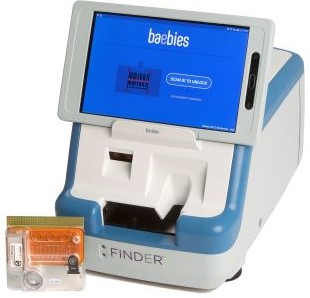
Lab-on-a-chip devices are starting to turn complex lab tests into something closer to a quick, portable checkup. According to the National Heart, Lung, and Blood Institute, these systems can analyze a tiny droplet of blood inside a disposable plastic cartridge that already contains the needed chemicals, then deliver results in minutes. That matters because speed and portability can make the difference between diagnosing a disease early and missing the window to act. One example highlighted by NHLBI is a blood-testing platform developed by Baebies, a company launched with support from the institute’s Small Business Innovation Research program. Another is a chip-based test for newborn sickle cell disease, a genetic blood disorder that can be deadly if it is not found and treated early. Researchers say the appeal is simple: move the power of a full laboratory into a small device that can travel to clinics, delivery rooms, and remote communities. If that vision holds up in real-world use, lab-on-a-chip tools could help close one of medicine’s oldest gaps: the distance between having a test and actually getting one when it is needed.
How a lab fits on a chip
The basic idea sounds futuristic, but it is easier to picture with a kitchen analogy. Imagine shrinking an entire recipe station—measuring cups, mixing bowls, timers, and ingredients—into a credit-card-sized gadget that automatically combines everything in the right order.
That is essentially what a lab-on-a-chip system does for diagnostics. These devices are typically made from plastic and built with tiny channels, valves, and pumps that guide microscopic amounts of fluid so the device can transport, mix, and analyze proteins, DNA, and other chemicals found in blood or other body fluids.
Why miniaturization changes care
In a conventional medical laboratory, samples often need trained staff, bulky instruments, and time for transport and processing. Lab-on-a-chip technology compresses much of that workflow into a portable format, which can allow testing closer to the patient.
NHLBI describes platforms in which hair-thin streams or droplets of liquid are moved with air pressure, electricity, or even sound. Those forces precisely steer the sample to different regions of the chip, where it reacts with stored chemicals and produces a measurable signal linked to disease or infection.
A platform built for fast blood testing
One of the examples in the NHLBI story is a diagnostic platform from Baebies. The setup pairs a disposable cartridge with micro-scale electronics, and the cartridge contains the chemical reagents—the substances needed to trigger the test reactions—so the user can perform onsite testing from a small blood droplet.
The practical benefit is speed. Instead of sending a sample away and waiting, clinicians can read results within minutes, which can be especially useful for newborn screening and other situations where delays can have lasting consequences.
The sickle cell test with global reach in mind
Among the most closely watched applications is a chip-based test for sickle cell disease in newborns. Sickle cell disease is an inherited disorder that changes the shape and behavior of red blood cells, making them more likely to block blood flow and cause pain, organ damage, infections, and early death if care is delayed.
The device highlighted by NHLBI contains a miniature version of electrophoresis, the standard lab method used to separate molecules based on how they move in an electric field. In everyday terms, it acts a bit like a very tiny sorting lane, separating components in the blood so the test can identify the patterns linked to sickle cell disease.
Why portability matters so much
The promise of this approach is not only that it is small, but that it can travel. Traditional diagnostic equipment may be difficult to deploy in places that lack stable infrastructure, specialized staff, or centralized laboratories.
NHLBI notes that this sickle cell device could be especially valuable in remote and underserved areas, including parts of Africa and India. In those regions, more than 300,000 babies are born each year with sickle cell disease, yet many are never diagnosed and die before age five.
The people behind the devices
The story also shows how these tools move from academic ideas to usable products. Baebies emerged with funding support from the NHLBI Small Business Innovation Research program, a federal effort designed to help early-stage companies translate scientific concepts into commercial technologies.
On the academic side, Umut Gurkan, a biomedical engineering professor at Case Western Reserve University and an NHLBI grantee, is identified as the inventor of the newborn sickle cell testing technology. His work points to a broader pattern in biomedical engineering: university labs develop the underlying method, and partnerships or funding programs help push it toward clinics and field use.
Why This Matters
For patients, the value of lab-on-a-chip technology is not just technical elegance. It is the possibility of getting an accurate answer faster, with less equipment, from a tiny sample, in places where a full laboratory may be unavailable.
That could be particularly important for newborn screening, infectious disease checks, and other tests where timing matters. A result delivered in minutes can accelerate treatment, reduce follow-up loss, and make screening programs more realistic in communities that have long been left out of advanced diagnostics.
The bigger story is that medicine is steadily shifting from centralized testing toward point-of-care diagnostics, meaning tests performed near the patient rather than in a distant lab. Lab-on-a-chip devices will still need to prove themselves through wider adoption and dependable performance in diverse settings, but the direction is clear: shrink the lab, shorten the wait, and bring critical decisions closer to the moment of care.