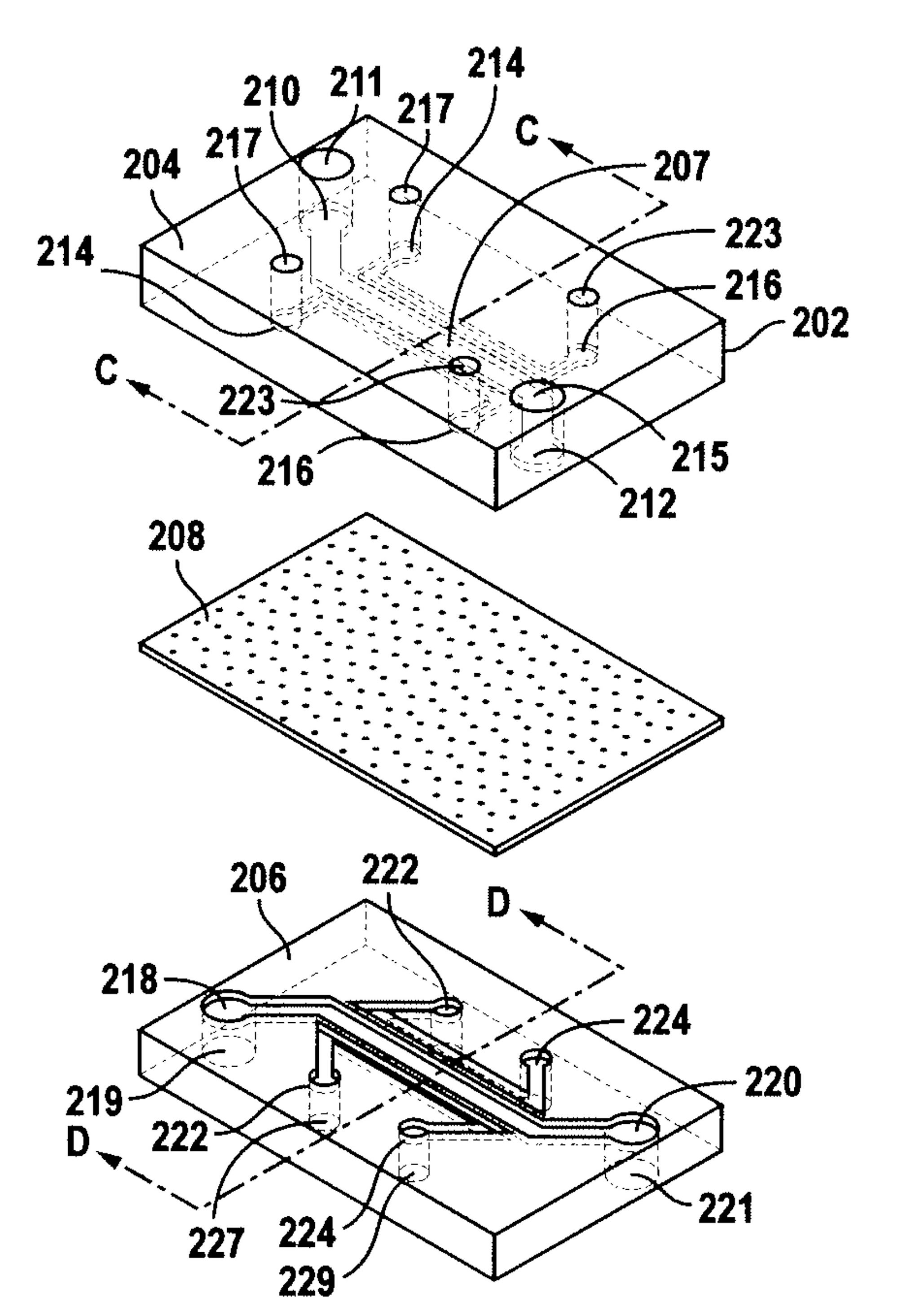
The Wyss Institute reports that data from preclinical studies using its Human Alveolus Chip were included in an Investigational New Drug application submitted to the US Food and Drug Administration by Cantex Pharmaceuticals. Cantex licensed the drug candidate from Harvard University and is seeking to begin Phase 2 clinical trials for treatment of COVID-19. The inclusion of Organ Chip data in this filing is significant because it puts a human-relevant laboratory model into a formal drug-development process that has historically relied heavily on animal testing. An alveolus is a tiny air sac in the lung where oxygen enters the blood, and the Alveolus Chip is designed to model key features of that lung environment. The milestone does not mean the chip has replaced clinical trials or established that the drug works in people. Rather, it shows that preclinical evidence generated with this type of system can contribute to the package regulators review before human testing moves forward. The Wyss Institute also points to a related policy shift: its Organ Chip results helped support passage of the FDA Modernization Act 2.0 in 2022. Together, the regulatory filing and the law suggest a widening path for non-animal methods, including organs-on-chips, to inform drug safety and effectiveness decisions.
A Lung Model Enters a Regulatory Submission
Cantex Pharmaceuticals included findings from studies using the Wyss Institute's Human Alveolus Chip in its Investigational New Drug, or IND, application to the FDA. An IND is a request that allows a developer to provide a drug candidate to people in a clinical study after supplying the agency with preclinical information and a plan for the proposed trial.
In this case, Cantex is seeking to initiate Phase 2 trials of a Harvard-licensed drug for COVID-19. Phase 2 studies generally examine whether a treatment shows evidence of benefit in people with a disease while continuing to evaluate safety, but the source does not describe the drug, its specific chip-study results, or the FDA's decision on the application.
What an Alveolus Chip Models
The name Human Alveolus Chip refers to a model of the lung's alveoli, the microscopic sacs where inhaled oxygen crosses into the bloodstream and carbon dioxide moves in the opposite direction. A useful analogy is a highly simplified, living version of a building's ventilation interface: it brings two distinct spaces close together so researchers can study what passes between them and how the barrier responds under stress.
Organ Chips are small laboratory devices that culture human cells in organized compartments meant to recreate selected features of an organ. Rather than attempting to reproduce an entire lung, the approach focuses on a defined biological function or interface that may be relevant to how a disease develops or how a potential medicine acts.
Why Preclinical Evidence Matters
Before a drug enters clinical testing, developers collect preclinical evidence, meaning information gathered before studies in human volunteers or patients. These studies are intended to help investigators understand possible effects of a candidate treatment and build a rationale for the next stage of development.
Animal studies have long been a standard source of preclinical data. The Wyss Institute frames the Cantex filing as an important step because Organ Chip evidence can now be included alongside other material in a regulatory submission, offering a model built with human cells for questions where human biology may be especially relevant.
A Change in FDA Policy
The Institute connects this development with the FDA Modernization Act 2.0, passed in 2022. According to the source, results from Wyss Organ Chips helped enable the law, which authorizes non-animal methods for testing drug safety and efficacy, or whether a treatment is safe and whether it produces its intended effect.
The law does not require every developer to use an organ-on-a-chip system, and it does not eliminate the need for careful evidence. Its importance is that it explicitly opens the door to approaches beyond animal testing, including organ-on-a-chip technology, when developers are generating data for drug development and regulatory review.
Why This Matters
The Cantex IND provides a concrete example of Organ Chip data being used in a pathway toward human clinical research. For the field, that is more consequential than a demonstration confined to a laboratory paper: it places the technology within the practical documentation a company assembles when asking regulators for permission to advance a treatment.
For patients and drug developers, the broader promise is not a shortcut around safety testing. It is the possibility of using human-cell models to ask more targeted questions early, potentially helping researchers decide which candidates and experiments deserve the substantial time and resources required for clinical trials.
What Comes Next
The next meaningful test will be continued use of Organ Chips across more drug programs and regulatory submissions, with each application judged on the quality and relevance of its evidence. The Wyss Institute's reported milestone, paired with the FDA Modernization Act 2.0, indicates that organs-on-chips have moved closer to being a recognized part of the evidence base used to develop medicines.