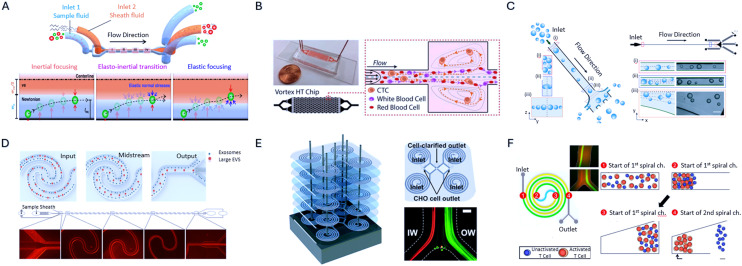
Integrated microfluidic biosensors are becoming one of the most important toolsets in modern biology and diagnostics because they combine two jobs that used to happen separately: moving tiny samples through miniature channels and reading out what is in those samples with a sensor. The review article describes how that merger is pushing life science toward faster, more quantitative, and more portable testing. In practical terms, it means researchers and clinicians can work with very small volumes of blood, saliva, cells, or environmental samples while still getting highly sensitive measurements. The authors survey a broad range of designs, from systems that sort cells by how they move in flowing liquid to chips that use light, electricity, sound, or surface chemistry to identify molecules. They also map out the kinds of targets these devices can detect, including DNA, RNA, proteins, exosomes, whole cells, and even small organisms. Just as important, the paper does not treat this as a niche engineering topic: it frames these chips as platforms for human and animal health, environmental monitoring, and point-of-care testing, where a result is needed close to the patient rather than in a central lab. The overall message is that integrated chips are no longer just clever prototypes; they are steadily turning into practical systems that could reshape how measurement-driven biology gets done.
Why integration changes the game
A useful way to picture a microfluidic device is to imagine a tiny plumbing system etched onto a chip. Instead of sending a sample through several bulky instruments, the chip can guide, mix, separate, and prepare it in channels so small that fluid behavior becomes highly controllable.
The biosensor part then acts like the chip's set of eyes and ears. It translates a biological event, such as a protein binding to an antibody or a strand of DNA pairing with its match, into a measurable electrical, optical, or mechanical signal.
The review argues that putting those functions together creates a strong synergy, meaning the combined system can do more than either part alone. Microfluidics improves sample handling and reduces reagent use, while the sensor delivers immediate detection, allowing real-time monitoring rather than delayed lab analysis.
The many forms of microfluidics
The paper begins by walking through several branches of microfluidics that already support quantitative biology. One is 3D dynamic cell culture, which grows cells in environments that better mimic living tissue than flat plastic dishes do.
It also covers inertial microfluidic separation, where particles or cells sort themselves in flowing liquid because of hydrodynamic forces. That sounds abstract, but the basic idea is simple: when fluid moves through a carefully designed channel, different objects drift into different positions, making separation possible without complicated labels.
Other methods use physical forces more directly. Acoustofluidics uses sound waves to move or organize particles, dielectrophoresis uses electric fields to manipulate cells based on their electrical properties, and optofluidics combines fluid handling with optical components so light can probe what is happening inside the chip.
The review also highlights microfluidic immunoassays, which miniaturize tests built around antibodies that recognize specific biological targets. These systems matter because immunoassays are already familiar in medicine, so shrinking them onto chips could make established tests faster and more portable.
The sensor technologies on the chip
On the sensing side, the authors describe several major biosensor classes that can be integrated with microfluidic devices. Electrochemical sensors detect changes in current, voltage, or impedance when a target molecule interacts with the sensing surface, making them attractive for compact and low-power devices.
Electrophysiological sensors are designed to measure electrical activity from cells or tissues, which can be especially useful in neuroscience or drug testing. These sensors can turn a microfluidic chip into a controlled mini-lab for watching how living cells respond over time.
The review also discusses plasmonic, Raman, and quantum sensors. In plain language, these are optical or physics-based systems that can pick up extremely subtle signals: plasmonic sensors track changes at metallic surfaces when molecules bind, Raman methods read molecular vibrations like a chemical fingerprint, and quantum approaches aim to push sensitivity even further by exploiting effects that emerge at very small scales.
What these devices can detect
One striking point in the review is the sheer range of biological targets these integrated systems can handle. The list includes DNA and RNA, the genetic molecules that store and transmit biological instructions, as well as proteins, which carry out much of the work inside cells.
The authors also discuss detection of exosomes, tiny membrane-wrapped particles released by cells that can carry disease-related signals. Because exosomes are small and often rare, they are a good example of why careful sample handling and highly sensitive detection need to work together on the same platform.
Beyond molecules, integrated chips can analyze whole cells and small organisms across a size range stretching from nanometers to millimeters. That breadth matters because it suggests these devices are not tied to one kind of assay; they can serve as flexible platforms across very different branches of biology and medicine.
Where the applications are heading
The review places heavy emphasis on biomedical use. For human and animal health, integrated chips could support molecular diagnostics, meaning tests that look for specific biological markers of infection, disease, or treatment response directly from small samples.
They are also well suited to point-of-care testing, where the aim is to run a test near the patient rather than sending the sample to a distant laboratory. That can shorten turnaround times and make testing more accessible in clinics, field settings, or places with limited infrastructure.
Environmental sensing is another major area. A portable chip that can process a sample and detect a target on site could help monitor contaminants, pathogens, or ecological changes without relying on full laboratory setups.
Why This Matters
This review is important because it captures a shift from isolated chip components to fully integrated systems. In biology, the hard part is often not just detecting something but preparing the sample, isolating the right target, and measuring it accurately under real-world conditions; these devices are designed to do that workflow in one place.
That integration could make quantitative life science more reproducible and more scalable. If a chip handles fluids in a controlled way and couples that to immediate sensing, it can reduce variability, lower sample and reagent needs, and increase throughput, which is the ability to run many tests efficiently.
The review also points to a practical signal of maturity: commercial products already exist. The presence of successful products suggests the field has moved beyond concept demonstrations, even if many promising systems still face engineering, manufacturing, and regulatory hurdles before widespread adoption.
The challenges ahead
The authors do not present integration as an automatic success story. A device can perform beautifully in a controlled experiment yet struggle when faced with messy real samples, manufacturing constraints, or the need for robust long-term operation outside expert labs.
Those challenges will shape the next phase of development. To become routine tools, integrated microfluidic biosensors will need reliable fabrication, user-friendly design, and strong validation in practical settings, but the review makes clear that the pieces are coming together for that transition.
Looking ahead, the field seems likely to move toward chips that are not only smaller and more sensitive, but also more complete as analytical systems. If researchers can keep improving how these devices handle samples, detect targets, and translate results into usable information, integrated microfluidic biosensors could become standard instruments for diagnostics, biology, and environmental monitoring rather than specialized tools confined to advanced labs.