Source: ACS Omega, by Heng Zhang; Mengqi Bai; Jingwen Wang; Zixuan Sun; Feiyi Zhang; Mengxiao Zhao; Jiaming Tang; Shaobo Wu; Zengkai Wang; Liu Lei (August 25, 2026). AI-generated summary by biochip.com, published . Not independently reviewed.
Key takeaways
- An ACS Omega review examines biosensor interfaces for bloodstream infection diagnosis through signal transduction, biorecognition, and antifouling design.
- Blood culture may require 48 to 96 hours for an actionable result, motivating faster point-of-care biosensor platforms.
- Whole-blood compatibility, device integration, standardization, and clinical validation remain challenges for these biosensors.
Heng Zhang and colleagues at Jiangsu University and Zhenjiang Hospital of Chinese Traditional and Western Medicine survey how biosensor interface engineering could speed the diagnosis of bloodstream infections. Their research review focuses on the engineered surface where a blood sample meets a sensor, a small but decisive zone that must capture a biological target, resist contamination, and convert that event into a measurable signal. Bloodstream infection, or BSI, occurs when bacteria enter the blood and can rapidly trigger systemic inflammation, septic shock, and multiorgan failure. The review places the mortality of BSI at 20% to 50% and notes that more than 30% of cases are hospital acquired. Existing diagnostic tools can identify pathogens, but each faces tradeoffs involving turnaround time, cost, sensitivity, and interference from the many cells and proteins in blood. The authors organize recent biosensing work around signal-transduction methods, biological recognition elements, and antifouling surface designs. They also distinguish sensors that look directly for intact bacterial cells from those that detect bacterial molecules or signs of the body's response. The central message is that a useful point-of-care blood test will need more than a sensitive detector: it will need an interface designed to work reliably in whole blood.
Why Bloodstream Infections Demand Speed
BSI is a medical emergency because clinicians need to identify the responsible pathogen quickly enough to guide antimicrobial treatment. Accurate identification and resistance profiling can support earlier targeted therapy, reduce unnecessary use of broad-spectrum antibiotics, and help limit antimicrobial resistance.
Blood culture remains the gold standard for finding the cause of bloodstream infection, with a reported positivity rate of roughly 80% to 90%. Yet cultures generally need 24 to 72 hours to flag positive, followed by another 24 to 48 hours for species identification and antimicrobial-susceptibility testing, leaving a complete actionable result after about 48 to 96 hours.
The Limits of Current Testing
Culture can also miss infections after a patient has received antibiotics, with a reported false-negative rate of up to 15% to 30%. Immunological tests can return results sooner, but cross-reactivity and sensitivity typically below 70% in samples with low bacterial loads restrict their routine use.
Molecular approaches, including multiplex polymerase chain reaction, or PCR, and metagenomic next-generation sequencing, or mNGS, can improve speed and sensitivity. However, these methods may detect nucleic acids from dead bacteria, may not cover every resistance gene, and can be costly. Mass spectrometry is another diagnostic route, but the review identifies a continuing need for methods that better combine rapid operation, accuracy, affordability, and point-of-care use.
The Interface Is the Working Surface
A biosensor's interface can be thought of as the doormat and reception desk of a diagnostic device. It is the first surface a sample encounters, so it must admit the target of interest while keeping unwanted material from clogging the system or generating misleading signals.
For bloodstream-infection testing, that job is unusually hard because blood is a complex mixture of cells, proteins, and other components. The review identifies three linked design priorities: how the device converts a recognition event into a signal, what biological component recognizes the target, and how the surface prevents unwanted material from adhering.
Three Parts of a Biosensing Strategy
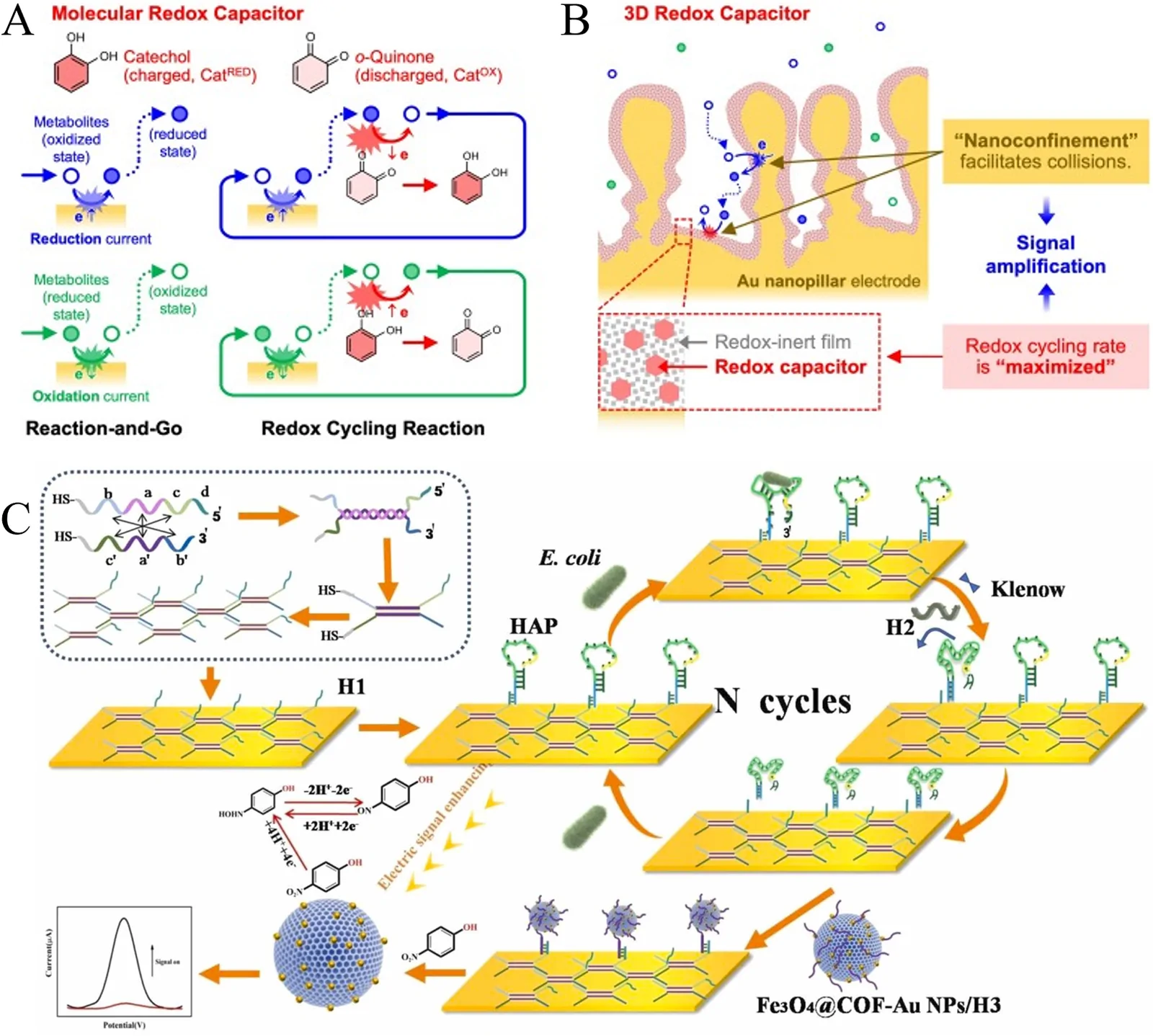
Signal transduction is the step that turns target recognition into a readable output. A sensor might register a change that occurs when a pathogen or biomarker binds at its surface, but the review stresses that this signal must remain clear despite interference from the surrounding blood matrix.
Biorecognition elements are the molecular components that provide selectivity, acting like a lock designed to recognize a particular key. In a BSI sensor, they are intended to help distinguish bacterial cells, bacterial biomarkers, or host-response biomarkers from the many other substances circulating in blood. The third component, an antifouling surface, reduces nonspecific attachment, which is unwanted sticking that can obscure the true signal.
Direct and Indirect Routes to Detection
Direct sensing seeks intact bacterial cells themselves. This approach aims to identify the pathogen in the sample, which is particularly valuable when clinicians need information that can guide organism-specific treatment.
Indirect sensing instead looks for bacterial biomarkers or host-response biomarkers, measurable signs of how the body is responding to infection. These two approaches answer related but different questions: one targets the suspected invader, while the other tracks biological evidence associated with infection. The review treats both as relevant paths for BSI diagnosis rather than presenting either as a complete solution on its own.
From a Sensitive Surface to a Usable Device
A promising sensing surface is not automatically a practical clinical test. The authors identify whole-blood compatibility, device integration, standardization, and clinical validation as remaining challenges for next-generation diagnostic platforms.
Whole-blood compatibility means that a system must function with actual blood rather than only simplified laboratory samples. Device integration means bringing sample handling, target capture, signal measurement, and result reporting together in a format suitable for use near the patient. Standardization and clinical validation are equally important because a test must generate consistent, meaningful results before it can support real treatment decisions.
Why This Matters
The review makes a useful shift in perspective: faster BSI testing is not simply a matter of choosing a more sensitive detection method. The surface chemistry and biological design at the sensor interface may determine whether a device can find a rare target in blood without being overwhelmed by background material.
That focus matters for point-of-care diagnostics, where a platform must be simple enough to use outside a specialized laboratory while still producing a trustworthy result. Better interface design could help biosensors address the same clinical pressure that has kept blood culture central despite its slow turnaround: clinicians need dependable pathogen information when time is short.
What Comes Next
The path forward will depend on connecting interface-level advances with integrated devices and clinical testing in whole blood. Zhang and colleagues position capture performance, antifouling behavior, and signal transduction as parts of one system, suggesting that future BSI biosensors will be judged not only by what they can detect, but also by whether they can do so consistently in the complex conditions of patient care.