Source: UBC Microbiology and Immunology, by Lidija Malic, University of British Columbia; Peter G. Y. Zhang, University of British Columbia; Pamela J. Plant, University of British Columbia; Liviu Clime, University of British Columbia; Christina Nassif, University of British Columbia; Dillon Da Fonte, University of British Columbia; Evan E. Haney, University of British Columbia; Byeong-Ui Moon, University of British Columbia; Victor Mun-Sing Sit, University of British Columbia; Daniel Brassard, University of British Columbia; Maxence Mounier, University of British Columbia; Eryn Churcher, University of British Columbia; James T. Tsoporis, University of British Columbia; Reza Falsafi, University of British Columbia; Manjeet Bains, University of British Columbia; Andrew Baker, University of British Columbia; Uriel Trahtemberg, University of British Columbia; Ljuboje Lukic, University of British Columbia; John C. Marshall, University of British Columbia; Matthias Geissler, University of British Columbia; Robert E. W. Hancock, University of British Columbia; Teodor Veres, University of British Columbia; Claudia C. dos Santos, University of British Columbia (May 1, 2025). AI-generated summary by biochip.com, published . Not independently reviewed.
Key takeaways
- A team published a six-gene Sepset expression signature for early-stage sepsis in Nature Communications in May 2025.
- The researchers developed a portable centrifugal microfluidic blood-testing device for bedside detection of the Sepset signature.
- The reported material does not establish sample size, diagnostic accuracy, or independent clinical validation of the platform.
Researchers associated with the University of British Columbia have paired machine learning with a portable centrifugal microfluidics blood-testing platform to support bedside prediction of sepsis. The work, published in Nature Communications in May 2025, centers on a six-gene expression signature called Sepset. Sepsis is a dangerous, dysfunctional immune response to infection that can progress to multi-organ failure. Because mortality rises as diagnosis and treatment are delayed, a fast way to identify the condition could help clinicians act earlier. The team used machine learning to analyze blood samples from people suspected of having sepsis and identify a gene pattern linked to immune-cell reprogramming. It then developed a portable device intended to test for that pattern at the bedside, rather than relying solely on a distant laboratory workflow. The platform connects a biological signal in blood with a compact testing format, making the sensing technology central to the effort. The result is a strategy for turning a complex immune response into a more immediately usable clinical measurement.
Why Sepsis Demands Faster Decisions
Sepsis begins with infection, but the greatest danger comes from the body's dysregulated response to it. Instead of mounting an orderly defense, the immune system can become profoundly disrupted, with consequences that extend beyond the original infection and can damage multiple organs. The condition is therefore not simply a matter of finding a pathogen: clinicians must recognize a rapidly changing immune state in a patient who may already be critically ill.
That makes timing especially important. The team notes that mortality increases alongside delays in diagnosis and treatment, so a test that can be performed near the patient could be useful when clinical decisions need to happen quickly. Bedside testing does not replace clinical judgment, but it can potentially bring relevant biological information closer to the moment when treatment choices are made.
A Six-Gene Immune Signature
The core biological finding is the Sepset signature, a pattern of expression across six genes. Gene expression refers to how actively cells use particular genes to produce RNA, an early step in making the molecules that help cells function. It is a little like checking which instructions are open on a workbench rather than merely looking at the full instruction manual stored nearby.
In this case, the six-gene pattern reflects immune-cell reprogramming associated with early-stage sepsis. Immune cells can change their behavior dramatically during severe infection, switching on some genetic programs and dialing down others. By reducing that broader shift to six measurable gene signals, the team created a biomarker, meaning a biological measurement that can help indicate a disease state.
What Machine Learning Contributed
Machine learning helped identify the Sepset pattern from blood samples collected from patients suspected of having sepsis. In plain terms, machine learning can sift through many possible combinations of measurements and search for a pattern that distinguishes one condition from another. Here, the approach focused on gene-expression data, looking for a compact signature that captured the immune changes characteristic of sepsis.
The value of a six-gene signature is not that it captures every feature of the immune system. Its practical appeal is that it narrows a complex biological response into a smaller set of targets that a diagnostic device can measure. That bridge between data analysis and assay design is important: a pattern discovered computationally becomes more useful when it can be tested outside a specialized research workflow.
How Centrifugal Microfluidics Fits In
Microfluidics is the control of very small volumes of fluid through tiny channels and chambers. A familiar analogy is a network of miniature plumbing, where blood and test reagents move through carefully designed pathways rather than through full-size tubes. Centrifugal microfluidics uses spinning motion to help move and manage those liquids inside the device.
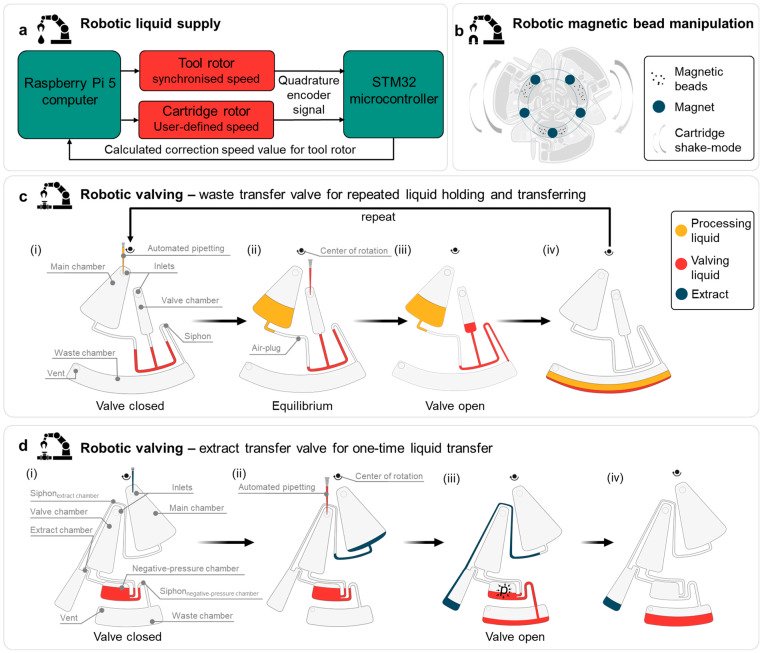
The team developed a portable blood-testing device for Sepset using this centrifugal microfluidics approach. The platform is designed to enable faster detection of sepsis at the bedside, linking sample handling and biomarker measurement in a compact format. That matters because a molecular signature only becomes clinically accessible when the physical test can process blood and deliver a usable result close to where patients are being evaluated.
From Molecular Signal to Bedside Test
Conventional laboratory testing can involve moving samples through several steps before a result reaches the clinical team. A portable platform aims to shorten the distance between a blood draw and the information needed for care. For suspected sepsis, where the underlying immune response can be difficult to recognize early, that change in workflow could be as meaningful as the biomarker itself.
The Sepset device is built around a specific clinical question: whether the patient's blood carries a six-gene expression pattern associated with early sepsis. This targeted design distinguishes it from a broad research assay that measures as much biology as possible. It concentrates on a defined immune signature and uses a microfluidic format intended for bedside use.
Why This Matters
This work illustrates how biochip-style technologies can turn molecular biology into a practical sensing problem. The machine-learning component identifies a concise pattern from complex blood data, while the centrifugal microfluidic device provides a path to measure that pattern in a portable system. Together, those pieces address a central challenge in sepsis care: recognizing a dangerous immune response quickly enough for the result to matter.
It also shows why device engineering and biomarker discovery need to move together. A promising gene signature has limited bedside value if it requires an impractical testing workflow, while a portable device needs a meaningful biological target. Sepset brings those two requirements into the same platform, connecting a defined six-gene signal with a blood test designed for use near the patient.
What Comes Next
The May 2025 publication places the Sepset platform within the growing effort to make molecular diagnostics faster and more accessible in acute care. Its next significance will depend on how the system performs across the varied patients and clinical settings where sepsis is suspected. For now, the work provides a clear example of a centrifugal microfluidic device built around a machine-learning-derived immune signature, with the goal of bringing earlier sepsis detection to the bedside.
Topics: Microfluidics · Diagnostics & precision medicine · Infectious diseases
Start here: Microfluidics explained