Microfluidic point-of-care devices aim to shrink complex lab testing onto a chip small enough to use near the patient, and a recent review argues that this could make earlier diagnosis faster, cheaper, and more accessible. Instead of sending samples to a central laboratory, these systems guide tiny amounts of blood, saliva, urine, or other fluids through miniature channels where chemical or biological reactions can be measured in minutes. The review highlights cancer as a major use case, including chip-based systems that can detect biomarkers and even mimic aspects of a tumor’s surroundings to study drug responses. It also makes clear that the promise is not just about clever engineering. For these devices to matter in clinics, they must be reliable, affordable, easy to manufacture at scale, and simple enough for non-specialists to use. One practical issue the authors emphasize is materials: the common chip material PDMS, or polydimethylsiloxane, works well for early prototyping but creates headaches for mass production. By contrast, thermoplastic elastomers and related industrial polymers may offer a more realistic path to large-scale manufacturing. The review ultimately reads as both a progress report and a reality check, showing that point-of-care microfluidics is advancing quickly, but still has to bridge the gap between elegant lab prototypes and robust clinical tools.
What Microfluidic Point-of-Care Devices Actually Do
A simple way to think about microfluidics is as plumbing at the scale of a grain of sand. Instead of pipes and pumps in a full laboratory, a chip contains tiny channels that move minute droplets of fluid past sensors, reagents, or capture surfaces designed to recognize disease signals.
That matters for diagnosis because many medical tests do not require large samples. If a device can accurately detect a biomarker, meaning a measurable sign of disease, from a very small volume, it can reduce waiting time and bring testing closer to where care happens: a clinic, bedside, ambulance, or even the home.
Why Early Diagnosis Is a Good Fit
Early diagnosis often depends on finding subtle signals before symptoms become severe. Microfluidic devices are attractive here because they can concentrate analytes, automate multiple steps on one platform, and reduce the amount of sample and reagents needed.
The review frames this as a practical advantage rather than just a technical one. A compact chip that combines sample handling, mixing, separation, and detection could lower costs and simplify workflows, especially in settings where full laboratory infrastructure is limited.
Cancer Detection and Tumor-on-a-Chip Systems
One of the most striking examples in the review is cancer. The authors note that microfluidic technology can recreate parts of the tumor microenvironment, the local physical and chemical conditions surrounding a tumor, on a chip. That gives researchers a controlled way to grow tumor cells and test anti-cancer drugs without relying as heavily on slower, more expensive conventional models.
An everyday analogy is a flight simulator for cancer research. The chip does not reproduce the entire body, but it can mimic key features closely enough to let scientists test how cells behave and how drugs perform under realistic conditions. According to the review, that kind of screening can save companies enormous research and development costs while also supporting diagnostic work.
Biomarkers, Multiplexing, and On-Chip Testing
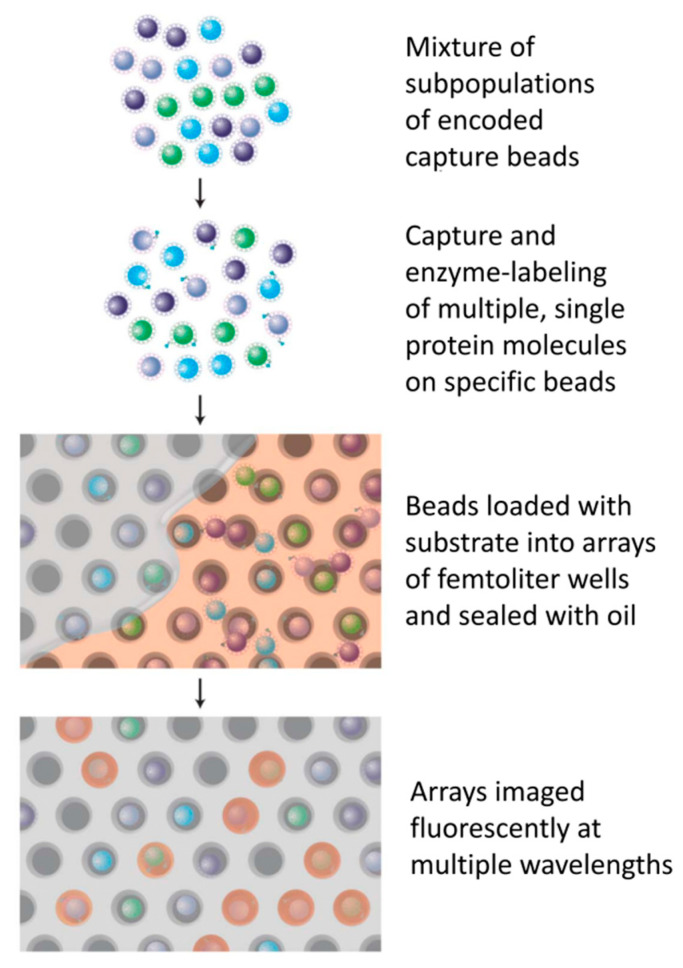
The source also points to devices that detect cancer biomarkers, including immunosensor arrays and standalone biochips designed for point-of-care monitoring. An immunosensor is a sensor that uses the specific binding between an antibody and its target, much like a lock recognizing the right key, to identify proteins linked to disease.
Some of the cited work focuses on multiplex detection, meaning several biomarkers can be measured at the same time rather than one by one. This is important because diseases such as cancer are rarely captured by a single signal. A panel of markers can improve confidence and give a fuller picture of progression or treatment response.
The Manufacturing Problem Behind the Science
The review does not treat chip fabrication as a side issue. It makes the case that the choice of material can determine whether a promising diagnostic tool remains a lab curiosity or becomes a product used by large numbers of patients.
The authors describe how PDMS chips are relatively easy to design and replicate during early experimental work once a template is made in a dust-free room. That makes PDMS valuable for rapid prototyping, where researchers need to test ideas quickly and change designs often.
But the same material becomes less attractive when demand grows. The review says PDMS is not well suited to situations requiring large output, which is exactly the challenge for point-of-care diagnostics intended for broad clinical deployment.
Why Thermoplastic Elastomers May Matter More
For scale-up, the review points to thermoplastic elastomers as a more practical alternative. These materials can be processed with established industrial polymer manufacturing methods, which makes them easier and cheaper to produce in large volumes than PDMS-based chips.
That may sound like a mundane engineering detail, but it can shape who actually benefits from the technology. A device that performs well in a research lab but cannot be manufactured consistently at low cost will struggle to reach hospitals, clinics, and low-resource settings where rapid diagnosis could have the biggest impact.
Why This Matters
The review’s central message is that point-of-care microfluidics sits at the intersection of diagnosis, engineering, and health-system logistics. Better early detection is not only about analytical sensitivity, or how faint a signal a test can detect. It is also about whether a device can be made reliably, shipped widely, used simply, and trusted by clinicians.
That is especially relevant for diseases like cancer, where timing shapes outcomes. If testing can move closer to the patient while maintaining quality, clinicians may be able to identify disease earlier, monitor progression more often, and make treatment decisions faster.
From Elegant Prototype to Useful Tool
The review presents a field with clear momentum but unfinished work. Researchers have shown that microfluidic chips can model tumors, detect biomarkers, and integrate multiple laboratory steps onto a small platform. The remaining challenge is to turn those capabilities into durable, manufacturable systems that fit real clinical practice.
If that transition succeeds, microfluidic point-of-care devices could become less like specialized research instruments and more like everyday diagnostic companions. The science is already showing what is possible; the next phase will depend on materials, manufacturing, validation, and whether developers can make these chips as practical as they are clever.