Source: Elveflow, by Guilhem Velve Casquillas; Timothée Houssin. AI-generated summary by biochip.com, published . Not independently reviewed.
Microfluidic chips shrink an entire fluid-handling system down to networks of tiny channels, often small enough to fit on a palm-sized device. The review article on microfluidics describes these chips as platforms built from etched or molded microchannels that can mix liquids, pump them, sort particles, or tightly control a biochemical environment. In simple terms, they work a bit like a city’s plumbing grid miniaturized thousands of times, with inlets and outlets linking the outside world to a carefully designed internal flow system. That small scale matters because fluids behave differently in narrow channels, letting researchers manipulate tiny sample volumes with unusual precision. The review also traces how the field grew out of semiconductor manufacturing, borrowing fabrication methods such as photolithography before expanding into newer materials and production techniques. Over time, microfluidic devices moved beyond rigid silicon and glass and began using polymers such as PDMS, short for polydimethylsiloxane, which made prototyping easier and cheaper. The larger goal has been ambitious from the start: to create lab-on-a-chip systems that integrate many steps of biological, chemical, and medical testing onto one compact platform. That vision helps explain why microfluidics remains so important across diagnostics, research, and device engineering.
What a Microfluidic Chip Actually Is
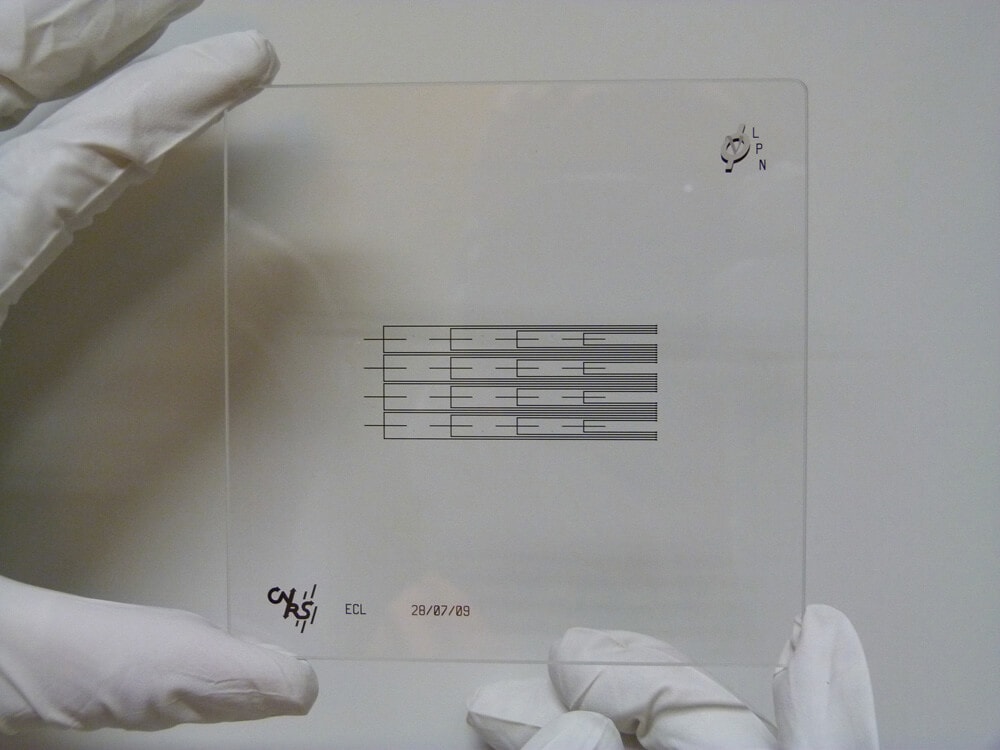
A microfluidic chip is essentially a patterned network of very small channels formed inside a solid material. Those channels are linked together so the device can perform specific tasks such as mixing fluids, directing them to different paths, or maintaining a stable local chemical environment.
The chip also needs a way to communicate with the larger world outside it. That is why the review highlights inputs and outputs pierced through the device, which act as interfaces between the ordinary, visible-scale “macro” world and the tiny “micro” environment inside the chip.
Why Tiny Channels Change the Rules
If you imagine water rushing through a household pipe, you are thinking at the everyday scale where turbulence and splashing are common. In a microfluidic channel, the situation is different: fluids move through spaces so small that flow can become much more controlled, which is useful when researchers need repeatable handling of minute samples.
That control is one reason microfluidics became attractive for biology and chemistry. When samples are precious, expensive, or available only in tiny amounts, a small device that can guide droplets or streams with precision offers clear practical advantages.
How the Field Borrowed from the Chip Industry
The review makes clear that early microfluidic chip fabrication grew directly out of the semiconductor industry. In particular, photolithography - a process that uses light to pattern structures on a surface - provided a way to create highly defined channel layouts in solid materials.
At first, that meant many devices were made from silicon or glass. These materials could support precise manufacturing, but they also tied microfluidic development to the heavy infrastructure of microelectronics fabrication, which limited how easily some labs could build or iterate new designs.
The Shift to More Materials
As the field matured, researchers gained more choices. The review notes that microfluidic chips can now be produced from polymers, ceramics such as glass, semiconductors such as silicon, and even metals, depending on what the application requires.
This expansion happened because fabrication methods also diversified. The article points to techniques including deposition, electrodeposition, etching, bonding, injection molding, embossing, and soft lithography, a family of methods especially associated with PDMS that made microfluidic prototyping much more accessible.
Why PDMS Became So Popular
PDMS, or polydimethylsiloxane, is a flexible polymer that became a staple of microfluidics because it is easier to work with than traditional hard materials. Think of it like the difference between carving channels into stone and casting them into a flexible mold: both can produce structure, but one is much friendlier for rapid experimentation.
That does not make silicon and glass obsolete. Rather, the choice of material depends on what the device must do, how durable it needs to be, and how it will be manufactured at scale, but PDMS helped widen participation by lowering practical barriers to device development.
From Single Functions to Lab-on-a-Chip Systems
The review places microfluidics within a broader effort to build laboratories on a chip. This idea refers to integrating multiple experimental or diagnostic steps - sample handling, mixing, sorting, and environmental control - onto one miniaturized device instead of spreading them across large benchtop instruments.
That integration goal matters because many biological and biomedical workflows involve long chains of separate operations. If those steps can be combined into one chip, testing can become more compact, more automated, and potentially more efficient.
Limits in the Commercial Ecosystem
The review also points out a practical issue that still shapes the field: only a limited number of manufacturers offer a broad range of microfluidic chip types or materials. That matters because scientific progress is not only about ideas; it also depends on whether researchers can reliably obtain devices suited to their experiments.
A narrow supplier base can slow translation from prototype to wider use. Even when the underlying science is sound, access to manufacturing options often determines whether a promising design remains a lab demonstration or becomes a routine tool.
Why This Matters
This review is not a single experimental result or product launch. Instead, it captures a key technological transition: microfluidics evolved from a niche, fabrication-heavy approach rooted in microelectronics into a broader platform with multiple materials and manufacturing routes. That shift opened the door to more flexible device design and made the field more relevant to biology, chemistry, and medicine.
For readers outside the field, the main takeaway is simple. Microfluidic chips are small because smallness gives scientists leverage: tighter control, lower sample use, and the ability to combine many steps into one device. The ongoing challenge is to turn that elegant engineering into robust, widely available tools that can serve real research and clinical needs.
Looking Ahead
The review suggests that the future of microfluidics depends as much on fabrication and standardization as on clever channel design. As materials and production methods continue to improve, the original lab-on-a-chip vision becomes more realistic. The field’s promise lies in making complex fluid-based experiments simpler, smaller, and more integrated without losing the precision that made microfluidics attractive in the first place.