Source: Military Medical Research, by Xin Wang; Xian-Zhe Hong; Yi-Wei Li; Ying Li; Jie Wang; Peng Chen; Bi-Feng Liu. AI-generated summary by biochip.com, published . Not independently reviewed.
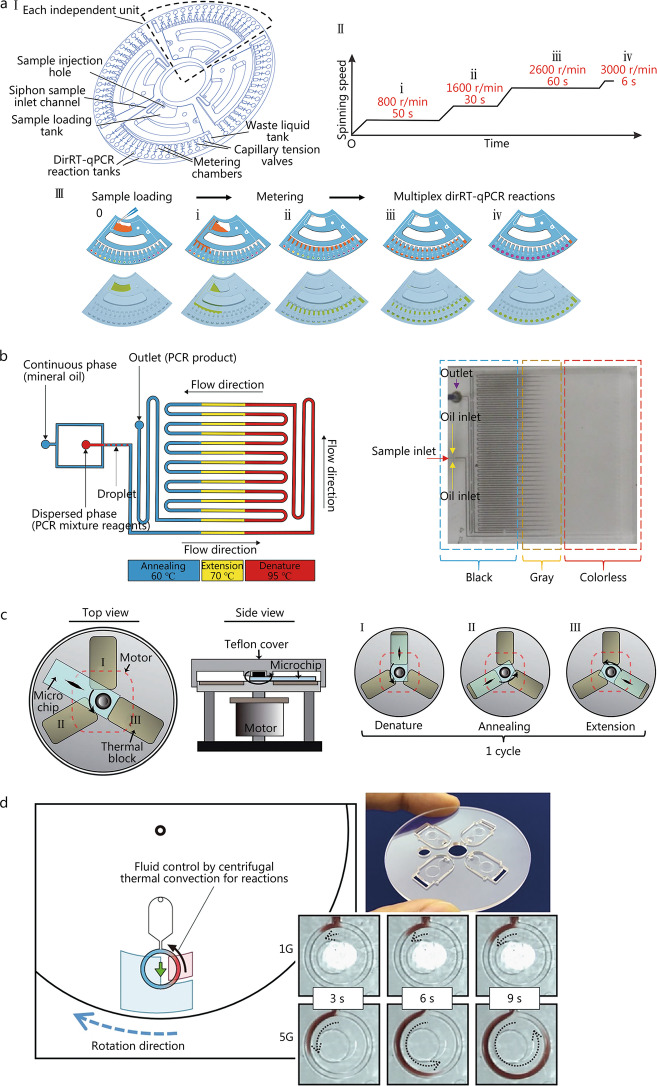
Microfluidic diagnostic devices are becoming one of the most practical ways to bring molecular testing for infectious diseases out of centralized labs and closer to patients. The core idea is simple: instead of running a test in a room full of large instruments, these systems move tiny amounts of fluid through miniature channels on a chip, where steps such as sample preparation, amplification, and readout can happen in one compact format. The source article argues that this matters most during outbreaks, when speed, portability, and low cost can determine whether health systems catch infections early or fall behind. It highlights how the COVID-19 pandemic, caused by severe acute respiratory syndrome coronavirus 2 or SARS-CoV-2, pushed the field into the spotlight by exposing the limits of traditional lab-centered testing. Compared with standard molecular diagnostics, microfluidic point-of-care testing can shorten turnaround times to minutes and reduce the need for trained staff, large facilities, and complex workflows. That makes these tools especially attractive in resource-limited settings, remote areas, and emergency environments such as field clinics or battlefields. At the same time, the article makes clear that today’s commercial devices are still catching up to hospital-grade performance in sensitivity, specificity, automation, and integration. In other words, the promise is real, but the engineering work is not finished.
Why tiny channels can change testing
If a standard laboratory is like a full industrial kitchen, a microfluidic device is more like a well-designed lunchbox that packs every tool into a small space. It handles fluids at a very small scale, often in channels too tiny to see clearly with the naked eye, so chemical reactions can happen quickly and with less reagent.
The article describes microfluidics as a platform that draws on micro-electro-mechanical systems, nanotechnology, and materials science to control fluids precisely. For infectious disease diagnostics, that precision matters because molecular tests depend on careful handling of samples, enzymes, and signals to detect the genetic material or other markers of a pathogen.
Why outbreaks make portability essential
During an epidemic, the value of a test is not just whether it works, but whether it can be used where the problem is unfolding. A compact point-of-care device can be deployed near sampling sites instead of forcing samples to travel to a distant lab, which cuts delays and reduces logistical bottlenecks.
The source emphasizes that this is particularly important in places with limited medical infrastructure. In resource-poor areas, and in settings such as wilderness medicine or battlefield care, a rapid on-site result can shape immediate decisions about isolation, treatment, and follow-up when formal laboratory support is hard to access.
What these devices do better than conventional tests
Traditional diagnostics often involve multiple separate steps: collecting the sample, preparing it, transporting it, amplifying the target, and reading the result. Microfluidic point-of-care testing tries to compress those steps into a more integrated workflow, sometimes simplifying or omitting parts of sample preparation and speeding up signal amplification and readout.
That compact workflow is one reason these devices can deliver answers within minutes rather than hours or days. The article also points to savings in sample volume and cost, which can become especially important when tests need to be scaled quickly during a public health emergency.
COVID-19 as a stress test for diagnostics
The COVID-19 pandemic gave microfluidics a real-world proving ground. As SARS-CoV-2 spread globally, health systems needed tests that were fast, accurate, and easy to deploy at scale, and that pressure renewed attention on technologies that could work outside traditional laboratories.
According to the article, the pandemic underscored the role of microfluidics in timely prevention and control. The crisis did not simply create demand for more tests; it also showed why decentralized testing matters, especially when centralized labs become overloaded or when rapid local screening is needed to break chains of transmission.
Where current commercial devices still fall short
The article is optimistic but not complacent. It notes that commercial microfluidic point-of-care devices are still trying to match modern hospital and laboratory tests on two crucial measures: sensitivity, meaning the ability to catch true positives, and specificity, meaning the ability to avoid false positives.
Many commercial systems were developed quickly during outbreaks by adapting conventional testing steps into a smaller format. That speed was useful, but it also means there is still room to improve efficiency, automation, integration, and overall analytical performance so these devices can move from emergency substitutes to trusted first-line tools.
Integration is the real engineering challenge
Building a portable test is not just about shrinking hardware. The harder task is combining every stage of a molecular assay into a device that is simple for users, robust in the field, and reliable across many conditions, all without sacrificing accuracy.
This is where the article sees major opportunities for development. A successful device has to unite fluid handling, chemical reactions, detection, and result interpretation in one smooth process, while also being manufacturable at scale and practical for widespread deployment.
Why This Matters
Infectious diseases spread through time and distance, so diagnostics that remove time and distance can change the public health response. A microfluidic point-of-care test does not merely make testing more convenient; it can help clinicians identify infections earlier, guide treatment faster, and support containment in places where conventional labs are unavailable or overwhelmed.
That matters beyond pandemics. The same features that help with COVID-19 response - portability, lower cost, small sample use, and quick results - also make these systems attractive for routine screening, rural health care, humanitarian settings, and sudden outbreaks of other pathogens.
What comes next
The direction of travel is clear: more compact, more automated, and more accurate molecular diagnostics delivered closer to the patient. If researchers and manufacturers can improve sensitivity, specificity, and integration while preserving the speed and convenience that make microfluidics attractive, these chips could become a standard layer of infectious disease detection rather than a niche emergency tool.