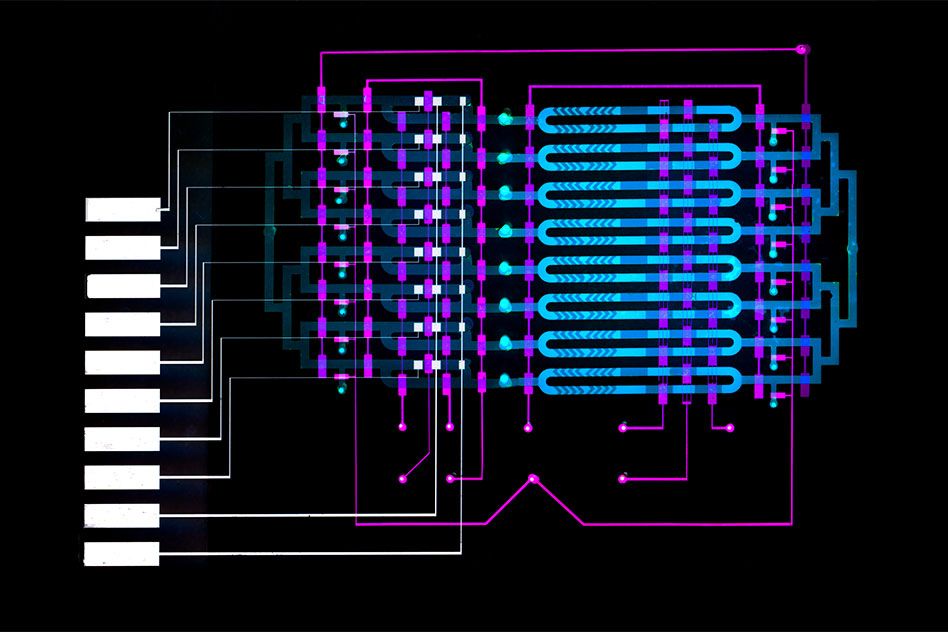
A new microfluidics device developed by researchers at MIT could make one of medicine’s most dangerous emergencies much easier to spot early. The target is sepsis, a life-threatening condition in which the body’s response to infection spirals into widespread inflammation, potentially damaging organs and causing shock. Today, diagnosing sepsis often depends on a mix of symptoms, blood work, and clinical judgment, which can take time and still leave uncertainty in the crucial early window. The MIT team’s system instead looks for a blood protein called interleukin-6, or IL-6, an inflammation signal that can rise before more obvious signs of sepsis appear. Their sensor can detect clinically meaningful IL-6 levels in about 25 minutes using just 5 microliters of blood, far less than a typical finger-prick sample. That tiny sample size matters because it could simplify testing at the bedside and reduce the burden on very sick patients. The work points to a faster, more sensitive way to identify sepsis before it progresses to septic shock. Just as important, the researchers say the same basic platform could be adapted to track multiple biomarkers at once, making it useful well beyond a single disease.
Why Sepsis Is So Hard to Catch
Sepsis is not an infection itself. It is the body’s overwhelming and dysregulated response to infection, and that response can rapidly trigger fever, fast heart rate, breathing problems, low blood pressure, and organ failure.
The challenge is that these symptoms can overlap with many other conditions. Doctors often have to combine vital signs, standard blood tests, imaging, and clinical observation before feeling confident enough to diagnose and treat aggressively.
A Blood Signal That Appears Early
Researchers have increasingly focused on biomarkers, measurable molecules in blood that can reveal what is happening inside the body. One of the most promising for sepsis is IL-6, a protein released during inflammation.
In people developing sepsis, IL-6 can climb hours before the full clinical picture becomes obvious. That makes it potentially valuable as an early warning signal, but there has been a practical problem: the amounts present in blood are still very small and hard for conventional lab assays to capture quickly.
How the New Device Works
The MIT system uses microfluidics, which means it manipulates extremely small amounts of liquid through tiny channels on a chip. Working at that scale helps the device bring target molecules into contact with detection chemicals more efficiently, speeding up analysis while using very little blood.
According to the researchers, the sensor can measure IL-6 concentrations as low as 16 picograms per milliliter. A picogram is one-trillionth of a gram, so this is a very small amount, and importantly it is below the range that signals sepsis, meaning the device is sensitive enough to catch clinically relevant levels.
Small Sample, Fast Answer
One of the most striking features is the sample size. The device needs only about 5 microliters of blood, roughly a quarter of the volume obtained from a finger prick and far below the roughly 100 microliters often required in lab-based protein biomarker tests.
That matters because less blood can mean easier collection, less discomfort, and the possibility of repeated testing in fragile patients. The team reports that the system delivers a result in about 25 minutes, a turnaround that could fit much more naturally into emergency and critical-care workflows than slower laboratory methods.
A Platform, Not Just a Single Test
The current design includes eight separate microfluidic channels, allowing multiple tests to run in parallel. In practical terms, that means the same chip could analyze different patient samples at once or look for several biomarkers in the same sample.
The platform is also flexible in its chemistry. Different antibodies, proteins that selectively bind to specific targets, and enzymes can be placed in different channels to detect different molecules, or combined to support multiplex testing, where several biomarkers are measured simultaneously.
Why This Matters
Speed is critical in sepsis. Every hour of delay in recognizing and treating the condition can worsen outcomes, because once sepsis progresses to septic shock, blood pressure can collapse and organs may begin to fail.
A rapid bedside-style test for an early biomarker like IL-6 could help clinicians move sooner, whether that means starting antibiotics, ordering closer monitoring, or escalating care. It would not replace physician judgment, but it could give doctors a sharper early signal at the moment when decisions matter most.
The broader significance is that this is not only about sepsis. If the same chip can be tailored to detect multiple biomarkers, it could become a more general diagnostic tool for inflammatory disease, infection, or other conditions where fast protein measurements are useful.
What Comes Next
The work was described in a paper presented at the Engineering in Medicine and Biology Conference, and like many promising medical devices, it will need further validation before it becomes routine in hospitals. Researchers will have to show how well it performs across larger and more diverse patient populations and how reliably it fits into real clinical settings.
Still, the concept is compelling: a tiny chip, a tiny blood sample, and a much faster path to actionable information. If future studies confirm its promise, this kind of microfluidic sensor could help shift sepsis diagnosis from a slow process of accumulating clues to a quicker, more precise measurement taken when patients need it most.