Researchers have built a microfluidic diagnostic chip that can test for several viral infections at the same time in a single, simple run. The device is designed to spot COVID-19 alongside related respiratory threats including SARS, seasonal influenza A, and pandemic influenza A (H1N1) 2009. According to the study summary, the chip can detect COVID-19 at 200 copies per microliter using a colorimetric RT-LAMP assay, a method that changes color when viral genetic material is amplified. That means results can be read not only with hue-based image analysis, but also by the naked eye after about 30 minutes. The team built the system from polydimethylsiloxane, or PDMS, a flexible silicone material commonly used in lab-on-a-chip devices, and designed it so a sample can be split into multiple tiny reaction chambers in sequence. The goal is a practical sample-to-answer platform, meaning a user could go from raw sample to result with minimal handling. For readers outside the field, think of it like a compact plumbing network on a chip that routes one drop of sample into several mini-tests at once. If the approach continues to improve, it could help bring faster multiplexed viral testing closer to clinics, field settings, and other point-of-care use.
What the chip does
The core advance is multiplexed diagnosis, which means one device can check for more than one pathogen at the same time. Instead of running separate tests for each suspected virus, the chip distributes the sample into multiple reaction microchambers, each set up to detect a different target.
That matters because many respiratory infections can look alike at first. Fever, cough, and fatigue can come from several viruses, so a tool that separates them quickly could help clinicians choose the right next step sooner.
How microfluidics makes this possible
Microfluidics is the science of moving very small amounts of liquid through tiny channels. An easy analogy is a miniature irrigation system: instead of directing water across a field, the chip guides microliter-scale droplets through precisely shaped pathways toward different test zones.
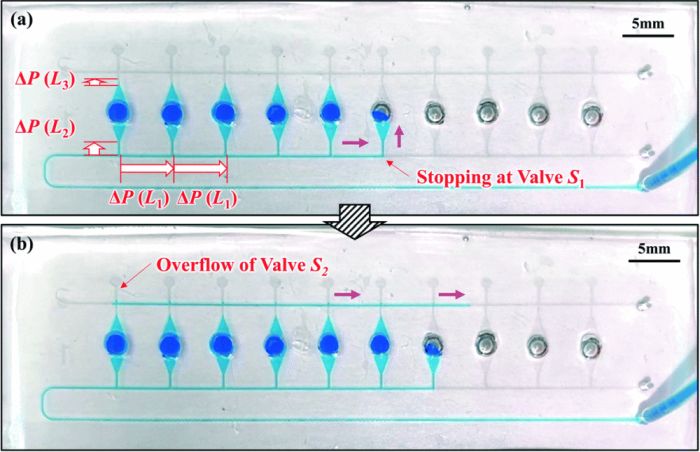
In this study, the researchers used PDMS-based microfluidic devices that allow sequential dispensing in a single operation. In plain terms, the chip is engineered so one loading step can feed several small chambers in order, reducing manual pipetting and making the workflow simpler.
The role of RT-LAMP
The testing chemistry relies on loop-mediated isothermal amplification, or LAMP, a method that copies genetic material at a constant temperature. Unlike polymerase chain reaction, or PCR, which usually cycles through repeated heating and cooling steps, LAMP works more like a steady oven recipe: keep the temperature stable and the reaction does the rest.
The version used here is a colorimetric RT-LAMP assay. “RT” stands for reverse transcription, which converts viral RNA into DNA before amplification, and “colorimetric” means the result shows up as a visible color change. That makes the readout easier to interpret without large laboratory instruments.
What the researchers reported
The authors said their fabricated devices enabled the simultaneous diagnosis of COVID-19 and other infectious diseases including SARS, seasonal influenza A, and pandemic influenza A (H1N1) 2009. For COVID-19, they reported detection at 200 copies per microliter, with results visible after running the assay for 30 minutes.
They also noted that the test output could be measured through hue-based quantitative analysis as well as by eye. Hue-based analysis means using the color value of the reaction, often captured in an image, to put a number on how strong the signal is instead of relying only on a yes-or-no visual judgment.
Why the flow theory matters
Beyond the chip itself, the team said it presents a microfluidic flow control theory for the sequential liquid dispensing behavior inside the device. That may sound abstract, but it is really a set of design rules explaining how and why the liquid moves the way it does through the small channels and chambers.
Those guidelines are useful because microfluidic systems often succeed or fail on fluid control. If the sample does not divide evenly or reach the right chambers at the right time, the test can become unreliable, so having a theory to guide optimization can make future versions more robust.
Why This Matters
This work points toward faster testing in places that may not have full laboratory infrastructure. Microfluidic chips already appeal to point-of-care medicine because they are portable, use small amounts of sample and reagents, and can offer high sensitivity in a compact format.
A multiplexed viral test is especially valuable when several diseases circulate at once. During respiratory virus season, a clinician or public health worker may need to distinguish among COVID-19 and influenza strains quickly, and a single chip that handles multiple possibilities could save time, reduce materials, and simplify decisions.
What comes next
The authors said future studies will focus on a fast and easy platform for simultaneous diagnosis of multiple COVID-19 variants and other infectious diseases, including influenza A and B, in what they called the “life with corona” era. That suggests the team sees this not as a one-off COVID tool, but as a broader framework for adaptable viral testing.
The bigger promise is not just miniaturization, but usability: a device that takes one sample, runs several genetic checks, and returns an answer in about half an hour. If researchers can extend the panel, maintain accuracy, and keep the workflow simple, microfluidic multiplex testing could become a practical front-line tool for managing outbreaks and everyday respiratory infections alike.