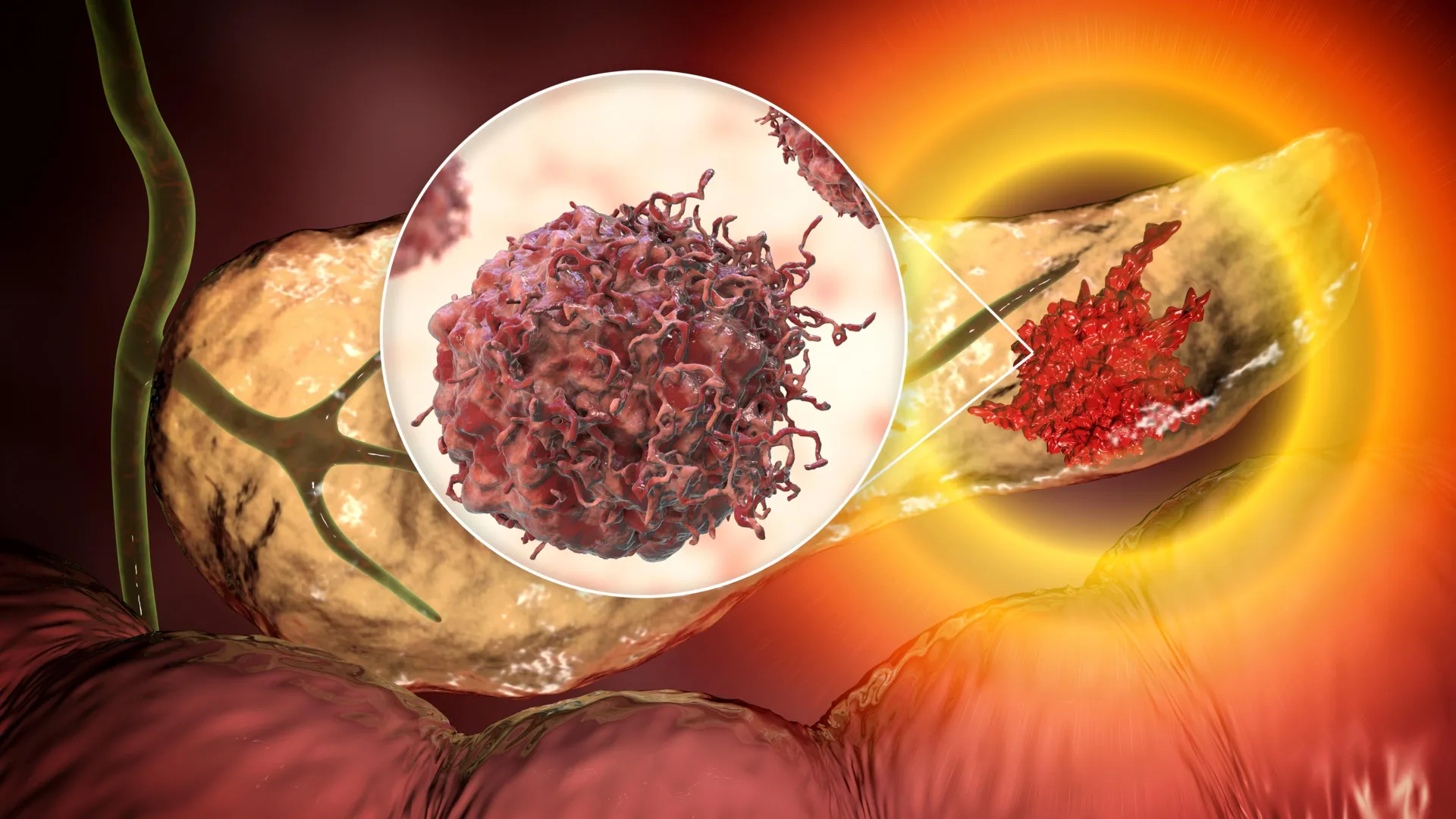
Pancreatic cancer is one of the deadliest cancers because it is usually found late, after it has already spread or become much harder to treat. Only about 10% of patients live five years beyond diagnosis, a grim statistic that reflects how few good tools doctors have for spotting the disease early. Researchers now report progress on a new blood test that could improve those odds by identifying pancreatic cancer when treatment is more likely to work. The approach builds on existing blood markers, which are measurable molecules in the bloodstream that can hint at disease, and adds two new ones to sharpen detection. According to the study team, the added markers appear to improve the test’s ability to recognize pancreatic tumors while also helping distinguish cancer from other pancreatic problems. That matters because the pancreas can also be inflamed in conditions like pancreatitis, which can mimic cancer and complicate diagnosis. If future studies confirm the findings, this work could move the field closer to a practical screening tool for people at elevated risk. In a cancer where timing is everything, even a modest gain in earlier detection could have an outsized effect on survival.
A cancer that is hard to catch
Pancreatic cancer is especially dangerous not only because it grows aggressively, but because it tends to stay silent in its early stages. Symptoms such as weight loss, jaundice, or abdominal pain often appear only after the disease is advanced.
That creates a major medical gap. While other cancers have screening methods such as mammograms or colonoscopies, pancreatic cancer has lacked a reliable, widely usable early-detection test.
What the new blood test adds
The new work focuses on biomarkers, substances in blood that can act as biological clues. Doctors already use some markers to help evaluate pancreatic cancer, but existing options have not been accurate enough to serve as dependable screening tools on their own.
The researchers found that adding two proteins, ANPEP and PIGR, improved performance beyond the standard marker set. Lead investigator Kenneth Zaret, Ph.D., of the University of Pennsylvania Perelman School of Medicine said that including these markers significantly strengthened the team’s ability to detect pancreatic cancer when it is most treatable.
Why distinguishing pancreatitis matters
One of the most important findings is that the test may help tell pancreatic cancer apart from non-cancerous pancreatic diseases, especially pancreatitis, which is inflammation of the pancreas. This is crucial because inflammation can sometimes produce signs that resemble cancer, leading to confusion and more invasive follow-up procedures.
A test that can better separate these conditions would not just improve accuracy. It could also reduce unnecessary anxiety for patients and help doctors decide more confidently who needs imaging, monitoring, or a biopsy.
Why blood-based screening is appealing
A blood test is attractive because it is relatively simple, low burden, and familiar in routine care. In principle, that makes it easier to use repeatedly over time, which is often what screening requires.
For pancreatic cancer, repeat testing could be especially useful for people with higher-than-average risk, such as those with a strong family history, certain inherited mutations, or other medical factors linked to the disease. Rather than waiting for symptoms, clinicians could potentially watch for warning signs earlier.
What still needs to happen
Promising early results are not the same as a ready-to-use screening program. Before a blood test can be adopted broadly, researchers need to show in larger and more diverse groups of patients that it consistently finds cancer early and does not trigger too many false positives, meaning results that wrongly suggest disease.
Scientists also need to learn exactly how the test fits into care. It may end up being most useful not as a standalone answer, but as part of a stepwise strategy that flags who should get imaging scans or specialist evaluation.
Why This Matters
The biggest opportunity in pancreatic cancer is not just better treatment, but earlier action. If doctors can identify tumors before they become advanced, more patients may be eligible for surgery and other therapies that have a better chance of extending life.
Just as importantly, a more accurate blood test could make screening realistic for people at increased risk while avoiding some of the uncertainty caused by less specific markers. In a disease with few second chances, improving early detection could shift outcomes more than almost any other advance.
The road ahead
This study does not mean pancreatic cancer screening has arrived, but it does point to a clearer path toward it. By combining established markers with ANPEP and PIGR, researchers are trying to turn blood chemistry into a more reliable early warning system. The next phase will be proving that the method works in real-world settings and identifying who benefits most from it. If those studies succeed, a simple blood draw could someday help change one of cancer medicine’s bleakest timelines into a more manageable one.