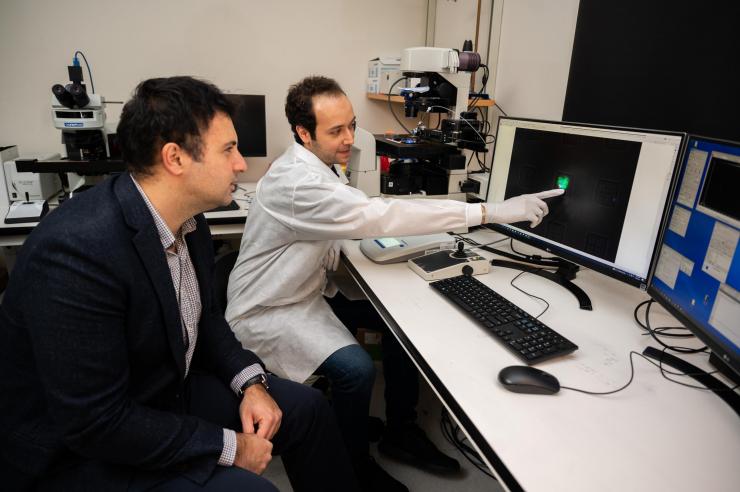
Cancer becomes far more dangerous when it spreads from its original site to other parts of the body, a process called metastasis. One of the main ways that happens is through circulating tumor cells, or CTCs, which break away from a tumor and travel through the bloodstream. These cells are rare, hard to find, and often mixed in with millions of normal blood cells, which makes them difficult to study with existing tools. Researchers at the Georgia Institute of Technology say they have built a chip designed to change that. Their device, called the Cluster-Well, is meant to capture not just individual tumor cells but also clusters of them, which may be especially important in helping cancer spread. By making those cells easier to isolate and analyze from a blood sample, the technology could give doctors a clearer picture of how aggressive a cancer is and how it is evolving. The broader promise is practical as well as scientific: a simpler, faster test that could eventually help guide treatment decisions without the need for repeated invasive biopsies.
Why circulating tumor cells matter
CTCs are essentially tumor cells on the move. Once they enter the blood, they can potentially lodge in new organs and seed secondary tumors, which is why they are so closely linked to metastatic disease.
Scientists have long viewed CTCs as a kind of liquid window into cancer. If doctors can capture them from a blood draw, they may be able to learn what mutations a tumor carries, how it is responding to therapy, and whether it is becoming more dangerous over time.
The challenge of finding something so rare
The problem is that CTCs are extraordinarily scarce. A single blood sample can contain billions of blood cells, while the number of tumor cells may be tiny by comparison, sometimes only a handful.
That makes precision essential. According to the Georgia Tech team, even one captured tumor cell can hold valuable information about a patient's disease, which means a useful device has to be sensitive enough to find rare targets without losing them in the background noise of normal cells.
How the Cluster-Well chip works
The new device comes from the lab of researcher Utkan Demirci Sarioglu at Georgia Tech and combines two existing ideas in a clever way. It merges the fine control of microfluidics—the manipulation of tiny amounts of fluid through microscopic channels—with the speed of membrane filtration, which physically separates particles by size and structure.
In standard microfluidic systems, engineers can build micron-scale features to guide cells into specific locations for inspection. Sarioglu explained that this level of control allows researchers to design a chip around the biological question they want to ask, increasing the precision and sensitivity needed to spot one suspicious cell among enormous numbers of healthy ones.
Why clusters may be especially important
The Cluster-Well was designed with a particular target in mind: CTC clusters, small groups of tumor cells traveling together. These clusters are drawing increasing attention because evidence suggests they may be especially efficient at starting metastases compared with single cells.
The chip filters these clusters into tiny wells, where they can later be accessed for further analysis. That matters because many earlier methods could capture cells but made them difficult to recover intact, limiting what scientists could do next in terms of genetic testing, imaging, or drug-response studies.
What researchers observed
In the material describing the work, the researchers noted finding hundreds of CTCs in clusters in blood samples from ovarian cancer patients. Some of those cells were still alive, an important detail because living cells can reveal much more about tumor behavior than dead or damaged ones.
That observation could be consequential for understanding how disease spreads. If viable clusters are common in some patients, they may help explain why certain cancers metastasize rapidly and why some cases become resistant to treatment sooner than others.
From blood test to treatment decisions
The long-term vision is a more informative kind of blood test, sometimes called a liquid biopsy. Unlike a traditional biopsy, which removes tissue directly from a tumor, a liquid biopsy looks for cancer-related material in blood, offering a less invasive way to monitor disease.
If tools like the Cluster-Well prove reliable in clinical settings, they could help physicians track cancer stage, watch for early signs of spread, and tailor therapies more quickly. Instead of relying only on scans or occasional tissue samples, doctors might be able to follow a cancer's behavior in near real time.
Why This Matters
Metastatic cancer is difficult to treat partly because it changes as it spreads. The more clearly clinicians can see that process unfolding, the better chance they have of choosing the right therapy before the disease gains ground.
A chip that can isolate both single tumor cells and clusters from a routine blood sample could make that surveillance easier and faster. It also opens the door to more personalized care, since the cells themselves may reveal which drugs are likely to work and which warning signs suggest a patient needs a different approach.
What comes next
Like many promising lab technologies, the Cluster-Well will need broader testing before it becomes a standard hospital tool. Researchers will have to show that it works consistently across cancer types, patient populations, and real-world clinical workflows.
Still, the concept points to where cancer care is heading: less invasive monitoring, richer biological data, and treatments guided by what tumors are doing right now rather than what they looked like weeks or months earlier. If that future arrives, a small chip built to catch rare traveling cells could end up playing an outsized role in making metastatic cancer more manageable.