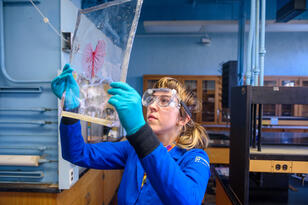
Researchers at the University of California, Berkeley have built an organ-on-a-chip that can mimic decades of human aging in just four days, offering a much faster way to study how age-related metabolic disease begins. The device was developed in the Stahl lab and fabricated at QB3-Berkeley’s Biomolecular Nanotechnology Center in Stanley Hall. It recreates a critical biological conversation between fat tissue and the liver, two organs whose chemical cross-talk strongly shapes metabolic health over time. That matters because aging changes the signals released by body fat, especially visceral fat, the type packed around internal organs, and those signals can push the liver toward dysfunction. The result can be a cascade of disease linked to modern aging, including nonalcoholic fatty liver disease, insulin resistance, and type 2 diabetes. Instead of waiting years to observe those effects in people or relying on animal models that only partly match human biology, the team used serum from real human blood to induce aging-like changes in human tissues grown on a chip. The approach could give scientists a practical way to test how aging reshapes metabolism, and to explore therapies for diseases that emerge slowly over decades.
A miniature model of the fat-liver axis
Organ-on-a-chip systems are small devices lined with living cells that are designed to imitate how real human tissues are structured and how they experience fluid flow and mechanical stress. In this case, the Berkeley team focused on the fat-liver connection, which is central to metabolic disease but difficult to study cleanly in people.
The chip contains fat cells and liver cells derived from human induced pluripotent stem cells, which are adult cells reprogrammed into a flexible state so they can be turned into many tissue types. The two tissues sit in separate but linked chambers, allowing molecules to move between them much like blood carries signals from one organ to another inside the body.
Why the fat-liver link matters in aging
Fat tissue is not just a storage depot for calories. It acts more like a hormone-secreting organ, releasing chemical messengers and metabolic byproducts that influence inflammation, energy use, and liver function.
Those signals shift with age, and the changes can be especially harmful when they come from visceral fat. Because that fat drains into the liver through the bloodstream, it can directly alter liver metabolism and contribute to fat buildup, poor glucose control, and the gradual development of disease.
Using human blood to speed up time
The key idea behind the project came from a deceptively simple question: could blood serum from real people be used to “age” tissues on a chip? Serum is the liquid portion of blood left after cells and clotting proteins are removed, and it contains hormones, nutrients, inflammatory factors, and many other molecules that reflect a person’s physiological state.
According to the source article, the concept emerged during a brainstorming session with QB3-Berkeley colleagues, when Irina Conboy suggested using human serum to drive aging-related changes. Stahl said he initially doubted it would work, but the idea was compelling enough to test, and it appears to have opened a new experimental shortcut for modeling long-term human aging.
How the chip works
The chip’s architecture is simple in concept but powerful in practice. Tiny channels connect the fat and liver compartments, letting a nutrient-rich fluid circulate between them and carry molecular signals back and forth, much like a stripped-down circulatory system.
One advantage of the platform is efficiency. Because the microfluidic system uses extremely small volumes of liquid, the researchers can run experiments with only a fraction of the serum required in standard cell culture, making studies possible even when precious human samples are limited.
Why researchers want human-like models
Scientists have long wanted better ways to study aging-related metabolic disease because the standard tools all have tradeoffs. Human studies are realistic but slow and messy, while animal models can reveal mechanisms but do not always reproduce human metabolism or disease progression accurately.
A chip built from human cells and exposed to human serum offers a middle path. It gives researchers a controllable lab system that still captures part of the complexity of real human biology, especially the way one tissue can influence another over time.
Why This Matters
The biggest promise of this work is speed. If a platform can condense aging-like metabolic changes that normally unfold over decades into a matter of days, scientists can test hypotheses, compare patient-derived samples, and evaluate drug candidates far more quickly than before.
That could be especially important for diseases such as nonalcoholic fatty liver disease, insulin resistance, and type 2 diabetes, which often build silently for years before becoming obvious. A faster model could help reveal the earliest triggers, when intervention may be most effective, and could make it easier to study why some people age metabolically faster than others.
What comes next
The Berkeley team’s chip is part of a broader push to make organ-on-a-chip systems more realistic, more personalized, and more useful in medicine. As researchers add other tissues, compare serum from people of different ages or health conditions, and test drugs in these linked systems, the technology could evolve from a clever lab model into a routine tool for understanding and treating chronic disease. For now, the study points to a striking possibility: with the right biological cues, a thumbnail-sized device can reproduce some of the most consequential effects of aging on the human body in less than a week.