Source: Diagnostics, by Hao Liu; Yuhan Jia; Yitong Jiang; You Nie; Rongzhang Hao. AI-generated summary by biochip.com, published . Not independently reviewed.
Paper-based microfluidic chips are tiny labs built on paper, and researchers are steadily turning them into serious tools for at-home genetic testing. In the review article, scientists describe how these devices can combine sample preparation, isothermal amplification - a way to copy genetic material at one steady temperature rather than cycling heat like standard polymerase chain reaction (PCR) - and simple readouts such as color changes or CRISPR-based detection. The goal is straightforward: let people collect a sample at home or in a community clinic and get a sensitive result without a full laboratory. That matters most for infections and screening programs where speed, convenience, and early detection can change outcomes. The paper highlights examples that already show strong performance, including a foldable three-layer paper chip that detected the HPV16 E7 gene in cervical swab samples with 95% sensitivity and 100% specificity when compared with quantitative PCR. Other systems described in the review can detect malaria nucleic acids in under 40 minutes, showing that paper platforms are not just cheap strips but increasingly capable analytical devices. At the same time, the authors are clear that major engineering problems remain, from precise fluid control to reliable multiplex testing and user-friendly smartphone interfaces. Their overall message is that the science is maturing, but success at home will depend as much on design and usability as on molecular biology.
How a lab fits onto paper
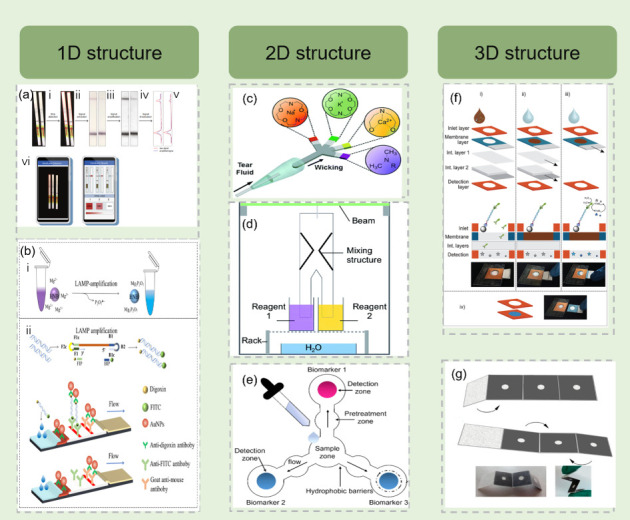
A useful way to picture these chips is to think of a coffee filter with traffic lanes printed into it. Liquid samples wick through the paper on their own, and the device steers those fluids into different zones where chemistry happens in sequence.
That built-in flow is what makes microfluidics appealing for home testing. Traditional lab tests rely on pumps, tubes, and trained technicians, while a paper chip can move tiny amounts of fluid passively, often with little more than folding, pressing, or adding a drop of sample.
Why nucleic acid testing is the hard but important target
Nucleic acid tests look for DNA or RNA, the genetic material of pathogens or human cells. They are often more sensitive than antigen tests because they detect the biological instructions themselves, not just proteins that may be present at lower levels.
But that sensitivity comes with complexity. A useful test usually has to break open cells or viruses, isolate genetic material, amplify it so there is enough to detect, and then produce a signal clear enough for a non-expert to read correctly.
What the review says is now possible
The review focuses on integrated workflows rather than single-step gadgets. Researchers have begun combining sample preparation, amplification, and final signal readout on a single paper-based platform so that users do not have to transfer material between multiple instruments.
One example the authors highlight comes from Liu and colleagues, who combined recombinase polymerase amplification, or RPA, with CRISPR-Cas12a on a three-layer foldable paper chip. RPA is a low-temperature amplification method, and CRISPR-Cas12a acts like a molecular security guard: once it recognizes the target sequence, it triggers cleavage of reporter molecules that generate a readable signal.
A notable HPV example
That Liu system was clinically validated using 50 cervical swab samples for the HPV16 E7 gene, a target linked to a high-risk type of human papillomavirus. According to the review, the chip reached 95% sensitivity and 100% specificity, with results highly consistent with laboratory quantitative PCR, the standard comparison method.
Those numbers matter because they suggest paper devices can move beyond proof-of-concept demos. In screening settings, especially for infections or cancer-linked viral markers, a home-friendly test has to detect true positives reliably while avoiding false alarms that can send people into unnecessary follow-up care.
Beyond HPV: faster testing for malaria and more
The article also points to paper-based systems for Plasmodium, the parasite that causes malaria. In one device described in the review, researchers used RPA to quantify Plasmodium nucleic acids with a total detection time of less than 40 minutes.
That speed is important in the real world. A test that works in under an hour is much easier to use in homes, field clinics, or resource-limited settings than one that demands a long wait, repeated handling steps, or bulky equipment.
The engineering challenge is fluid control
If the chemistry is the brain of these devices, fluid control is the plumbing, and bad plumbing ruins everything. The review emphasizes the need for better ways to regulate when fluids move, where they go, and how separate reagents are released without accidental mixing.
This may sound mundane, but it is central to reliability. A home test cannot depend on perfect timing by the user, so researchers are designing structures that automatically meter, delay, or direct liquid movement, reducing the chance that a result changes because someone added a drop too early or folded the chip incorrectly.
Multiplexing without confusion
Another goal is multiplexing, which means testing for several targets at once. In everyday terms, it is like reading multiple smoke detectors in different rooms from one dashboard instead of checking each alarm separately.
The trouble is that signals can interfere with one another, a problem known as crosstalk. The authors argue that practical home platforms will need spatial multiplexing designs that keep tests physically separated, along with fault-tolerant layouts and automated interpretation software that can tell a weak true signal from a messy or failed run.
Why usability may decide whether these chips succeed
The review does not treat users as an afterthought. It specifically calls for operation procedures that ordinary people can learn easily, with built-in tolerance for mistakes and better human-computer interfaces for smartphone-based testing.
That reflects a simple truth: a brilliant assay can still fail at home if the instructions are confusing or the result is hard to interpret. Smartphone imaging and software could help by standardizing color readouts, guiding each step, and reducing subjective judgment that often weakens simple strip tests.
Why This Matters
Paper-based microfluidic devices sit at an interesting intersection of biology, engineering, and public health. They promise the sensitivity of genetic testing in a format closer to a disposable strip than a benchtop machine, which could expand access in places where labs are scarce or clinical visits are hard to arrange.
For screening programs, that could mean earlier detection and broader reach. For infectious disease control, it could mean quicker answers outside centralized facilities. And for global health, the combination of low material cost, portability, and improving analytical performance makes these chips a serious platform to watch.
The review's outlook is optimistic but not simplistic. The field now has convincing examples of integrated paper tests for targets such as HPV and malaria, yet translating those prototypes into dependable at-home products will require better fluid handling, stronger multiplex designs, and interfaces that make correct use almost automatic. If those pieces come together, paper chips could shift nucleic acid testing from specialized labs into everyday settings without giving up the rigor that makes molecular diagnostics valuable in the first place.