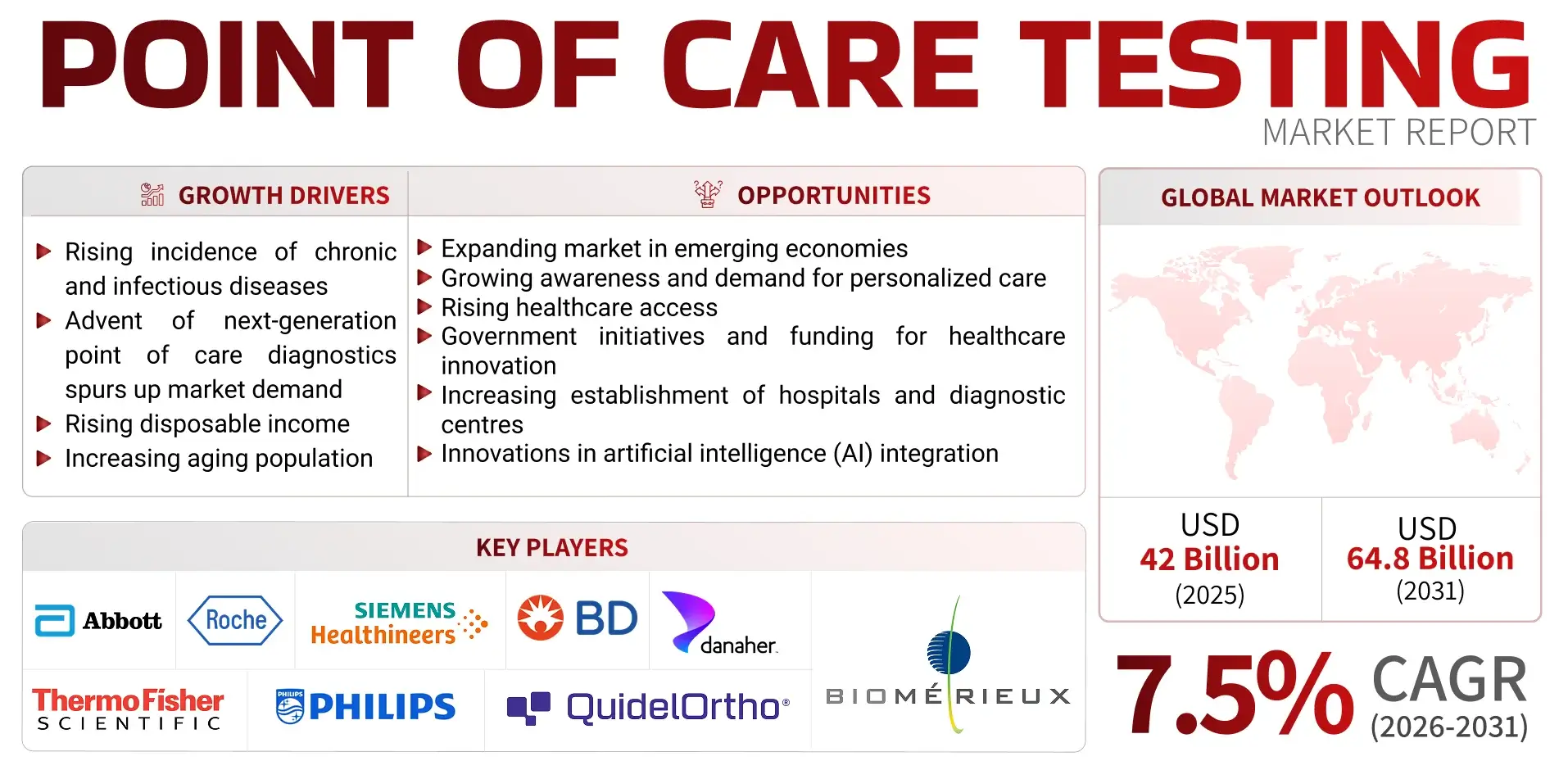
The market for point-of-care diagnostics is expanding as healthcare systems push testing closer to the patient, whether that means a clinic exam room, an ambulance, or a living room. The source report says the point-of-care testing market is on track to reach US$ 64.8 billion by 2031, reflecting strong demand for faster results and more decentralized care. A big driver is the rise of lab-on-a-chip devices, which shrink many lab tasks onto a tiny platform so clinicians can run tests with less sample and less waiting. Instead of sending blood or swabs to a central lab and waiting hours or days, these systems aim to deliver useful answers on the spot. The technology has moved beyond simple rapid tests and is now being adapted for more complex uses, including molecular diagnostics, which look for genetic material from pathogens or other biological markers. The report also points to growing interest in home-based and portable testing, a trend that accelerated as patients and providers became more comfortable managing care outside traditional hospital settings. Large diagnostics companies including Abbott, F. Hoffmann-La Roche, and Danaher are investing in smaller, easier-to-use platforms, suggesting that miniaturized testing is becoming a central part of the next wave of diagnostic tools.
Why smaller tests are becoming a bigger business
Point-of-care diagnostics, often shortened to POCD, are tests designed to be used near the patient rather than in a centralized laboratory. Think of the difference between using a kitchen thermometer at home and mailing a sample to a food lab; one gives you an answer now, while the other may be more involved but slower. In medicine, that speed can shape treatment decisions in real time.
The report ties market growth to a broader shift toward decentralized healthcare. Hospitals and clinics want tools that support quick clinical decisions, especially when a delay could change outcomes for infectious disease, chronic illness, or emergency care. As a result, demand is rising for devices that can work in varied settings and still produce reliable results.
How lab-on-a-chip changes the testing process
Lab-on-a-chip technology works by miniaturizing steps that once required an entire laboratory bench. In everyday terms, it is a bit like compressing a full office of separate machines into a smartphone: sample preparation, fluid handling, sensing, and analysis all happen inside a compact device. That compact design can reduce turnaround time and lower the amount of blood, saliva, or other sample needed from the patient.
The source highlights microfluidics and integrated biosensors as the enabling technologies. Microfluidics means controlling extremely small volumes of liquid through tiny channels, almost like plumbing built at the scale of a pinhead. Integrated biosensors then detect biological signals inside that system, allowing the chip to move from handling a sample to actually reading what is in it.
From simple strips to more complex diagnostics
Early point-of-care products were best known for single-purpose rapid tests, but the field is broadening. The report says lab-on-a-chip systems are now being used for more advanced applications, including molecular diagnostics and tests that can measure multiple markers at once. That matters because many medical decisions depend on more than one signal, especially when symptoms overlap or evolve quickly.
A multi-parameter test is exactly what it sounds like: one platform checks several biological indicators instead of only one. For clinicians, that can mean a fuller picture from a single sample. For patients, it may mean fewer repeat tests and faster triage when time is tight.
What major diagnostics companies are betting on
The report names Abbott, F. Hoffmann-La Roche, and Danaher as companies working to improve the portability, accuracy, and usability of lab-on-a-chip systems. That combination matters because a device is not useful in the field if it is only small; it also has to be dependable and simple enough for real clinical workflows. A portable test that produces confusing or inconsistent results will not gain much traction.
Usability is especially important as testing moves outside traditional labs. A nurse in a primary care office, a paramedic in transit, or a patient at home may all interact with these systems differently than a trained lab technician would. Investment from large established firms suggests the industry sees practical design, not just raw analytical performance, as a key factor in market adoption.
The push toward home and connected care
The source also points to rising demand for portable and home-based testing. That reflects a larger healthcare trend: patients increasingly expect services that fit around daily life instead of requiring a hospital visit for every decision. A compact diagnostic tool can support monitoring and follow-up in places where a full laboratory is unavailable or inconvenient.
Another important feature is digital connectivity. The report says future POCD products are expected to communicate more effectively with digital health systems and smartphones, allowing test data to be transferred, monitored, and managed remotely. In practical terms, that means a result generated at home could be reviewed by a clinician elsewhere, creating a tighter link between testing and ongoing care.
Why This Matters
If point-of-care diagnostics keep improving, they could change not just where tests happen but how quickly care starts. For an infection, a cardiac event, or chronic disease flare-up, faster results can shorten the gap between suspicion and action. In health systems under pressure, even small time savings repeated across millions of tests can have a large operational effect.
The shift also has equity implications. Smaller, lower-sample devices may help extend testing into rural clinics, resource-limited settings, and home environments where access to central labs is harder. That does not erase the need for high-complexity laboratory testing, but it does create a wider front door into the diagnostic process.
What to watch next
The main question is how quickly technical promise turns into routine use. The report suggests continued improvements in biosensors, microfluidics, and miniaturized platforms will keep expanding what these devices can do, from single-analyte checks to richer multi-marker assessments. If that happens alongside better connectivity and easier workflows, point-of-care diagnostics may become less of a niche category and more of a standard layer of modern care.
For now, the headline figure of US$ 64.8 billion by 2031 captures the scale of industry expectations. But the more interesting story is underneath the number: a steady move from centralized testing toward compact systems that bring analysis closer to patients. The companies and technologies highlighted in the report suggest that this transition is already well underway.