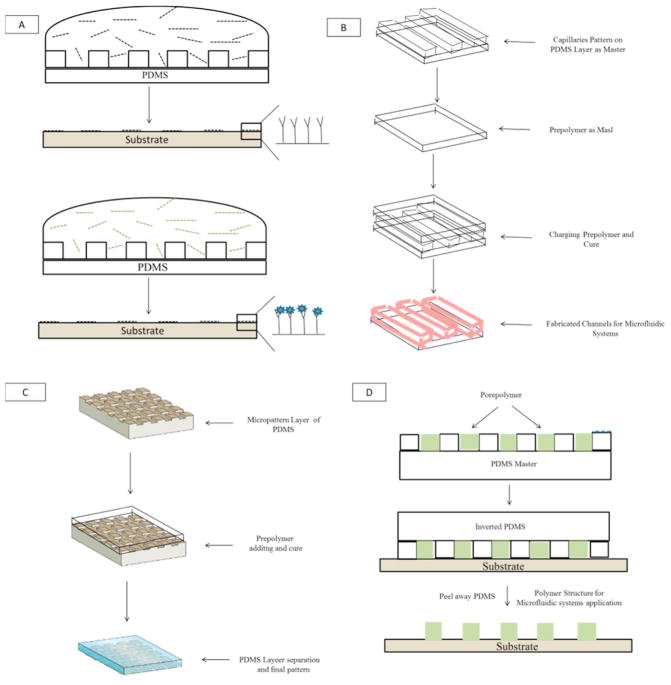
Point-of-care microfluidic devices aim to move pathogen testing out of specialized labs and closer to the patient, where speed can change treatment decisions. The core idea is simple: shrink many lab steps onto a small chip that can handle tiny amounts of fluid, a bit like turning a full benchtop workflow into a portable cassette. In the source article, the appeal of these systems rests on four linked benefits: rapid detection, ease of use, lower cost, and high accuracy in identifying infectious diseases, including serious threats such as HIV, hepatitis B virus, and Zika virus. That matters because conventional diagnostics often depend on cell isolation, purification, and culture, steps that can take time and require trained staff and well-equipped facilities. A faster test can narrow the gap between suspicion of infection and the start of treatment, which is especially important when delays worsen outcomes or allow disease to spread. The article also highlights another practical advantage: these portable systems can be especially useful in places where health services are limited and large laboratory instruments are hard to maintain. Taken together, the story is less about one single gadget and more about a broader shift in diagnostics, from centralized testing toward compact tools that can detect pathogens quickly, with smaller reagent volumes and fewer logistical hurdles.
What Microfluidic Testing Actually Does
Microfluidics means controlling very small volumes of liquid in tiny channels, often on a chip no bigger than a credit card. An easy way to picture it is to imagine a city of miniature plumbing, where each narrow lane directs drops of blood, saliva, or other samples to the right place for processing and measurement.
In pathogen detection, those channels can help perform steps that normally happen across several pieces of lab equipment. The source describes these systems as tools that simplify disease detection while still delivering high specificity, meaning they are designed to distinguish the target pathogen from other biological material that could confuse the result.
Why Point-of-Care Matters
Point-of-care testing refers to diagnostics performed near the patient rather than in a distant central laboratory. That can mean a clinic, an emergency setting, a rural health post, or another location where clinicians need answers quickly and cannot wait for samples to be shipped out and processed later.
The source emphasizes that reducing the time between detection and treatment is highly important for patient survival. Even when a test is not the whole answer, faster identification can help clinicians choose the most effective therapy sooner and manage a wider range of infectious diseases with less delay.
How These Devices Improve on Conventional Methods
Traditional pathogen diagnostics often require a relatively large number of pathogenic cells, plus isolation, purification, and sometimes cell culture before a result is possible. Those steps can be slow, labor-intensive, and dependent on laboratory infrastructure that is unevenly distributed across health systems.
Microfluidic chips try to compress and streamline that workflow. According to the source, they can reduce the consumption of expensive reagents, which is a practical benefit because the chemicals used in diagnostic assays are often a major part of testing cost, especially when they must be transported and stored under controlled conditions.
Detection Methods on the Chip
The article notes that these techniques use various forms of optical detection to identify and quantify specific biomolecules. In plain terms, optical detection means the system reads changes in light, such as fluorescence or reflected signals, to tell whether a target molecule linked to a pathogen is present and how much of it is there.
That approach matters because biomolecules such as nucleic acids and proteins act like fingerprints for infection. By capturing and reading those signals on-chip, a device can potentially provide a direct and specific readout without the larger footprint of conventional instruments.
Why Infectious Disease Is a Strong Fit
The source places special emphasis on microbiology and the diagnosis of infectious diseases, where timing and access are constant problems. Pathogens like HIV, hepatitis B virus, and Zika virus illustrate the challenge well: clinicians need tests that are accurate, fast, and usable outside top-tier laboratories.
Portable microfluidic biokits may be particularly valuable in regions with weak health services, where staff, equipment, and transport networks are limited. In that context, a compact diagnostic platform is not just a convenience; it can determine whether a patient is tested promptly at all.
How Researchers Build These Chips
The article references fabrication approaches such as photolithography and stereolithography. Photolithography is a manufacturing method that uses light to pattern tiny structures on a surface, while stereolithography is a form of 3D printing that builds parts layer by layer using light-cured material.
These methods matter because the performance of a microfluidic device depends on precision. Tiny channels, chambers, and reaction zones have to be made consistently so fluids move predictably and the test gives reliable results from one chip to the next.
Examples from the Literature
The source points to several studies that show how broad the field has become. One cited paper by Wang and colleagues describes the development of a microfluidic system for measuring HIV-1 viral load, a clinically important target because viral load testing helps monitor infection and treatment response.
Other cited work expands the picture beyond one pathogen or one sensing method. The references include research on nanodiagnostics for point-of-care infectious disease testing and a bacterial pathogen biosensor based on surface plasmon resonance, a light-based sensing technique that detects molecular interactions at a surface.
Why This Matters
The bigger significance of microfluidic pathogen testing is that it addresses a systems problem, not just a technical one. Health care often fails at the handoff points, when samples must be collected, preserved, transported, processed, and reported before treatment can begin, and each delay adds friction.
By miniaturizing workflows and reducing dependence on large volumes, costly reagents, and centralized facilities, these devices could make diagnostics more responsive and more widely distributed. The promise is especially strong for outbreaks, underserved settings, and routine infectious disease management, where the value of a test depends heavily on how quickly it can guide action.
The source presents microfluidic diagnostics as a field that is still improving, with steady advances in chip design, detection methods, and fabrication. If those improvements continue to translate into reliable real-world tools, pathogen testing may increasingly happen where decisions are made: close to the patient, under tighter time constraints, and with fewer barriers between suspicion of infection and a useful clinical answer.