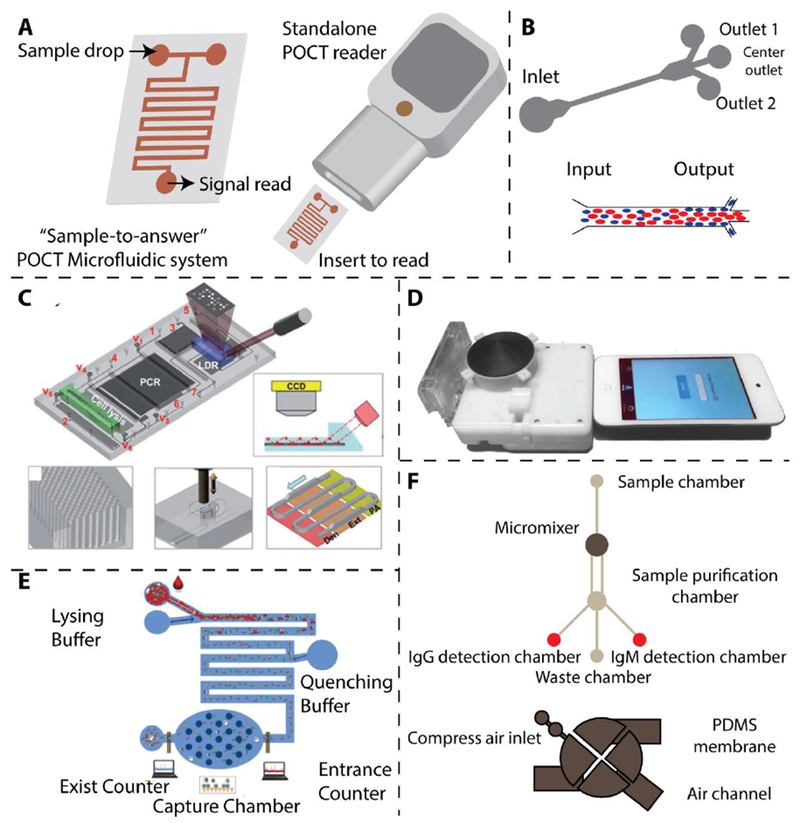
Point-of-care testing, or medical testing done near the patient instead of in a centralized lab, is reshaping how infectious diseases are detected and managed. The source article argues that two technology families in particular—microfluidics and plasmonics—have made notable progress in pushing these tests toward faster, smaller, and more practical formats. Microfluidics works by moving tiny amounts of liquid through miniature channels and chambers, allowing sample preparation, mixing, and detection to happen in one compact device. That matters for infections because speed can change outcomes: the sooner clinicians know what pathogen is present, the sooner they can isolate patients, start treatment, or avoid unnecessary drugs. The article also highlights paper-based microfluidic systems, which aim to keep costs low and operation simple enough for use in clinics with limited equipment. One example it cites is a paper analytical device developed to detect antibodies against the HIV-1 envelope antigen gp41 using only a very small sample and producing a result within about an hour. Taken together, these advances point toward a future in which diagnostic tools act less like distant laboratory services and more like immediate bedside decision aids.
How point-of-care testing changes infectious disease care
Traditional infectious disease testing often sends samples to a central laboratory, where instruments and trained staff perform multiple processing steps before results return to the clinic. That model can be accurate, but it can also be slow, especially when transport, batching, or overloaded labs add delays.
Point-of-care testing tries to compress that timeline. Instead of moving the patient sample through a long chain of handling, the goal is to bring the key steps of analysis much closer to the person being tested, whether that is in a hospital ward, a clinic, or a low-resource setting.
Microfluidics: a lab shrunk onto a chip
A helpful way to think about microfluidics is to imagine a plumbing system built at a nearly invisible scale. Instead of pipes carrying liters of water, tiny channels guide droplets that may be as small as billionths to quintillionths of a liter, letting researchers control where fluids go, when they mix, and how reactions unfold.
The source describes this precise control as one of microfluidics' main strengths. Samples and reagents can be transported, combined, and reacted in dedicated microchambers, making the platform attractive for tests that need automation, integration, and miniaturization all at once.
Why tiny fluid control matters
That fine control is not just an engineering trick. Infectious disease tests often require several distinct steps—handling the sample, adding reagents, triggering a chemical reaction, and reading the signal—and each step can introduce delays or errors when done manually.
Microfluidic systems aim to combine those steps into a sample-to-answer workflow, meaning the user inserts the sample and the device handles much of the rest. In practice, that can reduce hands-on work, limit contamination risk, and make testing easier to perform outside large laboratories.
Paper-based devices bring down cost and complexity
Among the microfluidic approaches discussed, paper-based microfluidics stands out for its simplicity. Like a paper towel pulling liquid along by capillary action, these devices can move samples without pumps or complex machinery, which makes them especially appealing for lower-cost settings.
The source notes that paper-based microfluidics is considered user-friendly and well suited to infectious disease detection at the point of care. Another practical advantage is colorimetric readout, which means the result appears as a visible color change rather than requiring a complicated instrument to interpret it.
An HIV example shows the promise
The article points to work by Whiteside and colleagues on a microfluidic paper-based analytical device, often shortened to μPAD, for detecting antibodies against the HIV-1 envelope antigen gp41. Antibodies are proteins made by the immune system, so detecting them can reveal whether the body has mounted a response to a specific infection-related target.
In that design, testing was described as relatively fast, producing a result within about one hour while using only 1 to 10 microliters of sample. For a reader without a lab background, that is a very small amount—closer to a tiny droplet than a conventional tube of blood—which hints at why such devices could be useful when sample volume, staffing, or equipment is limited.
Plasmonics adds another route to detection
The source also highlights plasmonic technologies as another area with substantial innovation over the past decade. Plasmonics broadly refers to methods that use how light interacts with electrons at the surface of certain materials, often metals, to detect biological events with high sensitivity.
An everyday analogy is the way a mirror or a soap bubble changes appearance depending on what light hits it and what is happening at the surface. In a plasmonic test, the surface is engineered so that binding events—such as a pathogen-related molecule attaching to a sensor—alter the optical signal in a measurable way.
The bigger toolbox for infectious disease diagnosis
The source does not present microfluidics and plasmonics as isolated inventions. Instead, it places them within a broader point-of-care testing toolbox, suggesting that infectious disease diagnostics will likely improve through combinations of methods rather than a single winner.
That framing is important because different settings need different tradeoffs. A small rural clinic may value low cost and visual readout above all else, while a hospital may prioritize automated processing, higher throughput, or tighter integration with treatment decisions.
Why This Matters
Infectious diseases move quickly, and healthcare decisions often have to move even faster. A test that can be performed near the patient, using little sample and minimal equipment, can help clinicians decide who needs treatment, who should be isolated, and when a broad precaution can be narrowed to a targeted response.
The article's larger point is that better testing is not only about analytical performance. It is also about access, usability, and timing—whether the right answer reaches the right person early enough to change care, especially in settings where laboratory infrastructure is limited.
What comes next
The technologies reviewed in the source suggest a clear direction: diagnostic systems are becoming smaller, more integrated, and more tailored to real-world clinical use. If developers can continue to combine speed, reliability, affordability, and simple operation, point-of-care tools may become a more routine part of infectious disease management from first screening to treatment follow-up.