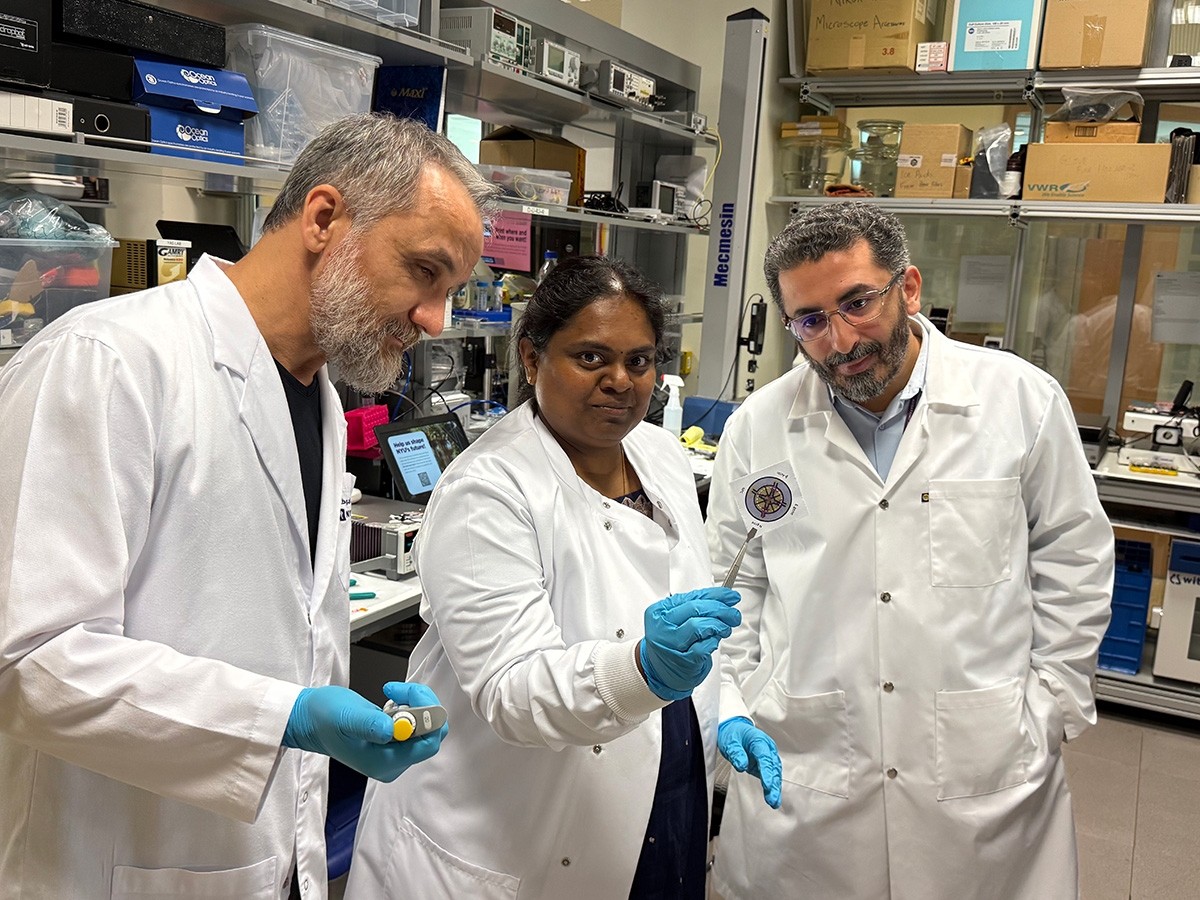
A team at NYU Abu Dhabi has built a paper-based diagnostic device that could make infectious disease testing much faster and cheaper outside traditional laboratories. The tool, called the Radially Compartmentalized Paper Chip, or RCP-Chip, is designed to detect SARS-CoV-2, the virus behind COVID-19, and potentially other pathogens in less than 10 minutes. Instead of relying on bulky instruments, the chip uses a small drop of sample, a modest heat source, and a simple color change that can be read by eye. That combination matters because many communities around the world still lack easy access to advanced molecular testing, especially during outbreaks when speed is critical. The device was developed by researchers in NYU Abu Dhabi's Advanced Microfluidics and Microdevices Laboratory and described in Advanced Sensor Research. Their study focused on showing that a single-layer paper device can carry out multiplex detection, meaning it can check for more than one genetic target at the same time. If the approach continues to prove reliable, it could help bring molecular-quality screening to clinics, border checkpoints, rural health centers, and emergency settings where conventional lab systems are too slow, expensive, or impractical.
A lab test built on paper
The RCP-Chip is made from a single sheet of paper that has been engineered into multiple tiny functional zones. These include sample inlets, vents, flow-control features, and reaction chambers loaded in advance with the chemicals needed to run the test.
That design is important because it turns paper from a passive material into a miniature testing platform. By shaping how fluid moves through the chip, the researchers created a device that performs steps normally handled by larger and more complicated diagnostic systems.
How the test works
The chip is designed to detect traces of viral genetic material using isothermal amplification, a method that copies genetic sequences at one constant temperature. Unlike the polymerase chain reaction, or PCR, used in many labs, this approach does not need repeated heating and cooling cycles or an expensive thermal cycler.
In practice, the test only needs mild heat of about 65 degrees Celsius, roughly comparable to very warm water. Once the sample is added, the preloaded primers, enzymes, and gold nanoparticles inside the chip help drive the reaction and generate a visible signal if the target is present.
Why multiplexing is useful
One of the more notable features of the RCP-Chip is its ability to perform multiplex testing. That means the same device can look for multiple genetic targets in parallel rather than checking only one sequence at a time.
For COVID-19, this can improve confidence by targeting more than one part of the virus's genome. More broadly, the same principle could be adapted to test for different infectious agents in a single run, which is especially valuable when symptoms overlap and quick triage matters.
Designed for low-resource settings
The researchers framed the chip as a tool for places where standard laboratory infrastructure is limited. Many current molecular tests are accurate, but they depend on specialized instruments, stable power, trained staff, and supply chains that can break down during a public health emergency.
By contrast, a lightweight paper device that works without electricity and gives a simple color readout could be used much closer to the patient. That could reduce delays between sample collection and diagnosis, which in turn can help people isolate earlier, start treatment faster, or avoid unnecessary travel to centralized labs.
Born from the pressures of the pandemic
The RCP-Chip was conceived during the early COVID-19 lockdowns, when the limits of testing systems became painfully clear. Around the world, people saw how outbreaks can outrun centralized labs, leaving health workers and patients waiting for answers when timing matters most.
That urgency appears to have shaped the device's priorities: speed, low cost, portability, and ease of use. Rather than trying to build a slightly better lab machine, the team aimed for something that could bring sensitive molecular detection out into the field.
What the study adds
According to the published report, the researchers developed and validated the paper chip as a rapid diagnostic platform for infectious disease detection. The study specifically highlights the ability of a single-layer, radially organized paper structure to carry out rapid isothermal testing for SARS-CoV-2 gene targets.
That matters because paper-based diagnostics are often associated with simpler chemistry, such as pregnancy-test-style strips, rather than more advanced nucleic acid detection. Showing that a compact paper device can support a more sophisticated genetic assay suggests a path toward inexpensive tests that still deliver high-value information.
Why This Matters
Fast testing is not just a convenience; it changes how outbreaks are managed. A result in under 10 minutes can support same-visit decisions in clinics, mobile testing units, airports, schools, and remote communities where follow-up may be difficult.
Affordability also matters as much as speed. If a diagnostic platform can be manufactured cheaply from paper and used with minimal training, it becomes more realistic to deploy at scale, including in lower-income regions that are often hit hardest by gaps in testing access.
There is also a broader lesson here for point-of-care diagnostics, meaning tests performed near the patient instead of in a central lab. Technologies like the RCP-Chip point toward a future in which advanced molecular detection becomes simpler, more distributed, and more resilient during global health emergencies.
What comes next
The promise of the RCP-Chip will depend on how well it performs beyond the initial study, including its accuracy in real-world settings and its adaptability to diseases other than COVID-19. But the core idea is compelling: a single piece of paper, carefully engineered, could carry out work that once required a specialized laboratory. If future development and clinical validation go well, this kind of device may help shift infectious disease testing from centralized bottlenecks to rapid, local decision-making.