AI-generated summary by biochip.com, published . Not independently reviewed. Source: Oncology Reviews, by Europe PMC.
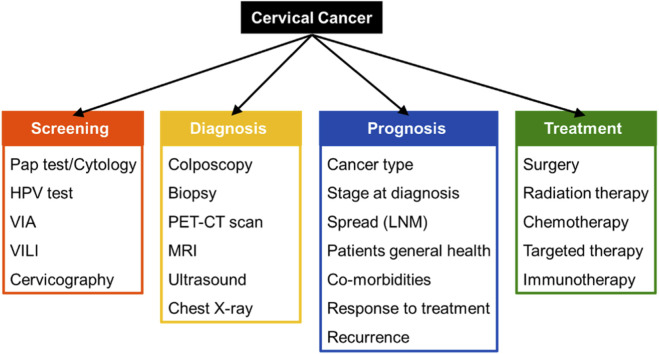
Artificial intelligence, or AI, is rapidly moving into nearly every part of cancer care, and cervical cancer is becoming one of its most closely studied use cases. A recent review of the field maps how machine learning and deep learning systems are being applied across the full care pathway, from screening and diagnosis to predicting outcomes and guiding treatment. That matters because cervical cancer is one of the most preventable and treatable cancers when it is caught early, yet many patients around the world still face delayed detection, limited specialist access, and uneven follow-up care. The review brings together evidence showing that AI can help read medical images, classify tissue samples, identify high-risk patients, and support clinicians making difficult decisions. It also makes clear that these tools are not magic replacements for doctors; they are pattern-finding systems that depend heavily on the quality of the data used to train them. In other words, the promise is real, but so are the practical challenges around reliability, fairness, and deployment in real clinics. Taken together, the paper offers a useful snapshot of where AI for cervical cancer stands today and where it may have the biggest impact next. For readers outside medicine, the core takeaway is simple: smarter software could make cervical cancer care faster, earlier, and more consistent, but only if it is built and tested carefully.
How AI is entering cervical cancer care
The review describes AI as a broad family of computational methods designed to learn patterns from data. In this setting, that data can include Pap smear images, colposcopy photos, pathology slides, MRI scans, gene-expression profiles, and electronic health records.
A key distinction is between machine learning, which often relies on human-selected features, and deep learning, which can automatically learn useful features from raw data such as images. For cervical cancer, both approaches are being explored because the disease produces many kinds of measurable signals at different stages.
Improving screening and early detection
One of the clearest opportunities for AI is screening, where large numbers of patients must be evaluated quickly and accurately. Cervical cancer screening often depends on cytology, meaning the microscopic examination of cervical cells, or on tests for human papillomavirus (HPV), the virus responsible for most cervical cancers.
AI systems can assist by analyzing cell images and flagging samples that look suspicious for precancerous changes. In practice, that could reduce the burden on specialists, lower reading time, and help standardize interpretation in places where expert cytopathologists are scarce.
The review also highlights work using AI to interpret colposcopy images, which are magnified views of the cervix taken after abnormal screening results. Because visual inspection can be subjective, software that consistently identifies suspicious patterns could improve referrals for biopsy and help clinicians avoid both missed lesions and unnecessary procedures.
Sharpening diagnosis with medical images and pathology
Beyond screening, AI is being trained to support diagnosis by examining images more deeply than the human eye can. Researchers have applied these methods to digital pathology slides, radiology scans, and other imaging data to distinguish benign tissue from precancer or invasive cancer.
In pathology, algorithms can segment cells and tissue regions, classify abnormalities, and quantify subtle features linked to disease severity. That is important because pathology remains the diagnostic gold standard, and even small improvements in consistency can matter when treatment decisions depend on how advanced or aggressive a lesion appears.
Radiology is another active area. AI models can mine MRI, CT, or PET scans for imaging patterns associated with tumor stage, lymph-node involvement, or likely treatment response, potentially turning routine scans into richer sources of clinical information.
Predicting prognosis and guiding treatment
The review also looks at how AI may help forecast what happens after diagnosis. In cancer care, prognosis means predicting outcomes such as recurrence, survival, or response to chemotherapy and radiation.
By combining clinical records with imaging, pathology, and molecular data, AI models may identify patients at higher risk of relapse or poor outcomes. That could help clinicians tailor treatment intensity, choose closer follow-up schedules, or select patients for clinical trials.
Treatment planning itself is another target. AI tools are being studied for tasks such as tumor contouring in radiotherapy, which means outlining the precise area that should receive radiation, and for anticipating which patients may benefit most from certain therapies.
The data problem behind the promise
For all the excitement, the review emphasizes that AI performance depends on the data used to build it. If the training datasets are small, narrow, poorly labeled, or drawn from only one hospital or population, the resulting model may perform well on paper but fail when used elsewhere.
That issue is especially important in cervical cancer because the burden of disease is highest in many lower-resource settings, while much AI development happens in better-resourced institutions. A system trained mostly on one type of scanner, one patient population, or one style of clinical documentation may not travel well across borders or health systems.
The authors also point to challenges in transparency and interpretability. Clinicians are more likely to trust a tool if they can understand why it reached a conclusion, especially when it influences major decisions such as biopsy, surgery, or radiation planning.
Why This Matters
Cervical cancer is unusual among major cancers because we already have effective ways to prevent and detect it early. Yet gaps in access, workforce shortages, and inconsistent quality still leave many people diagnosed later than they should be, which is exactly the kind of system-level problem AI may help address.
If these tools are validated properly, they could make expert-level support available in clinics that do not have enough specialists, speed up triage, and improve consistency from one provider to another. That would not eliminate the need for doctors, nurses, pathologists, and radiologists, but it could help them focus attention where it is most needed.
There is also a larger lesson here for digital medicine. The most useful AI systems may not be the flashiest ones, but the ones that fit neatly into real workflows, reduce delays, and improve care without adding new complexity for patients or clinicians.
What comes next
The field is now moving from proof-of-concept studies toward clinical validation, real-world testing, and integration with routine care. To get there, researchers will need larger and more diverse datasets, stronger external validation, better reporting standards, and close collaboration with frontline clinicians.
That next phase will determine whether AI for cervical cancer remains a promising research topic or becomes a practical medical tool. The review suggests there is enough progress to take the idea seriously, but the future will depend on building systems that are accurate, equitable, explainable, and useful in the places where cervical cancer prevention and treatment are needed most.