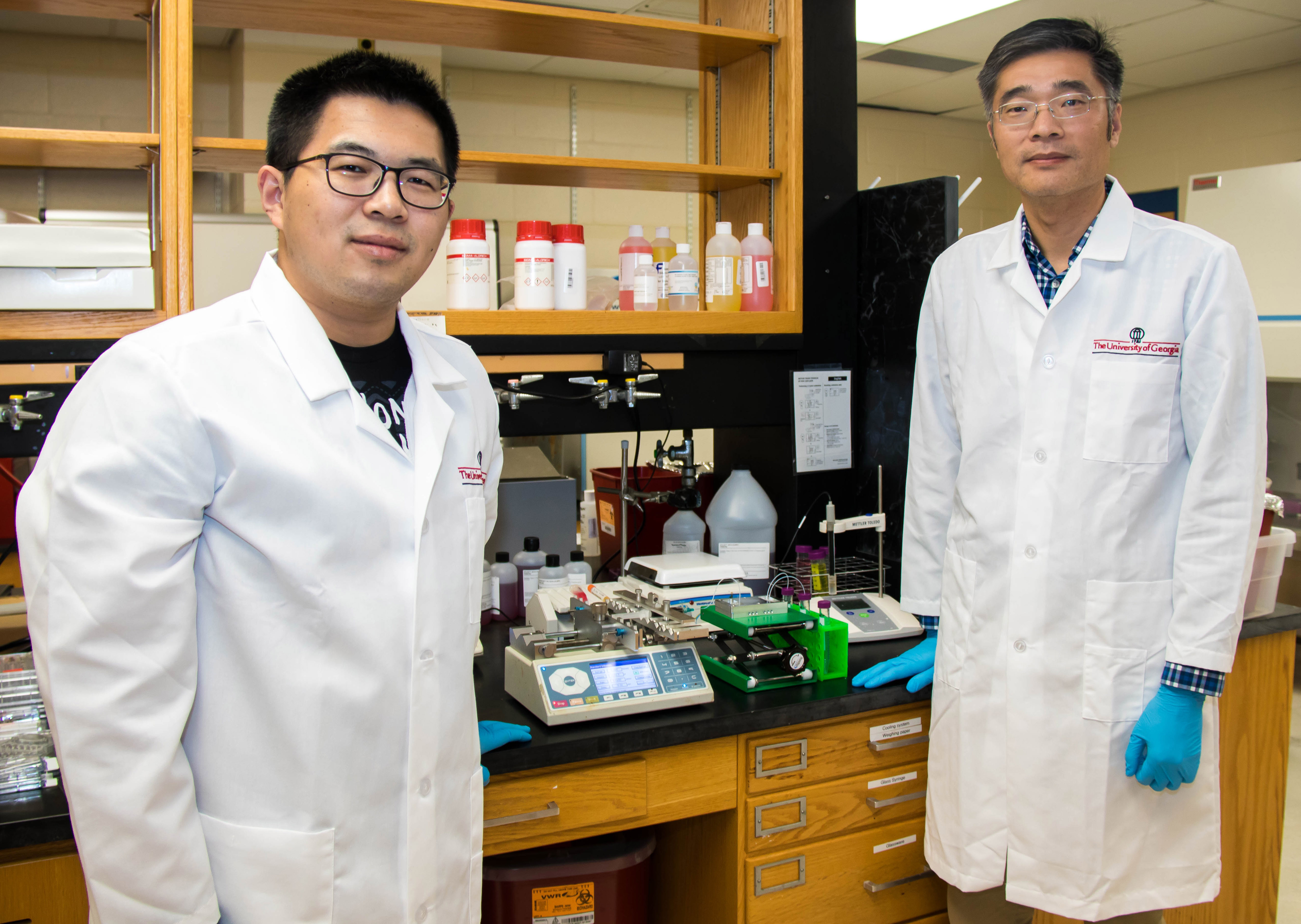
Researchers at the University of Georgia and their collaborators have developed a compact microfluidic device designed to pull circulating tumor cells, or CTCs, out of blood with unusually high efficiency. CTCs are cancer cells that break away from a primary tumor and travel through the bloodstream, where they may help seed metastasis, the spread of cancer to other parts of the body. Because these cells are so rare, and because they can look very different from one another, they have been notoriously hard to capture with existing tools. The new approach, called integrated ferrohydrodynamic cell separation or iFCS, flips the usual strategy on its head. Instead of trying to directly fish out the few tumor cells, the system removes most of the normal cells that do not belong, leaving the tumor cells behind. In a study published in Lab on a Chip, the team reported that the chip captured more than 99% of CTCs in a blood sample. If that performance holds up in broader testing, the technology could make it easier to monitor cancers such as breast cancer using a simple blood draw rather than more invasive procedures.
A Different Way to Find a Rare Cell
CTCs are often described as a needle in a haystack, but the metaphor is almost too simple. According to the researchers, the problem is not only that these cells are rare, but also that they can vary widely in shape, size, and biological features.
That variability matters because many current systems rely on identifying tumor cells by a narrow set of markers, such as specific proteins on the cell surface. If a CTC does not display those expected markers, it can slip through unnoticed, even if it may be clinically important.
How the Chip Works
The iFCS device is about the size of a USB drive and uses microfluidics, the controlled movement of tiny volumes of fluid through microscopic channels. In this case, blood is guided through channels narrower than a human hair, allowing the system to precisely manipulate different cell types as they flow.
Before the sample enters the chip, the researchers add micron-scale magnetic beads. White blood cells attach to these beads, effectively giving the normal immune cells a magnetic handle.
Once the blood is moving through the chip, magnets positioned above and below the device pull the bead-labeled white blood cells into one path. The CTCs, which are not magnetically tagged, continue into a separate channel, making them easier to collect for downstream analysis.
Why Removing the Wrong Cells May Be Better
Most efforts in this field try to positively identify tumor cells from the start, which can be difficult when cancer cells are so diverse. The Georgia team instead focuses on subtracting what should not be there, especially the far more abundant blood cells that can overwhelm a sample.
That subtraction-based strategy may sound simple, but it addresses one of the biggest bottlenecks in liquid biopsy research. A liquid biopsy is a test that looks for signs of cancer in blood or other body fluids, offering a less invasive alternative to tissue biopsy. To make liquid biopsies useful, researchers need ways to recover fragile and uncommon tumor cells without losing them in the process.
What the Results Suggest
The study reports that the chip captured more than 99% of CTCs in tested blood samples, a level that appears to exceed many existing technologies. In practical terms, that could mean clinicians would have a better chance of detecting tumor cells even when they are present in very low numbers.
High capture efficiency is important not just for detection, but for what comes next. Once isolated, CTCs can potentially be analyzed for genetic changes, drug resistance, or other traits that reveal how a patient's cancer is evolving over time.
Potential Impact on Breast Cancer Care
Melissa Davis, a geneticist at Weill Cornell Medicine and a collaborator on the project, said the device could be transformative for breast cancer treatment. That is a notable claim because breast cancer care increasingly depends on understanding how a tumor changes, especially after therapy begins.
If doctors can repeatedly sample CTCs from blood, they may gain a running snapshot of disease status without needing repeated tissue biopsies. That could help them identify relapse earlier, track whether a treatment is working, or spot signs that the cancer is becoming resistant to a drug.
Why CTCs Are So Hard to Capture
One reason this problem has persisted is that CTCs do not come in a single, tidy form. Some may resemble epithelial cells, the kind that line surfaces and organs, while others take on features more like muscle or connective-tissue cells as they adapt to travel and invade new tissues.
That shape-shifting behavior means a one-size-fits-all capture method may miss important subpopulations. By avoiding overreliance on a single tumor marker, the iFCS system may be better suited to capturing the full diversity of cancer cells moving through the bloodstream.
Why This Matters
The promise of a tool like iFCS is not just technical elegance; it is better information from a routine blood draw. In oncology, the ability to detect and analyze rare tumor cells could improve diagnosis, personalize treatment, and make monitoring less invasive for patients.
It also speaks to a broader trend in medicine: replacing difficult, episodic testing with simpler, repeatable measurements. If researchers can reliably isolate CTCs at high yield, blood tests may become a more powerful window into how cancers spread and how they respond to treatment in real time.
What Comes Next
The results are early, and technologies that perform well in a research setting still need broader validation before they become part of standard care. Future studies will need to show how the device works across different cancer types, in real patient samples, and in clinical workflows where speed, cost, and reproducibility all matter.
Even so, the concept behind iFCS is compelling: instead of hunting for a perfect signature of a tumor cell, clear away the crowd and let the rare cells stand out. As liquid biopsy tools continue to mature, that shift in strategy could help bring more sensitive cancer monitoring from the lab bench to the clinic.