Source: Joint Research Centre. AI-generated summary by biochip.com, published . Not independently reviewed.
Organ-on-chip technology aims to build tiny, living models of human organs on microengineered chips, and the European Commission is highlighting a push to standardize how those devices are designed and used. That may sound like a technical housekeeping issue, but it goes to the heart of whether these systems can move from promising lab tools into dependable platforms for drug testing, disease research, and personalized medicine. Organ-on-chip devices combine living human cells with microfluidics, which are miniature channels that move tiny amounts of liquid in a controlled way, much like plumbing shrunk to the scale of a chip. Researchers use these systems to imitate how organs such as the lung, heart, or liver behave in the body, including how tissues respond to stress, infection, or medicines. The Commission frames standardization as a necessary next step if scientists, regulators, and companies are going to compare results across labs and trust what the devices show. It also ties the effort to a broader goal: reducing reliance on animal testing by creating models that better reflect human biology. In short, the story is not just about a new gadget, but about building the rules and shared methods that could make the technology broadly useful. If that works, organ-on-chip systems could become a more routine part of how therapies are developed and tailored to patients.
What Organ-on-Chip Means in Practice
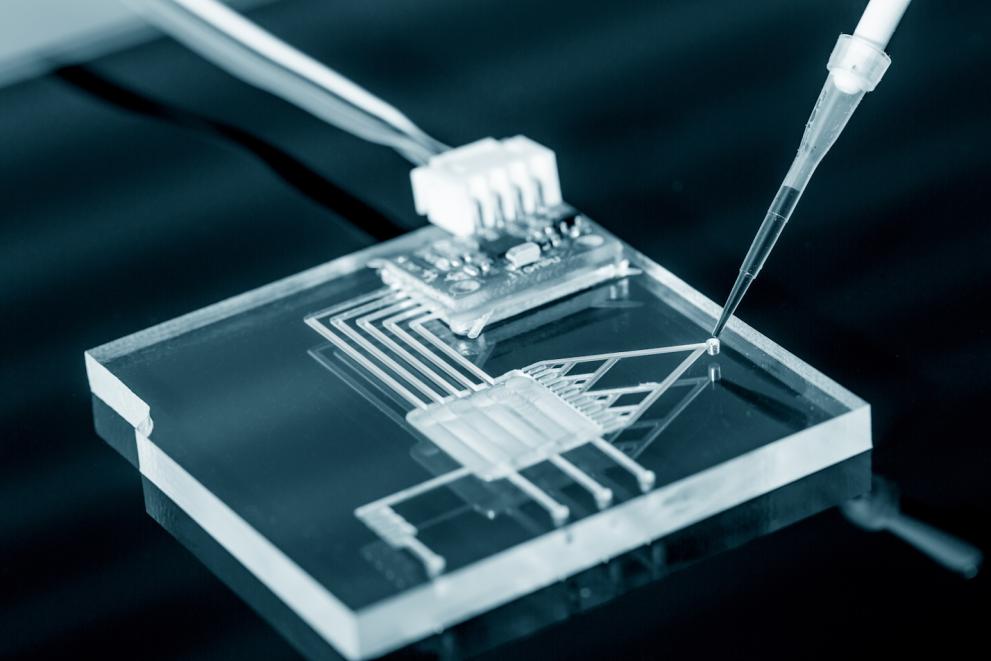
An organ-on-chip is essentially a small device that hosts living human cells in a carefully controlled environment. Instead of growing cells in a flat dish, researchers place them in a chip with tiny channels, sensors, and structures that better mimic the physical conditions inside the body.
A simple analogy is a movie set versus a real street. Traditional cell culture can show you a few important actors, but organ-on-chip platforms try to recreate more of the setting, movement, and interactions that shape how those cells actually behave.
Why Standardization Is Coming to the Fore
The European Commission describes standardization as an important step toward making organ-on-chip technology dependable enough for wider use. If one lab builds a liver chip one way and another group uses different materials, cell types, flow conditions, or readouts, the results may be hard to compare even if both systems seem promising.
That is the core problem standards are meant to solve. Shared definitions, test procedures, and performance benchmarks can help researchers know whether two chips are really measuring the same thing and whether a result can be reproduced somewhere else.
A Bridge to Personalized Medicine
The Commission connects this work directly to personalized medicine, the idea of tailoring care to the biology of a specific patient rather than relying only on averages from large populations. Because these chips can use human cells, they offer a path to studying how different tissues may respond to a treatment before it reaches the clinic or before it is selected for an individual patient.
Think of it as a test drive using a biological stand-in. Instead of asking only whether a drug tends to work in general, researchers can ask how a model built from relevant human cells reacts under controlled conditions that resemble a real organ.
An Alternative to Animal Testing
The other major theme in the Commission's summary is animal-free testing. Animal models have long played a central role in biomedical research, but they do not always predict what will happen in humans because species differ in metabolism, immune responses, and tissue structure.
Organ-on-chip systems are attractive because they are built around human cells and can capture some of the mechanical and chemical cues that shape organ function. That does not mean they replace every animal study today, but it does suggest a route toward tests that are both more human-relevant and potentially more ethical.
What Needs to Be Standardized
The source text does not lay out a detailed technical checklist, but the standardization challenge is easy to see from the technology itself. Researchers need common ways to describe the chips, the cells placed inside them, the fluids that flow through them, and the sensors used to measure responses.
They also need agreement on validation, which is the process of proving that a tool measures what it claims to measure. For organ-on-chip devices, that could include showing that a lung, heart, or liver model reliably reproduces key features of the organ it is supposed to mimic and does so across repeated experiments.
Why This Matters
Standardization can sound bureaucratic, but in science it often determines whether a clever prototype becomes a trusted instrument. A shared roadmap can help academic labs, companies, and regulators speak the same language, compare data more fairly, and decide when a chip is ready for serious use in research or testing.
That matters especially in fields like drug development, where decisions are expensive and the consequences are high. If organ-on-chip results are consistent enough to inform those decisions, the technology could help identify failures earlier, refine which compounds move forward, and support evidence built on human-relevant models.
From Promising Devices to Usable Infrastructure
The bigger story here is that organ-on-chip technology is maturing. Early excitement often centers on what a new platform might someday do, but the next phase is less glamorous and more practical: setting standards, defining quality, and making sure results travel well from one lab to another.
The European Commission's emphasis on a roadmap signals that this field is being viewed not only as an experimental niche, but as infrastructure for future biomedical work. If researchers can align on common methods, organ-on-chip systems may become a more credible foundation for studying disease, designing therapies, and moving toward testing strategies that rely less on animals and more on models built from human biology.