AI-generated summary by biochip.com, published . Not independently reviewed. Source: Synthego, by Jess Spaude.
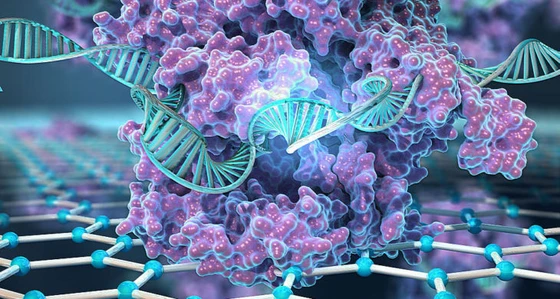
A single letter change in DNA can be enough to cause a serious inherited disease, alter how a patient responds to a drug, or raise the risk of developing cancer. These tiny changes, called single nucleotide polymorphisms or SNPs, are common in the human genome, but finding the specific ones that matter in a patient can still take time, specialized equipment, and multiple processing steps. Researchers are now pushing a new approach called SNP-Chip, a CRISPR-based sensing platform designed to detect these one-letter mutations quickly and directly. The technology pairs the gene-targeting precision of CRISPR with a graphene field-effect transistor, an electronic sensor made from an ultra-thin carbon material that is highly sensitive to molecular binding events. By combining biology and electronics in one device, the system aims to skip some of the slowest parts of genetic testing, such as extensive sample preparation or fluorescent labeling. That could make it easier to identify disease-linked mutations earlier, when clinical decisions can have the greatest impact. In practical terms, the work points toward a future where genetic screening is faster, more portable, and more useful at the point of care rather than only in specialized labs.
What SNP-Chip Is Trying to Solve
Many genetic disorders are tied to mutations that differ from the normal sequence by just one DNA base. Detecting that kind of change is technically challenging because a diagnostic tool has to distinguish between two nearly identical sequences with very high accuracy.
Traditional methods often rely on DNA amplification, optical readouts, or sequencing workflows that can be powerful but slow and expensive. Even when they work well, they may not be ideal for rapid screening in a clinic, especially if doctors need answers quickly to guide follow-up testing or treatment decisions.
How CRISPR Becomes a Sensor
The core idea behind SNP-Chip is to use CRISPR, best known as a gene-editing system, not to cut DNA but to recognize a specific sequence. CRISPR proteins can be programmed with a guide molecule that directs them to a matching genetic target, giving the platform a built-in way to look for one mutation and ignore others.
In this case, that molecular recognition is connected to an electronic device rather than a fluorescent or chemical signal. When the CRISPR complex binds its target DNA, the interaction changes the electrical properties at the sensor surface, and that shift can be measured directly.
Why Graphene Matters
The electronic component of the platform is a graphene field-effect transistor, or GFET. Graphene is a sheet of carbon just one atom thick, and because its electrical behavior is extremely sensitive to its surroundings, it can act as a powerful detector for molecular events happening on its surface.
That sensitivity is what makes graphene attractive for biosensing. If a DNA molecule binds to a CRISPR complex attached to the transistor, the local charge environment changes, and the device can convert that change into a readable electrical signal without requiring bulky optics or complicated labeling steps.
Built for Single-Base Precision
The notable claim for SNP-Chip is that it can detect single nucleotide mutations, meaning it can tell the difference between two DNA sequences that vary by only one base. That is a high bar, because false positives can easily arise when a sensor sees closely related sequences.
If the system performs as intended, it would represent an important advance for diseases where one exact mutation matters. In those cases, speed alone is not enough; the diagnostic also has to be specific enough to avoid confusing a harmless variant with one that is clinically meaningful.
Why Faster Detection Could Change Care
For many inherited conditions, treatment options remain limited, but diagnosis still matters enormously. An earlier answer can help families understand risk, guide monitoring, shape reproductive decisions, and in some cases connect patients to supportive care or clinical trials sooner.
Rapid mutation detection can also be valuable beyond rare disease. In oncology and pharmacogenomics, where clinicians study how genes affect drug response, the ability to identify a relevant SNP quickly could help physicians choose therapies with more confidence.
What Makes This Different From Standard Genetic Testing
Most established genetic tests are performed in centralized laboratories with sophisticated instrumentation and trained staff. Those systems can be highly accurate, but they are not always designed for speed, portability, or low-cost deployment in everyday clinical settings.
SNP-Chip suggests a different model: a compact bioelectronic device that reads out binding events directly in electrical form. In principle, that could reduce the number of steps between collecting a sample and getting a result, making the technology more practical for decentralized testing.
Why This Matters
The broader importance of SNP-Chip is that it reflects a larger shift in diagnostics: moving from complex lab workflows toward integrated platforms that combine molecular recognition with simple electronic readouts. That matters because the value of a genetic test is not only in how accurate it is, but also in how quickly and widely it can be used.
If researchers can make this kind of CRISPR-enabled sensor robust enough for real-world samples, it could open the door to earlier detection of genetic disease and better access to precision medicine. The ultimate promise is not just a clever chip, but a faster path from mutation to action.
What Comes Next
As with many emerging diagnostic tools, the key question is whether the platform can move from proof of concept to routine use. That means showing it works consistently with clinical samples, across many mutation types, and in formats that fit real healthcare workflows.
Still, the concept is compelling. By merging CRISPR's sequence specificity with the sensitivity of graphene electronics, SNP-Chip offers a glimpse of how future genetic tests may become smaller, faster, and more immediately useful for patients facing diseases driven by the smallest possible changes in DNA.