Source: Diagnostic Biochips. AI-generated summary by biochip.com, published . Not independently reviewed.
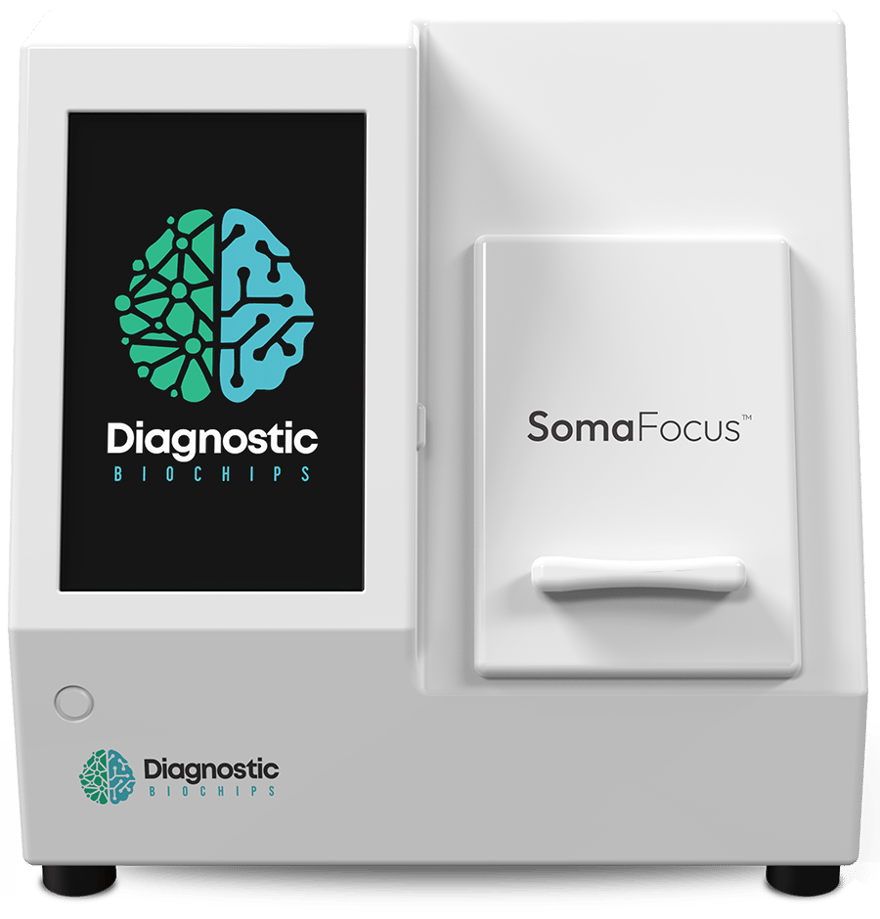
Diagnostic Biochips has introduced SomaFocus, a platform designed to record electrical activity from deep inside intact 3D cell cultures such as brain organoids. Organoids are lab-grown clusters of human cells that mimic some features of real organs, and they have become an important tool for studying diseases that are hard to model in animals or flat cell dishes. But getting useful electrophysiology data from organoids has been a persistent challenge, because researchers often have to choose between surface-level recordings or disruptive preparation steps that can alter the tissue they want to study. SomaFocus aims to change that by combining automated positioning, silicon probe hardware, and real-time analysis in a single recording system. The company says the platform can identify the best depth for recording inside an organoid, then capture signals as the probe moves through the tissue. That could help scientists observe how neurons fire, synchronize, and form networks in a more natural three-dimensional environment. If the system performs as described, it may make organoid electrophysiology faster, more reproducible, and more useful for preclinical neuroscience research. The broader goal is to narrow the gap between simplified lab experiments and the complex electrical behavior seen in the human brain.
A push beyond surface recordings
Electrophysiology is the measurement of electrical signals produced by cells, especially neurons. In brain research, these signals reveal whether cells are active, how strongly they respond to stimuli, and whether they are working together as a circuit.
In 3D cultures, those questions become harder to answer. Many existing methods record mainly from the outside of an organoid or require slicing, transfer steps, or other preparation that can disturb the tissue and make experiments more complicated.
What SomaFocus is built to do
Diagnostic Biochips describes SomaFocus as a functional depth recording platform for intact organoids and other electrically active 3D cultures. The key promise is high-resolution recording from inside the tissue, not just from the surface.
The platform is also pitched as highly automated. According to the company, users can move an organoid directly from culture media into an environmentally controlled recording setup and begin collecting data without extensive manual preparation.
Automation as the product's main selling point
A major feature is software that automatically determines the optimal depth for recording. In practical terms, that means the system is intended to find where the richest electrical signals are located inside each organoid, which could reduce the guesswork that often comes with probe placement.
That matters because organoids are variable. Even cultures grown under similar conditions can differ in size, density, maturity, and internal structure, so a one-size-fits-all recording depth may not work well from sample to sample.
Borrowing from in-vivo neural probe technology
The hardware foundation of SomaFocus is the company's silicon probe technology, which it says has been trusted for decades in in vivo research, meaning experiments performed in living organisms. These probes are made using semiconductor-style manufacturing, the same general production approach used to create highly precise microelectronics.
That fabrication method allows many microelectrodes to be packed into a small footprint. The result, at least in principle, is a high channel count for parallel recordings, so researchers can measure activity from many neurons at once while limiting tissue disruption.
Reading circuits in real time
Diagnostic Biochips says SomaFocus provides AI-driven, real-time data capture. Rather than simply storing raw electrical traces for later review, the platform is meant to give live readouts of spiking activity, synchrony, and broader network dynamics as the recording is happening.
Spiking activity refers to the rapid voltage changes neurons use to communicate. Synchrony and network dynamics describe whether groups of neurons are firing together or forming larger coordinated patterns, which can be especially important when researchers want to know whether an organoid has developed meaningful circuit behavior.
Why organoid researchers may care
Brain organoids are increasingly used to study neurodevelopment, neurodegeneration, epilepsy, and other disorders where human-specific biology matters. Because they are built from human cells, they can sometimes reveal disease features that do not appear clearly in animal models.
Still, one of the field's biggest bottlenecks is proving that these miniature tissues are not just structurally interesting but functionally informative. A platform that can reliably measure live electrical behavior deep inside intact organoids could strengthen the case that organoids are useful models for screening drugs or studying disease mechanisms.
What the claims do and do not show yet
The source material presents SomaFocus as a product and highlights a preprint, but it does not provide detailed performance data in the page text itself. That means important questions remain open, including how consistently the platform works across organoid types, how much variability it reduces, and how its recordings compare with other electrophysiology approaches.
Those details will matter for adoption. Researchers will want evidence on signal quality, tissue viability after probing, throughput, and whether the system can generate reproducible biomarkers that hold up across labs and disease models.
Why This Matters
Tools often determine what biology scientists can actually see. If electrophysiology in organoids stays difficult, slow, or inconsistent, then even promising human cell models may remain underused for neuroscience and drug development.
SomaFocus represents a broader shift toward making organoid experiments more standardized, data-rich, and accessible to non-specialist labs. By combining automated handling, dense silicon probes, and live analysis, the platform is aimed at turning organoids from visually impressive cultures into systems that can be measured at the level of functional circuits.
The next test will be whether the platform can prove its value in real research workflows, especially in studies of neurological disease where subtle changes in network behavior may be the most important signal. If it can, SomaFocus may help push organoid science closer to a long-standing goal: building human-relevant models that are not only anatomically suggestive, but electrically informative enough to guide discovery.