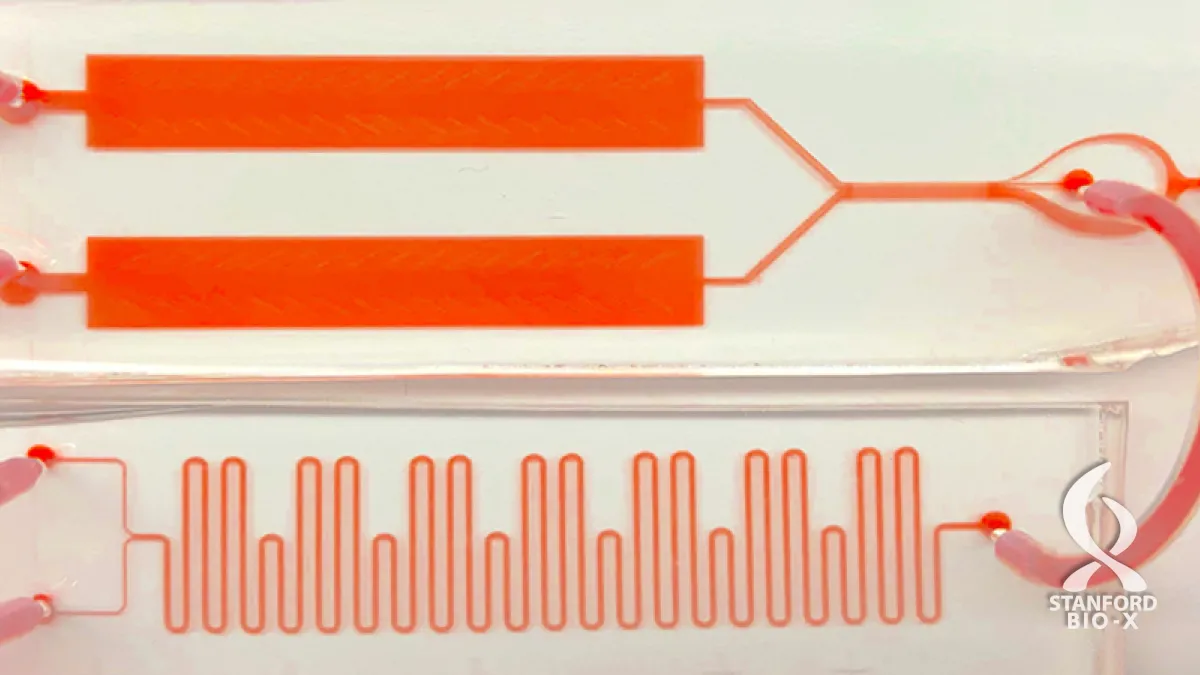
Most blood tests work like a photograph: they capture a single moment and tell doctors what a patient’s body looked like at that instant. Researchers at Stanford have built a lab-on-a-chip device designed to do something far more dynamic, turning those isolated snapshots into a near-continuous stream of information. The prototype, called RT-ELISA, tracks proteins in blood in real time by constantly sampling, processing, and measuring the blood as it flows through a tiny microfluidic system. Proteins in the bloodstream can serve as biomarkers, meaning biological signals that reveal what the body is doing, from mounting an immune response to reacting to treatment. By following those signals minute by minute instead of once every few hours or days, clinicians could potentially see disease flare-ups, drug responses, or dangerous changes much earlier. The Stanford team says this chip combines chemistry, engineering, and imaging into one compact platform that automates what would normally require a traditional lab assay. While still a research prototype, the work points toward a future in which blood testing becomes less like checking a still frame and more like watching a movie of human biology in motion.
How the chip works
The device is built around microfluidics, the science of moving tiny amounts of liquid through channels smaller than a pencil tip. In this case, blood enters the chip and is mixed with microscopic beads coated with probes that can recognize a target protein.
The system also adds fluorescent detection antibodies, which are specialized molecules that bind to the same target and light up when measured. If the target protein is present, it becomes part of a glowing molecular sandwich attached to the bead, making it easier to detect.
Three modules, one continuous process
The prototype has three linked stages. In the first module, incoming blood is combined with the probe-covered beads and the fluorescent detection antibodies so the target proteins can be captured and labeled.
In the second module, the chip removes excess blood cells that could interfere with measurement. That cleanup step matters because whole blood is crowded and visually noisy, and reliable sensing depends on isolating the useful signal from all that biological clutter.
In the third module, the labeled beads are moved into a detection window where a high-speed camera records their fluorescence. The brighter the signal, the more target protein is present, allowing the system to estimate concentration continuously over time.
What makes RT-ELISA different
The name RT-ELISA refers to a real-time version of ELISA, or enzyme-linked immunosorbent assay, one of the most common lab methods for measuring proteins. Traditional ELISA is powerful, but it usually requires collecting a sample, sending it through several processing steps, and getting a result well after the blood was drawn.
Stanford’s approach compresses that workflow into an automated chip that can keep running. Instead of waiting for repeated manual tests, the system is designed to update protein measurements continuously, creating a time-resolved record of biological activity.
Why continuous protein tracking matters
Many important signals in the body change quickly. Hormones, inflammatory markers, and other proteins can rise and fall over minutes or hours, meaning a single blood draw may miss crucial spikes, dips, or patterns.
A continuous monitor could reveal how a patient responds to medication in real time, whether an infection is escalating, or when an immune system reaction begins. That kind of information could be especially valuable in intensive care settings, during surgery, or in clinical research where timing matters as much as the measurement itself.
From chemistry bench to bedside potential
The appeal of a lab-on-a-chip system is not just speed but integration. By combining sample handling, cell removal, labeling, and optical readout into one miniature device, the platform could reduce the need for bulky equipment and repeated manual processing.
That said, a prototype is not the same thing as a hospital-ready product. Devices like this still need validation across many proteins, many patients, and real clinical conditions to show that they are accurate, durable, and practical outside a controlled lab environment.
Why This Matters
This work reflects a broader shift in medicine from occasional testing to continuous monitoring. We already see that trend with wearable heart sensors and glucose monitors, and blood-based protein sensing could bring the same idea to a much richer set of biological signals.
If the technology matures, doctors may be able to watch disease processes unfold as they happen rather than infer them from occasional samples. That could make treatment more personalized, help catch deterioration earlier, and give researchers a clearer picture of how the body changes from one moment to the next.
What comes next
The Stanford team’s prototype is an early demonstration, but it suggests a compelling future for diagnostics. As engineers improve sensitivity, expand the range of detectable proteins, and make the hardware easier to use, real-time blood analysis could move closer to everyday medicine.
In that future, a blood test may no longer be a one-time check but an ongoing stream of insight. For patients and doctors alike, that would mean replacing isolated data points with a living timeline of health.