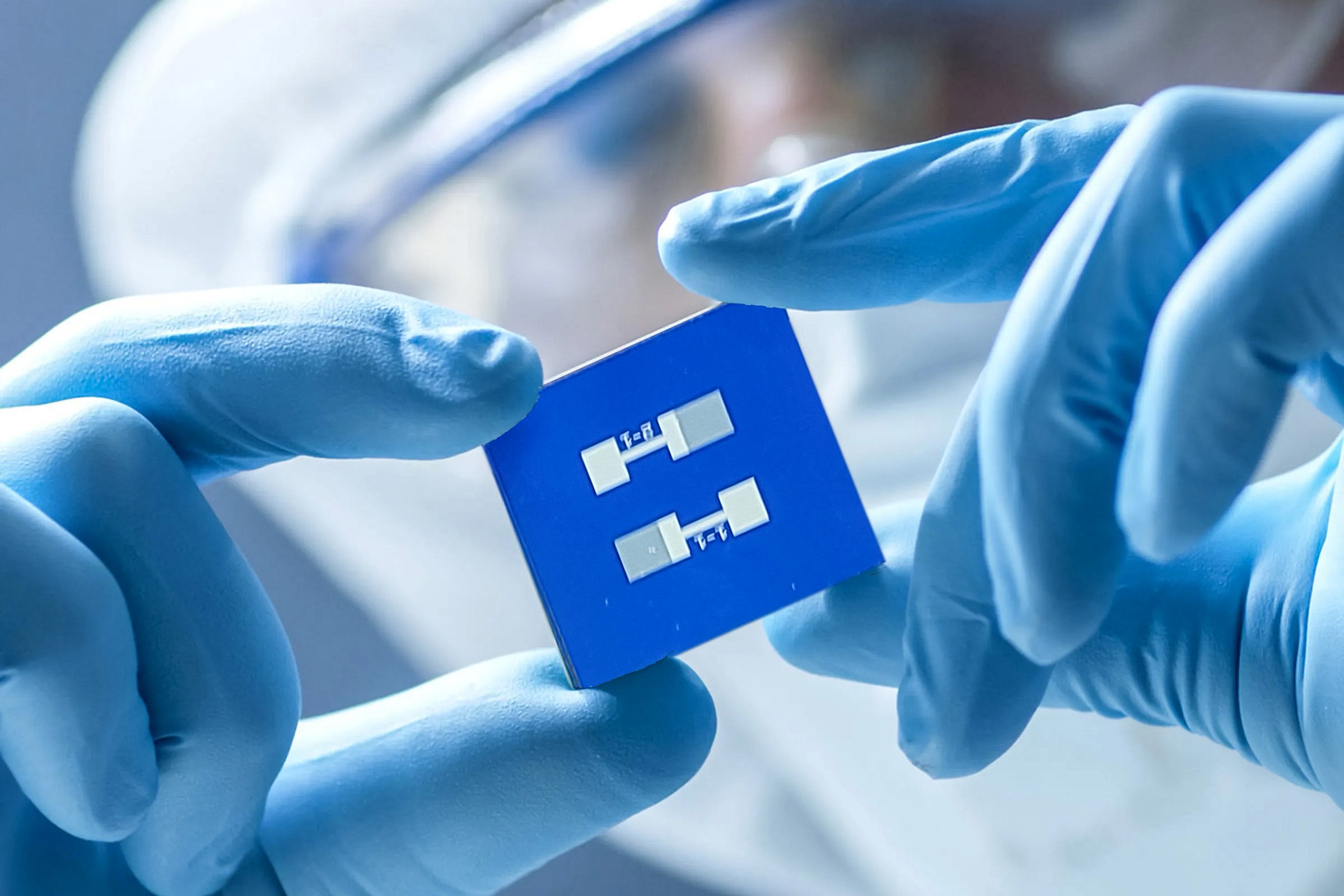
A long-standing bottleneck in drug development is the humble protein test. Companies often rely on ELISA, a standard lab method that can accurately measure proteins but usually takes hours, skilled staff, and specialized equipment. That makes quality control slower and more expensive, especially during biopharmaceutical manufacturing, where protein levels must be checked repeatedly. A startup called Advanced Silicon Group, or ASG, says it has built a faster alternative: a biosensor that combines silicon nanowires with antibodies to measure multiple proteins at once. The company was founded by Marcie Black and Bill Rever, and it is positioning the technology as a way to cut both time and cost across research, manufacturing, and eventually clinical testing. Instead of a lengthy lab workflow, users place a small amount of sample on the sensor, rinse it, and insert it into a handheld reader. Results can arrive in under 15 minutes. If the platform scales as hoped, it could make sophisticated testing more accessible not just for drug companies, but also for clinics and patients far from major medical centers.
Why Protein Testing Is So Costly
Protein measurements sit at the heart of modern biotech. Drug makers need to know whether a therapeutic protein is present at the right concentration, whether a manufacturing batch is consistent, and whether contamination or unexpected changes have occurred.
Today, one of the most common tools for that job is ELISA, short for enzyme-linked immunosorbent assay. It is widely trusted and highly precise, but it is also labor-intensive, involving several preparation and washing steps, trained technicians, and benchtop instruments that are not easy to move outside a traditional lab.
How ASG's Sensor Works
ASG's approach is built around silicon nanowires, extremely tiny wire-like structures made from the same basic material used in semiconductor chips. These nanowires are paired with antibodies, which are proteins designed to latch onto specific molecular targets.
When molecules in a sample bind to those antibodies, the sensor detects the interaction and converts it into a measurable signal. In plain terms, the chip acts like a compact molecular detector, spotting and quantifying substances in a liquid sample without the long workflow associated with conventional lab assays.
Faster Results, More Targets
One of the most important selling points is speed. According to the company, the test can deliver results in less than 15 minutes, a dramatic shift from methods that can take hours from start to finish.
The platform is also designed for multiplexing, meaning it can measure many proteins or other molecules at the same time. That matters because real biological samples are complex, and looking at several markers in parallel can give drug developers or clinicians a much clearer picture than a single readout.
From Foundry to Handheld Device
ASG is not just pitching a scientific concept; it is also trying to industrialize it. The company says it can currently produce about 2,000 sensors on 8-inch chips per production line through a partner semiconductor foundry, an important detail because manufacturing scale often determines whether a promising biotech tool becomes affordable.
The use of semiconductor-style fabrication could be a major advantage. Chip foundries are built for repeatability and high-volume production, so if the process translates cleanly from prototype to mass manufacturing, the cost per test could fall substantially over time.
Beyond Drug Manufacturing
Although the first opportunities are in biotech and pharmaceutical quality control, the company sees a much broader future. Marcie Black has pointed to regenerative medicine as one area of strong interest, where rapid measurement of biological signals could help researchers and manufacturers monitor delicate cell-based products more efficiently.
She has also described a more decentralized healthcare vision: a clinic in a rural setting using one handheld system to check for flu, Covid-19, food poisoning, pregnancy, and other conditions at once. That idea reflects a larger trend in diagnostics toward point-of-care testing, meaning tests that can be performed near the patient rather than shipped to a distant central laboratory.
Why This Matters
If ASG's biosensor performs reliably in the field, the implications go beyond convenience. Faster and cheaper testing could shorten development cycles, reduce manufacturing delays, and lower some of the invisible quality-control costs that eventually get built into the price of medicines.
It could also widen access to advanced diagnostics. Many smaller labs, clinics, and low-resource settings cannot support expensive instrumentation or highly trained assay specialists, so a portable system with quick turnaround could move sophisticated protein testing into places where it is currently impractical.
The Road Ahead
Like many promising biosensor platforms, the real test will be execution. The company will need to prove that its system can match established methods on accuracy, consistency, and regulatory acceptability while also scaling production enough to make the economics compelling.
Still, the pitch is easy to understand: take a slow, costly, expert-dependent process and compress it into a chip and handheld reader. If ASG can do that at scale, it may not only streamline how drugs are made, but also help bring fast molecular testing to many more people and places in the years ahead.