Source: Drug Discovery World (DDW), by DDW Team. AI-generated summary by biochip.com, published . Not independently reviewed.
Key takeaways
- Richard Fisler reviews how microarrays can measure gene expression, DNA copy-number changes, regulatory binding sites, splice variants, and microRNAs.
- The review identifies potential uses in cancer research, genetic-disorder diagnosis, drug-response assessment, and selection of clinical-trial participants.
- The review does not provide clinical validation data, sample sizes, or evidence that these approaches improve patient outcomes.
Richard Fisler's review examines how microarray technology could shape pharmaceutical development and medical diagnostics by measuring many biological signals at once. A microarray is a small surface covered with thousands of precisely placed probes, functioning like a highly organized grid of molecular fishing hooks. Researchers can use those probes to detect which genes are active, identify differences in DNA sequence, or measure other biological molecules in a sample. Fisler argues that gene-expression arrays have already had a major effect on biomedical research, while newer array formats broaden what researchers can learn beyond gene activity alone. The review highlights comparative genomic hybridization, ChIP-on-chip, splice-variant analysis, and microRNA arrays as complementary tools for drug discovery and disease research. In clinical settings, it points to potential applications in diagnosing genetic disorders, studying cancer, and matching treatments to patients with similar biological patterns. The central idea is straightforward: a technology that can inspect thousands of genetic features in parallel may help researchers see disease as a network of interacting changes rather than a single defective gene.
From One Gene to Many Signals
Many diseases do not arise from one mutation in one gene. Instead, they reflect interactions among multiple genes, environmental exposures, and lifestyle factors. That complexity has made it difficult to build useful screening tests for conditions such as diabetes, cardiovascular disease, Alzheimer's disease, and arthritis.
Microarrays offer a way to search broadly rather than one target at a time. Like reading many lines of a spreadsheet in a single glance, an array can survey a large number of genes quickly or examine a limited biological sample. This ability allows researchers to compare patterns between healthy and diseased tissues, or between two cell types, and look for signals linked to a condition.
What Expression Arrays Measure
Gene expression refers to the process by which a cell uses a gene's instructions to make RNA and, often, protein. Expression arrays measure the level at which particular genes are expressed. These arrays can show which genes are more active or less active in a sample, creating a broad snapshot of cellular behavior.
That snapshot has supported large-scale biological experiments that generate extensive genetic information. Fisler notes that DNA microarrays have helped researchers investigate disease mechanisms, identify disease subtypes, predict disease progression, assign potential functions to previously unannotated genes, group genes into functional pathways, and predict the activities of new compounds.
Looking Beyond Gene Expression
Gene-expression data do not tell the entire biological story. A gene may be present in altered copy number, regulated differently, or produce different RNA forms even when an expression measurement alone does not reveal the full change. The review focuses on newer microarray applications that can add those layers of information.
Comparative genomic hybridization, often shortened to CGH, can identify changes in DNA copy number. In plain terms, it can reveal when a stretch of DNA has been duplicated or deleted, much as a proofreader might notice that pages are missing or repeated in a book. Such changes can matter in cancer and inherited disease.
Mapping Regulation and Genetic Variation
ChIP-on-chip combines chromatin immunoprecipitation, a method for isolating DNA associated with specific proteins, with microarray analysis. It can help locate binding sites for transcription factors, proteins that influence whether genes are switched on or off. This gives researchers a route to study gene regulation, not just the genes themselves.
The review also identifies splice variants and microRNAs as useful sources of added information. Splice variants are different RNA versions produced from the same gene, while microRNAs are small RNA molecules that can regulate gene activity. Combining these measurements with expression data could help researchers build a more detailed view of disease processes and possible drug targets.
Uses in Drug Development
Drug discovery depends on understanding what a candidate compound changes inside cells and tissues. Microarrays can help connect compounds with shifts in gene activity or biological pathways, potentially helping researchers predict the activities of new compounds. They may also reveal genetic features that distinguish people who respond differently to a treatment.
Fisler also describes a potential role in clinical-trial design. If array analysis identifies people with similar biological patterns, drug companies may be able to select more appropriate participants for trials of new medicines. That approach fits the broader goal of choosing drugs that are likely to work well for an individual patient or cause fewer side effects.
Diagnostics and Cancer Research
Microarray technologies have been used in efforts to diagnose genetic disorders including cystic fibrosis and autism. In oncology, expression and single nucleotide polymorphism, or SNP, microarrays have supported studies of cancer-related genetic modifications. A SNP is a difference at one position in DNA sequence, and such differences can help researchers distinguish genetic patterns among tumors or patients.
The review points specifically to insertions, deletions, and signal-transduction pathway analysis as informative for cancer research. Signal transduction is the chain of messages cells use to respond to internal and external cues. Studying disruptions in those pathways can help link genetic changes to the behavior of different cancers and inform diagnosis and treatment decisions.
A Growing Family of Arrays
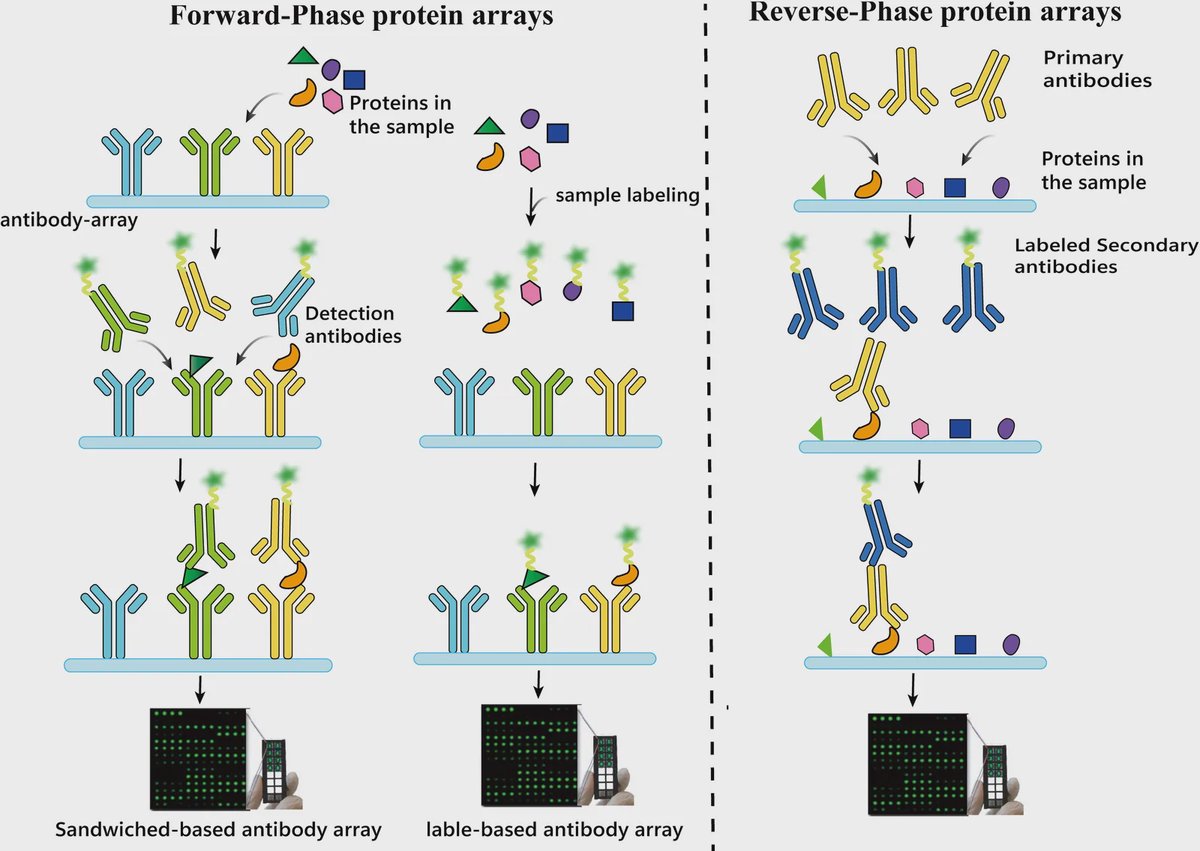
DNA arrays are only one part of the broader microarray field. Fisler lists applications involving genotyping and sequence analysis, along with arrays built around carbohydrates, peptides, RNA interference molecules, microRNAs, proteins, and antibodies. Each format is designed to capture a different kind of biological interaction.
This variety matters because disease biology extends beyond DNA sequence. Proteins carry out much of a cell's work, antibodies can recognize specific molecular targets, and carbohydrates participate in cell recognition and signaling. A broader set of array tools could therefore help researchers compare molecular layers that were once studied separately.
Why This Matters
The promise of microarrays lies in their ability to turn a small biological sample into a wide-ranging measurement. Instead of asking only whether one suspected gene is altered, researchers can inspect patterns across many genes and molecular features at the same time. That systems-level view may be especially useful for diseases driven by many interacting factors.
The route from identifying a gene or molecular pattern to producing an effective treatment remains difficult. Still, the review frames microarrays as tools that can narrow the search: they can help identify disease-associated genes, classify biological subgroups, and point toward pathways worth investigating. As array formats continue to expand, their practical value will depend on linking broad molecular measurements to decisions that improve diagnosis, trial selection, and treatment development.
Topics: Biochip · Cancer · Diagnostics & precision medicine · Drug development & safety
Start here: What is a biochip?