Source: TissueGnostics, by Victoria (September 14, 2026). AI-generated summary by biochip.com, published . Not independently reviewed.
Key takeaways
- TissueGnostics partnered with Diya Biological Technology, a Chinese organ-on-a-chip CDMO and research-service platform.
- Diya's services include microfluidic organ chips, organoid banking, and tumor drug-testing, while TissueGnostics supplies imaging and image analysis.
- The announcement provides no named joint product, study results, validation data, or timeline for the collaboration.
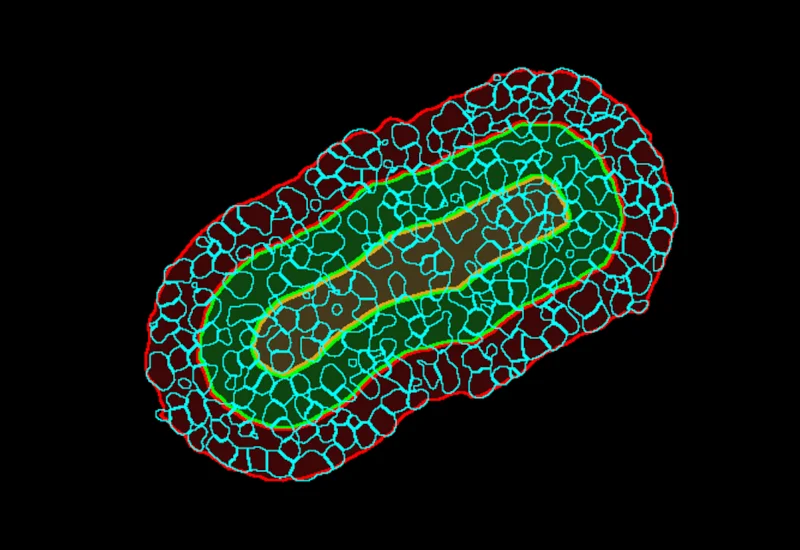
TissueGnostics has entered a collaboration with Diya Biological Technology Group Co., Ltd., linking advanced tissue imaging with organoid and organ-on-a-chip research services. TissueGnostics develops tools for whole-slide imaging and image analysis, while Diya Biological Technology specializes in microfluidic organ chips, organoid banking, and tumor drug-testing services. The partnership places two complementary parts of translational research, the process of moving laboratory findings toward practical medical use, in closer contact. Organoids are three-dimensional cell models that mimic selected features of an organ or tumor. Organ-on-a-chip systems use small fluidic devices to recreate aspects of an organ's physical and chemical environment. Combining these models with spatial tissue analysis could help researchers examine not only which cells are present, but also where they sit and how they interact. That spatial context matters because cells can behave differently depending on their neighbors and local environment. The announcement identifies organoid detection, translational research, and technology advancement as central themes of the collaboration.
Two Complementary Technology Areas
Diya Biological Technology operates as a contract development and manufacturing organization, or CDMO, and research-service platform focused on organ-on-a-chip work in China. Its stated capabilities include microfluidic organ chips, organoid banking, and services for tumor drug testing.
Microfluidics means controlling very small volumes of liquid through channels built into a device. It works somewhat like a miniature plumbing system: rather than moving liters of fluid through pipes, it guides tiny streams through channels that can supply cells with nutrients, drugs, or other experimental conditions.
What TissueGnostics Adds
TissueGnostics provides whole-slide imaging and image-analysis systems for biological and clinical research. Whole-slide imaging converts an entire microscope slide into a digital image, allowing researchers to inspect large tissue areas rather than relying only on selected fields viewed through a microscope.
The company describes its work as Spatial Tissue Cytometry, an approach that measures cells while retaining information about their location in tissue. A conventional cell count can show how many cells carry a marker. Spatial analysis adds a map, showing whether those cells cluster around a tumor, line a boundary, or appear beside other cell types.
Why Organoid Detection Needs Context
Organoids can give researchers a more structured model than a flat layer of cells grown in a dish. They are often used to study how cells organize, respond to treatments, and form tissue-like structures, though the announcement does not describe a specific organoid model or assay planned under the agreement.
Imaging and analysis are important because organoids contain cells at different positions and developmental states. Digital imaging can help turn those complex structures into measurable features, including tissue organization, cellular interactions, and the spatial distribution of cells.
An Organ-on-a-Chip Connection
Organ-on-a-chip devices aim to model parts of an organ in a controlled system using living cells and flowing fluid. The chip is not a computer chip in the consumer-electronics sense. It is a compact biological test platform whose channels and compartments can recreate selected conditions that cells experience in the body.
Diya's emphasis on microfluidic organ chips makes the agreement directly relevant to biological chip technology. These platforms can support research service workflows in which tissue models, imaging, and data analysis are connected, rather than handled as wholly separate steps.
Why This Matters
Research models are only useful when investigators can measure them clearly and consistently. The combination of organoid and organ-on-a-chip services with whole-slide imaging and spatial analysis addresses a practical challenge: complex cell models produce complex visual data that must be captured and interpreted.
For tumor drug-testing work, the local arrangement of cells may be as important as a simple readout of whether a treatment changed cell number. A spatial view can distinguish broad changes in a model from changes concentrated in particular regions or cell populations.
What Comes Next
The collaboration establishes an organizational link between TissueGnostics and Diya Biological Technology, but the announcement does not identify a named joint product, research project, validation study, or launch schedule. Its significance will depend on how the partners apply imaging and analysis to Diya's organoid and microfluidic organ-chip services in future translational research programs.