Source: Frontiers in Microbiology, by Michael Blümlinger; Lukas Schwarz; Joachim Spergser; Adriana Cabal-Rosel; Werner Ruppitsch; Maximilian Collatz; Sascha D Braun; Stefan Monecke; Ralf Ehricht; Andrea Buzanich-Ladinig; Igor Loncaric (September 25, 2026). AI-generated summary by biochip.com, published . Not independently reviewed.
Key takeaways
- A 15-gene DNA microarray matched multiplex PCR and whole-genome sequencing results for 143 Austrian C. perfringens isolates.
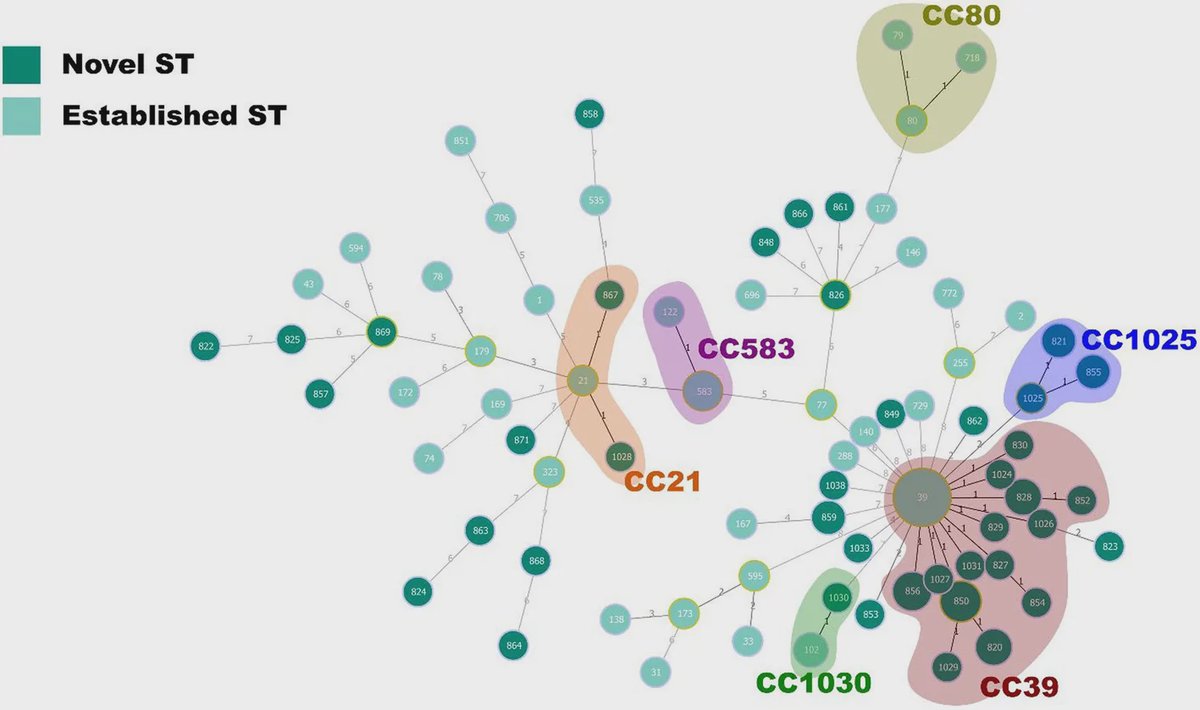
- MLST identified 77 sequence types, including 42 novel types, with clonal complex 39 exclusively associated with pork or swine.
- The study identifies resistance genes but does not establish whether the isolates were clinically resistant to specific antibiotics.
Researchers at the University of Veterinary Medicine Vienna and partner institutions evaluated a DNA microarray for genetically characterizing Clostridium perfringens, a bacterium that can live in animal intestines but can also cause serious disease. The array screened 15 genes linked to the bacterium and produced results comparable to multiplex polymerase chain reaction (PCR) and whole-genome sequencing in the tested isolates. The work also provides Austria's first epidemiological snapshot of these animal-associated strains, identifying 42 previously unreported genetic sequence types and a swine-associated lineage. It matters because a faster, less labor-intensive genetic test could help laboratories track toxin and antibiotic-resistance genes across bacterial populations.
A broader genetic screen for a complex bacterium
C. perfringens is an anaerobic bacterium, meaning it grows without oxygen. It can be part of the normal gut microbiota of healthy people and animals, yet certain strains produce toxins that contribute to conditions ranging from food poisoning to necrotic intestinal disease.
Detecting the bacterium alone does not establish that it caused disease. Laboratories therefore look for toxin genes, but routine typing commonly focuses on six toxin genes even though more than 20 potential virulence factors, traits that may help a microbe cause disease, have been described.
The team designed a DNA microarray that targets 15 C. perfringens-associated genes. A microarray works much like a densely packed panel of molecular locks: DNA from a bacterial isolate is applied to the panel, and matching genetic sequences bind to their complementary probes, revealing which targeted genes are present.
Testing the microarray against established methods
The researchers evaluated the array on 143 isolates and compared its results with a published multiplex PCR assay. Multiplex PCR detects several DNA targets in one reaction, while whole-genome sequencing reads a much broader set of genetic information. The group also compared microarray findings with in silico, or computer-based, analysis of whole-genome sequences from 20 isolates.
The array detected every targeted gene found by the comparison methods, except becA and becB, which were absent from all strains tested by every approach. The most common virulence-associated genes were cpa, found in all 143 isolates, tpi, found in 132, and cpb2, found in 104.
The findings indicate that the microarray can provide a wider genetic panel than routine toxin typing while requiring less labor and lower cost than whole-genome sequencing. It does not replace sequencing for discovering unexpected genes, but it offers a targeted way to survey known markers across many isolates.
Mapping Austrian strain diversity
The team also used multilocus sequence typing, or MLST, on 124 isolates. MLST compares sequences at selected housekeeping genes, allowing researchers to assign bacterial samples to sequence types and examine how closely related they are.
The analysis identified 77 sequence types, including 42 that had not previously been reported. Those types grouped into six clonal complexes, clusters of genetically related sequence types. Clonal complex 39 was the most abundant and appeared exclusively linked to pork or swine isolates in this dataset.
That association does not prove that the lineage is limited to pigs, but it gives veterinary surveillance a specific genetic cluster to monitor. Because toxin genes can move between bacteria on plasmids, small DNA circles that can be exchanged among cells, tracking both strain background and toxin content is important.
Antibiotic-resistance genes add another signal
The researchers examined genomes from the study alongside 44 publicly available genomes for antimicrobial-resistance genes. At least one resistance-associated gene appeared in 58.7% of the analyzed genomes, while 34.8% carried multiple such genes.
The detected genes were associated with resistance to tetracyclines, aminoglycosides, pleuromutilins, lincosamides, macrolides, and streptogramins. The analysis did not identify genes associated with beta-lactam resistance. One isolate carried lsa(E), a gene not previously described in C. perfringens.
A resistance gene is not the same as a confirmed treatment failure. Genetic screening identifies the potential for resistance, while laboratory susceptibility testing is needed to show whether an organism actually withstands a specific antibiotic under test conditions.
Why This Matters
For animal-health laboratories, the microarray offers a practical middle ground between narrow PCR panels and comprehensive whole-genome sequencing. It can simultaneously assess a larger group of toxin-related and other bacterial genes, helping investigators distinguish among strains that may look similar in conventional culture.
The Austrian dataset also establishes a baseline for future surveillance of C. perfringens in animals. Continued testing across hosts, regions, and disease settings could show whether clonal complex 39 remains closely tied to swine and whether the newly detected resistance markers spread to other bacterial lineages.
Topics: Biochip · Diagnostics & precision medicine · Infectious diseases
Start here: What is a biochip?
Related articles
- Analytical validation of a multiplexed peptide microarray for multi-antigen Epstein–Barr virus serological profiling across diverse clinical specimens
- Aptitude Announces FDA 510(k) Clearance of Next-Generation Metrix® COVID Test
- Paper-Based Microfluidic Chips for At-Home Point-of-Care Nucleic Acid Testing: Applications and Challenges
- Nanomaterials-enabled point-of-care diagnostics for pathogens