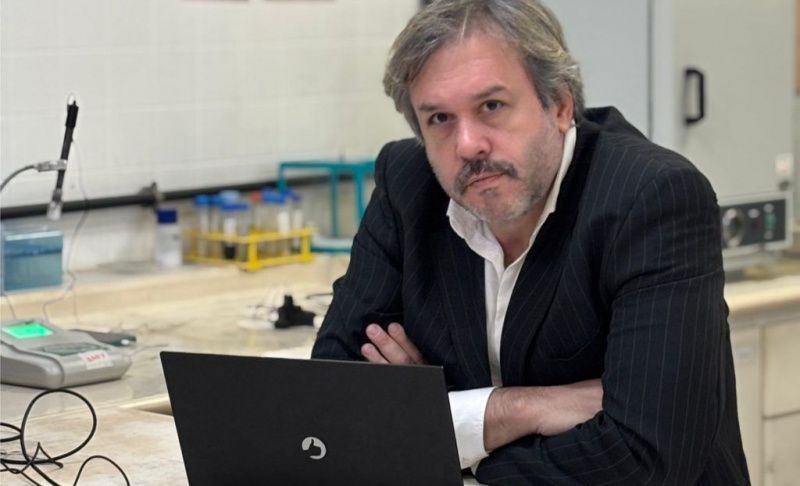
Source: DairyNews.today, by Laurence Rycken (September 14, 2026). AI-generated summary by biochip.com, published . Not independently reviewed.
Key takeaways
- A Brazilian team developed a colorimetric microchip intended to detect cattle diseases and antibiotic residues in about five minutes.
- The device targets mastitis, brucellosis, tuberculosis, diarrhea, parasitic sadness, and antibiotic residues in milk.
- The project reports no validation accuracy data or Anvisa approval, and patenting and commercialization are still planned.
Researchers in Brazil have developed a colorimetric microchip designed to detect cattle diseases and antibiotic residues in roughly five minutes. The small test device aims to move part of livestock diagnostics out of centralized laboratories and closer to the farm. A producer would place a sample on the chip, then read a reaction that signals the condition under investigation, much like reading the lines on a home pregnancy test. Ralph Santos-Oliveira, who coordinates the project, said the device is intended to work without a professional trained in specialized laboratory methods. The team has identified potential uses for conditions including mastitis, brucellosis, tuberculosis, diarrhea, and parasitic sadness. It could also help farmers check whether milk contains antibiotic residues while a cow is receiving treatment. Faster answers could allow earlier treatment decisions and help producers avoid holding milk longer than necessary. The project is now moving toward patent registration and potential commercialization, while the Institute of Nuclear Engineering considers a related version for horse diseases.
A Test Designed for the Farm
Routine cattle-health checks often require veterinary oversight, a blood draw, and shipment of samples to an analytical laboratory. That process can take several days, leaving farmers to make decisions before they have a confirmed result.
The Brazilian microchip is meant to shorten that wait. Rather than transporting a sample to a distant lab, a producer could perform the test where the animal is being managed and receive an indication in about five minutes.
How Colorimetric Detection Works
Colorimetric testing means that a chemical reaction produces a visible color change. Think of it as using a litmus strip to check whether water is acidic or alkaline: the color serves as a quick visual signal that something specific has reacted.
In this case, the chip is designed to react after a sample is applied to it. Santos-Oliveira compared its basic operation to a pregnancy-test kit, where a visible response indicates the condition the test has been built to investigate.
Targeting Common Cattle Health Problems
The project names mastitis, brucellosis, tuberculosis, diarrhea, and parasitic sadness among the diseases the technology could identify. These conditions have different causes and consequences, but each can affect animal welfare, milk production, farm operations, or disease control.
Mastitis, an inflammation of the udder that is often linked to infection, is a central concern for dairy producers. The project materials identify it as one of the leading problems in dairy cattle and associate it with about 70% of losses, primarily because affected cows produce less milk.
Checking Milk for Antibiotic Residues
The chip's proposed role goes beyond diagnosing illness. It is also intended to identify antibiotic residues, meaning traces of treatment drugs that may remain in milk after a cow has received medication.
Milk from a treated cow cannot be sold while antibiotic residues remain, creating a direct financial challenge for a dairy farm. A rapid test could help producers monitor that situation more quickly, reducing uncertainty around discarded product and return-to-market decisions.
Why Speed Changes Farm Decisions
Rapid testing does not replace veterinary judgment, but it can change the timing of a response. When a result takes days, farmers may need to isolate an animal, monitor symptoms, or make treatment choices while laboratory analysis is still pending.
Santos-Oliveira said the microdevice could reduce both the time and cost of diagnosis. Its practical appeal rests on simple operation: the device is designed so that users do not need specialized professional training to obtain a real-time result.
From Nanotechnology Program to Market
The work belongs to the Research Networks in Nanotechnology Programme, created by the Rio de Janeiro Research Foundation, known as FAPERJ, in 2019. Nanotechnology involves working with materials and structures at extremely small scales, where their chemical and physical behavior can be useful for sensing molecules in a sample.
Santos-Oliveira has also submitted the initiative to FAPERJ's Agro do Futuro Programme. The next stated step is patent registration, which would protect the technical approach before wider commercial development.
Commercial and Regulatory Steps Remain
The technology is available to companies interested in bringing it to market. Those companies could develop the device into a commercial product and seek approval from Anvisa, Brazil's health regulatory agency.
Regulatory review matters because a diagnostic test must reliably distinguish a true signal from a misleading one. A farm-ready device would need to show that its visual result remains dependable across real samples, different operating conditions, and the diseases or residues it claims to detect.
Why This Matters
Livestock diagnostics are most useful when they fit the pace of farm work. A five-minute, easy-to-use test could give producers a faster way to flag health concerns, direct veterinary attention, and manage milk that may be affected by antibiotic treatment.
The concept also reflects a broader shift toward point-of-care testing, where analysis happens close to the person, animal, or product being tested rather than at a centralized facility. For dairy operations, that shift could make laboratory-style sensing more accessible at the place where daily decisions are made.
What Comes Next
The Institute of Nuclear Engineering laboratory plans to explore a version of the microchip for horse diseases as well. Whether the cattle device reaches farms will depend on patenting, industrial participation, regulatory approval, and testing that establishes how accurately it performs under real-world conditions.