
Source: Nature Biomedical Engineering, written by Hao Lu; Xiaojie Qin; Cuiyun Su; Binqi Wei; Kai Liang; Zhanyu Xu; Yuyuan Zhang; Yu Yang; Min Fang; Xinchun Li; Fan Yang (November 16, 2026). AI-generated summary by biochip.com, published . Not independently reviewed.
Key takeaways
- The Butor microswarm isolated nearly 90% of extracellular vesicles in 10 minutes, including in high-viscosity biofluids.
- In a pilot cohort, EV profiling showed up to 94% accuracy and 95% sensitivity for non-small cell lung cancer.
- The reported diagnostic accuracy comes from a pilot cohort; its size and independent validation are not stated.
Researchers at Guangxi Medical University and affiliated hospitals developed a self-powered bubble-motor microswarm to isolate and profile extracellular vesicles in blood samples. The device collected nearly 90% of targeted vesicles in 10 minutes and was used to assess non-small cell lung cancer in a pilot cohort. The team reports up to 94% diagnostic accuracy, suggesting the platform could support cancer detection and treatment monitoring, though the reported clinical results remain preliminary.
A swarm that lifts and scans
Extracellular vesicles, or EVs, are tiny particles released by cells that carry molecular information. They can offer clues about disease, but separating and measuring them in blood and other bodily fluids can be difficult.
The researchers’ Butor system uses small bubble motors that move together as a microswarm. Like a group of floating objects rising through a tube, the bubbles use buoyancy to propel themselves along vertical or inclined, tube-like paths. Their movement lets them scan the sample in three dimensions and capture EV subtypes.
The team reports that the microswarm completed this isolation in 10 minutes, recovering close to 90% of EVs even in high-viscosity biofluids. The abstract does not specify which fluids were tested or provide further details on how the recovery rate was measured.
Profiling vesicles for cancer signals
After isolation, the buoyancy-activated Butor motors enabled EV profiling near the single-particle level. That means the method could examine individual vesicles rather than relying only on measurements averaged across a larger group.
In a pilot cohort, the team used the platform to detect non-small cell lung cancer with accuracy of up to 94% and sensitivity of 95%. Accuracy describes the share of classifications that were correct, while sensitivity measures how often the test identified people with the disease. The researchers also report improved discrimination among cancer stages I to IV.
Monitoring treatment
The reported applications extended beyond initial diagnosis. The researchers say EV measurements helped monitor responses to surgery and predict the efficacy of immunotherapy in patients with non-small cell lung cancer.
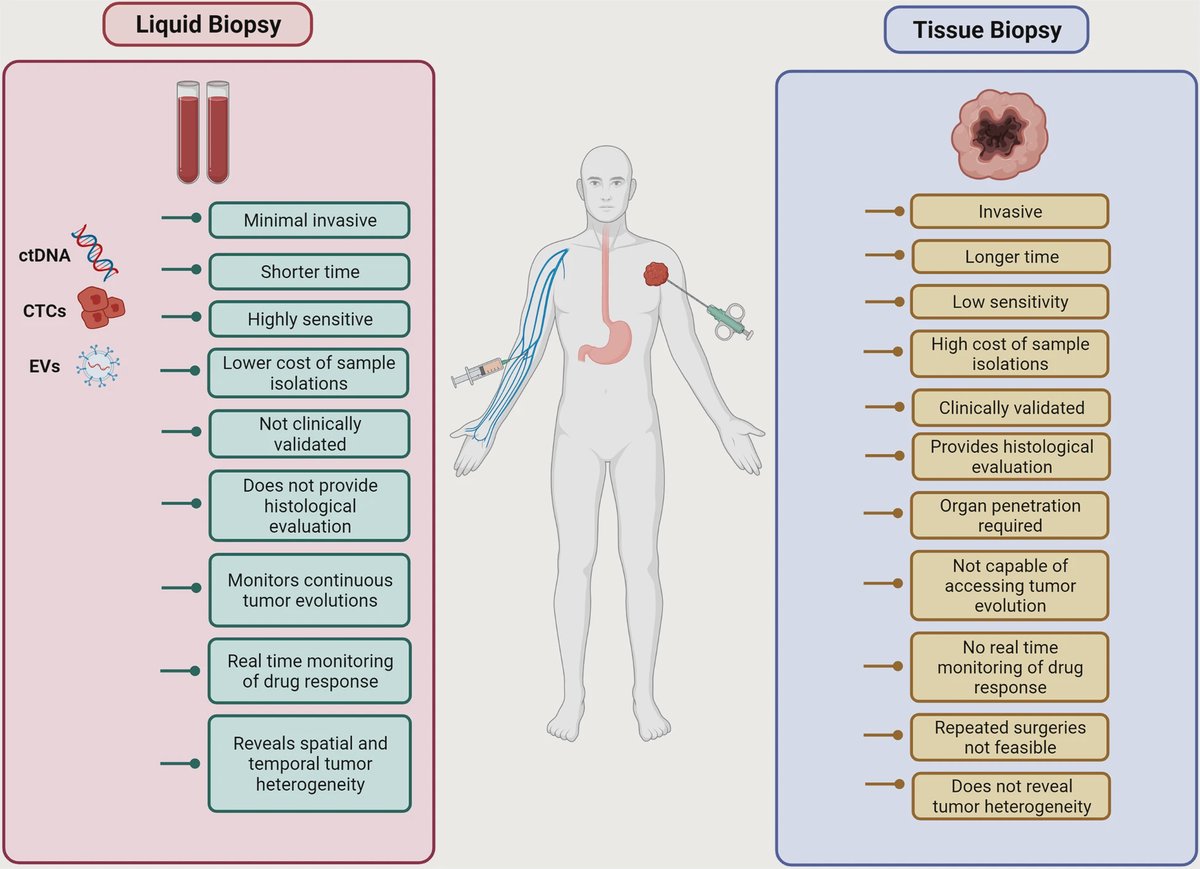
These results make the microswarm a candidate for liquid biopsy, which uses material from bodily fluids to look for signs of disease without relying solely on a tissue sample. The study’s reported performance, however, comes from a pilot cohort and does not establish how well the approach would work in larger or independent patient groups.
Why This Matters
EVs may carry useful signals about a tumor, but those signals are only valuable if the particles can be isolated and analyzed reliably. A device that combines rapid capture with sensitive profiling could make those measurements more practical for studying cancer and tracking treatment.
The next question is whether the reported results hold up in broader clinical testing. The abstract does not give the pilot cohort size, and it does not establish that the platform is ready for routine clinical use. Further validation would be needed to determine how reliably Butor-based testing can guide diagnosis or treatment decisions.
Topics: Cancer · Diagnostics & precision medicine
Start here: What is a biochip?