Source: Bioengineering & Translational Medicine, written by Hua Zhou; Xinyu Gu; Weilong Chang; Lin Zhou; Ruixuan Cao; Xin Wang; Liuyan Deng; Shengping Xiao; Sen Ye; Xiaohua Qian; Zhiyong Xie; Shipeng Li; Xin Xie; Haiqing Bai (November 2, 2026). AI-generated summary by biochip.com, published . Not independently reviewed.
Key takeaways
- Researchers created eight patient-derived organ-on-a-chip models from tumors collected from 14 people with stage III colorectal cancer.
- The models showed different sensitivities to FOLFOX and FOLFIRI; all patients identified as FOLFOX-sensitive remained disease-free after surgery at seven months.
- Clinical evidence is preliminary, with seven months of follow-up and no demonstrated prospective clinical utility.
A patient-derived organ-on-a-chip platform distinguished chemotherapy response patterns in colorectal tumors, and early follow-up offered a preliminary check against patient outcomes. Researchers built eight patient-specific chips from samples collected from 14 people with locally advanced colorectal cancer, then tested standard chemotherapy regimens. The work, published in Bioengineering & Translational Medicine, addresses a key challenge for these devices: whether a lab model can reflect how an individual patient’s tumor responds.
A tumor model in a miniature test lane
Think of an organ-on-a-chip as a small, engineered test lane for living tissue. In this study, researchers placed patient-derived colorectal cancer organoids, three-dimensional clusters grown from tumor tissue, in a microfluidic device. Its channels allow fluid to move through the platform, helping create conditions that a static dish cannot reproduce.
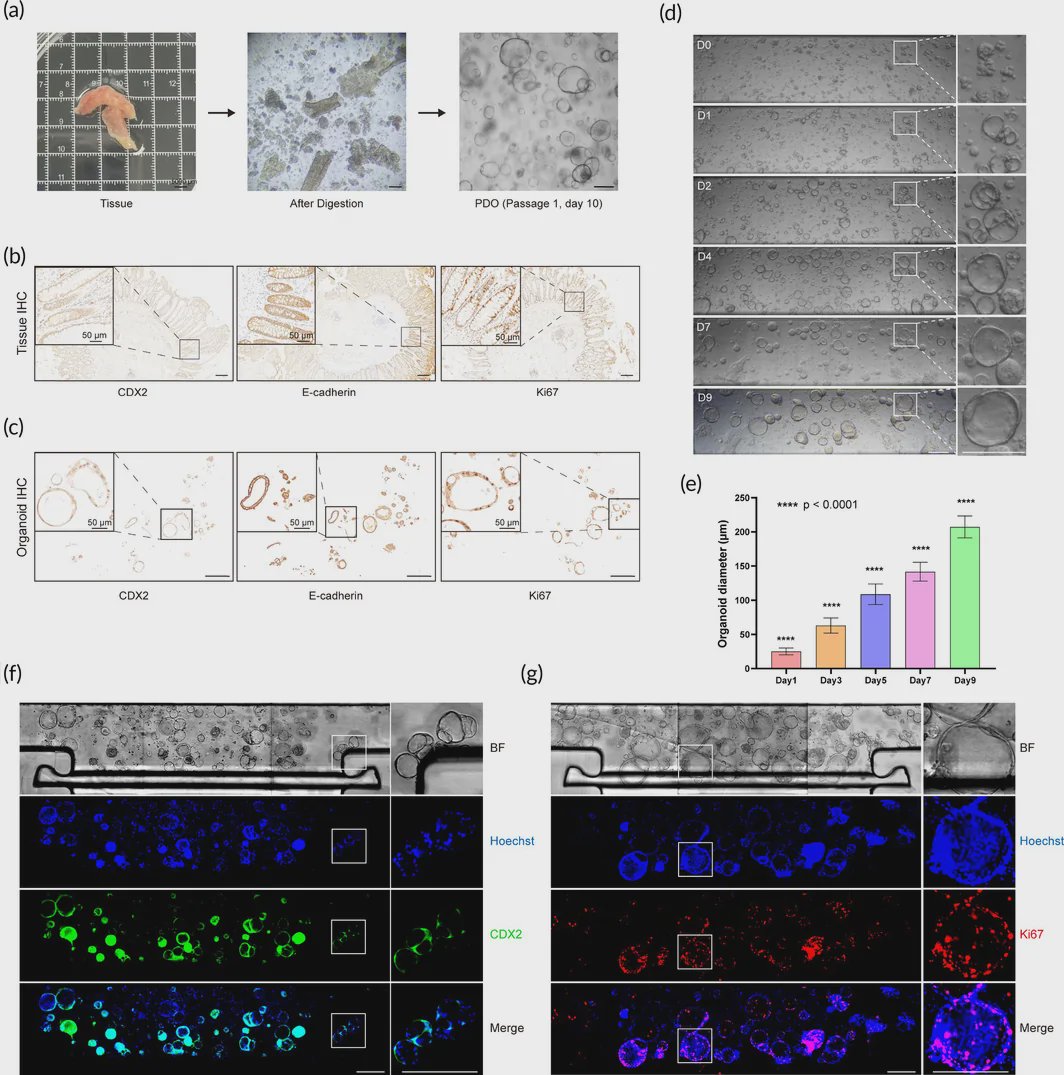
The team enrolled 14 people with stage III colorectal cancer who had not received treatment before surgery. Organoids grew successfully from 13 tumor samples, but the researchers established patient-derived organ-on-a-chip models, or PDOCs, for eight cases. The organoids retained tumor markers found in the original tissue, and they grew in the chip for as long as 27 days.
Measuring response to chemotherapy
The researchers tested irinotecan and the chemotherapy combinations FOLFOX and FOLFIRI. They used an automated imaging workflow to examine organoid shape and distinguish live from dead cells after drug exposure. They also compared imaging results with a conventional assay that estimates cell viability by measuring adenosine triphosphate, or ATP, a molecule cells use to store and transfer energy.
The platform sorted the patient-derived models into different response patterns, including distinct sensitivities to FOLFOX and FOLFIRI. That matters because people with similar diagnoses can respond differently to the same treatment. A model that identifies those differences could eventually help guide treatment selection, though this study’s results do not establish that the platform is ready to direct care.
Early comparison with patient outcomes
The researchers reported preliminary clinical evidence from seven months of follow-up: all patients classified as FOLFOX-sensitive by the platform remained disease-free after surgery. This is an encouraging correspondence between lab results and patient outcomes, but the follow-up was short, and the study involved a small group. The reported result does not show whether the chip can reliably predict outcomes across a larger, independent patient population.
Why This Matters
Many lab models leave out features of a tumor’s surroundings that can affect how it behaves. The chip-based approach combines patient-derived tumor tissue with a microfluidic environment and automated measurement, offering a way to test drug responses while retaining more of the tumor’s structure than a simple layer of cells in a dish.
The next step is to test the platform prospectively, meaning before treatment decisions are made, and determine whether its predictions hold up across more patients. The study establishes feasibility and reports an early patient-outcome comparison; it does not yet demonstrate that using the chip improves treatment choices or outcomes.
Topics: Microfluidics · Organ-on-a-chip · Cancer
Start here: Microfluidics explained