Source: LCGC International, by Steven Ray Wilson (September 25, 2026). AI-generated summary by biochip.com, published . Not independently reviewed.
Key takeaways
- Steven Ray Wilson describes organ-on-a-chip systems as organoids on microfluidic devices that mimic circulation or organ-to-organ interactions.
- Wilson's group is developing automated online preparation before LC-MS and reports one platform uses one-twentieth the plastic of conventional methods.
- The discussion does not provide comparative performance data, sample numbers, or clinical validation for the automated workflow.
Organoids and organ-on-a-chip systems promise more human-relevant models for studying drug effects and toxicity, but their tiny, chemically crowded samples are difficult to measure. Steven Ray Wilson of the University of Oslo argues that automated online sample preparation paired with liquid chromatography-mass spectrometry, or LC-MS, can meet that analytical challenge. The approach reduces manual handling before measurement, which can help preserve irreplaceable samples. It also may sharply reduce laboratory plastic use.
From Miniature Tissues to Chips
Organoids are small, lab-grown structures made from a patient's cells or cells from a group of patients. They can reproduce selected functions of the organs they represent, offering researchers a model that can behave more like human tissue than standard cell cultures.
Researchers can use organoids to examine drug responses and toxicity. Their appeal is straightforward: rather than drawing conclusions from animal models alone, scientists can study biological systems with a closer connection to human tissue.
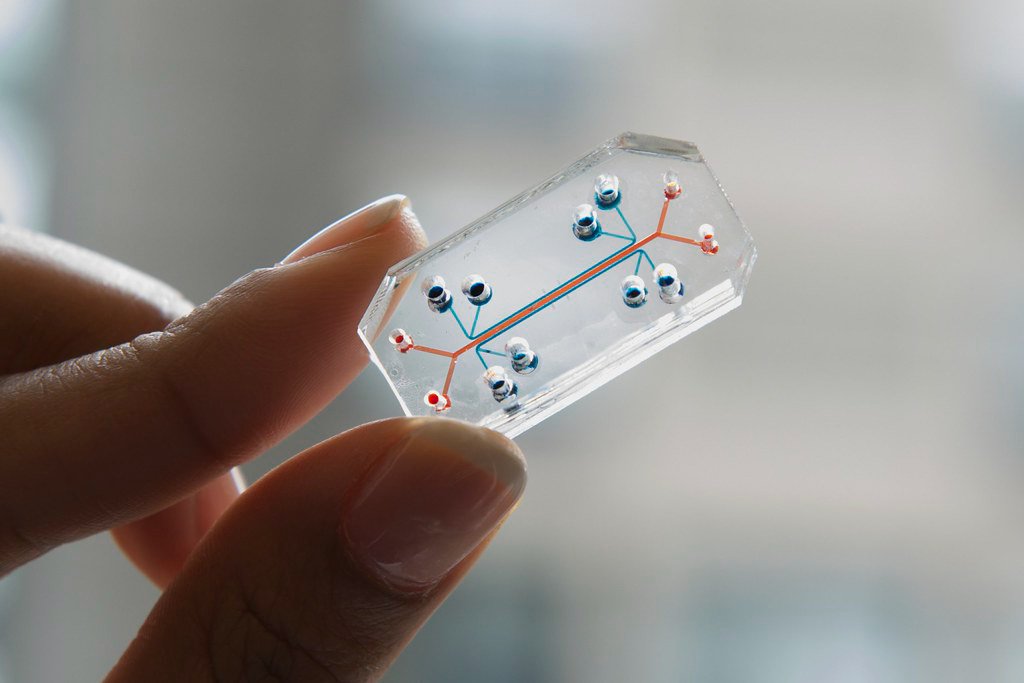
An organ-on-a-chip combines these living models with a microfluidic device. Think of microfluidics as a network of exceptionally small plumbing channels: fluid moves through the device to imitate circulation and, in some cases, interactions among organs. Wilson defines organ-on-a-chip as organoids placed on these microfluidic platforms.
A Sample That Is Small but Complicated
The same features that make organoids biologically useful create a measurement problem. A single organoid may be millimeter-sized, leaving little material available for analysis and raising the sensitivity requirements for any instrument.
These samples are not clean chemical extracts. Organoids sit in cell culture media, which Wilson compares with the blood of a miniature organ system. That surrounding fluid contains a complex mixture of substances, making it harder to isolate and measure the small molecules researchers care about.
Why Online LC-MS Fits the Task
LC-MS separates chemicals before identifying and measuring them by their mass. In everyday terms, liquid chromatography acts like a sorting line that separates a crowded mix of molecules, while mass spectrometry weighs molecular fragments to help identify what passed through.
Wilson's group is minimizing manual sample-preparation steps by moving toward online, automated workflows before LC-MS analysis. In an online setup, preparation is connected directly to the analytical system rather than relying on repeated manual transfers between containers.
Reducing handling matters when samples are both limited and difficult to replace. It can protect data quality by limiting the number of processing steps, while also making the workflow less dependent on disposable laboratory materials. One current platform used by the group consumes one-twentieth of the plastic required by a conventional approach.
Why This Matters
Organoid and organ-on-a-chip models are increasingly used to make drug and toxicity studies more directly relevant to human biology. But their value depends on methods that can reliably measure what is happening in very small, complex biological systems.
Automated online LC-MS offers a practical route for connecting these models to chemical measurements without adding unnecessary manual work. As organoid systems become more sophisticated, analytical workflows that preserve scarce samples and reduce waste could become an important part of making their experiments useful at scale.
Topics: Microfluidics · Organ-on-a-chip · Drug development & safety
Start here: Microfluidics explained
Related articles
- Researchers develop 'organ on a chip' for better drug testing
- TissueGnostics collaborates with Diya Biological Technology in organoid and organ-on-a-chip innovation
- Microfluidic chips: recent advances, critical strategies in design, applications and future perspectives
- Manufacturing Intelligence: Organoids, Organ-on-a-Chip, and the Trust Gap