Source: Healthcare in Europe, by Bernard Banga, MD, Healthcare in Europe. AI-generated summary by biochip.com, published . Not independently reviewed.
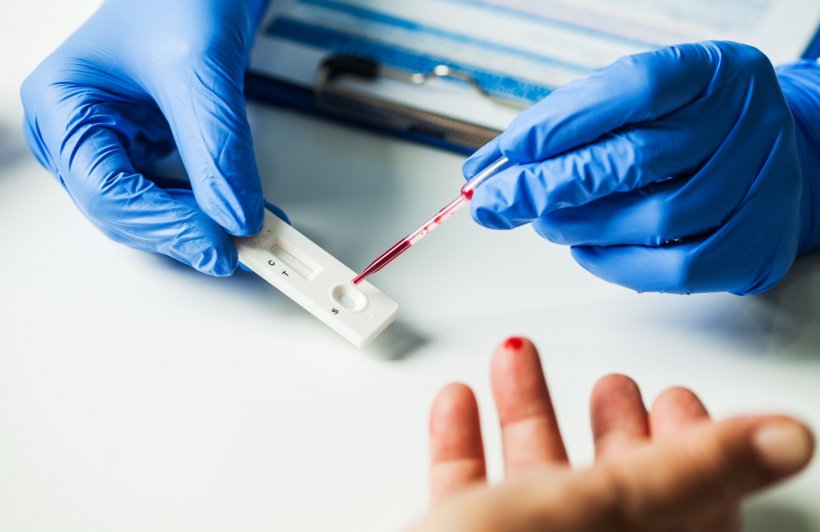
Point-of-care testing, or POCT, is moving beyond simple bedside strips and handheld meters into something much more capable: miniaturized labs that can run sophisticated tests close to the patient. According to Healthcare in Europe, the biggest push is coming from lab-on-a-chip platforms, along with smartphone-based tools, wearable sensors, and cloud-linked artificial intelligence systems. These technologies aim to bring tests that once required a central laboratory, such as polymerase chain reaction (PCR), microbiological culture, and enzyme-linked immunosorbent assay (ELISA), directly to clinics, emergency rooms, and remote settings. That matters most in infectious disease, where speed can change treatment decisions and help contain outbreaks. The article also points to growing use in cancer, where devices are being designed to spot disease-related biomarkers, the measurable molecules that can signal a condition is present or changing. A key theme is sensitivity: newer systems are not just smaller, but better able to detect tiny amounts of viral or bacterial genetic material. If these platforms continue to improve, POCT could shift from a fast but limited screening tool into a genuine front-line diagnostic system. The broader promise is simple to grasp: test sooner, decide faster, and move lab-grade analysis closer to the patient.
From bedside test to lab on a chip
The phrase lab-on-a-chip sounds futuristic, but the idea is easy to picture. Think of shrinking an entire testing workflow into a device no larger than a credit card or small cartridge, with tiny channels that move drops of fluid the way plumbing moves water through a house.
Those tiny channels are part of microfluidics, a technology that handles very small liquid volumes with precision. In POCT, microfluidics lets a device collect a sample, mix it with reagents, separate targets, and produce a result without the bulky instruments found in a traditional laboratory.
Why miniaturization changes what can be tested
Older point-of-care tests often traded sophistication for convenience. They were quick and portable, but many could only answer narrow questions, such as whether a single protein or chemical marker was present above a threshold.
The article argues that miniaturization is changing that tradeoff. By packing more functions into a small cartridge, newer systems can perform bioassays that were once confined to centralized labs, including microbiological culture, PCR, and ELISA, while still keeping the speed and accessibility that make POCT useful.
Infectious disease is the clearest use case
Infectious disease diagnosis stands out as one of the strongest drivers for these new devices. When a clinician needs to know quickly whether a patient has Ebola, dengue, malaria, Zika virus, or a respiratory infection, waiting hours or days for a central lab can slow treatment and public health response.
That is why the article highlights both traditional assay formats and genetic tests that identify pathogens by their nucleic acids, the DNA or RNA that acts like a biological fingerprint. A sensitive test can detect very small amounts of that material, helping clinicians pick up infections earlier or with greater confidence.
PCR on a chip and isothermal amplification
The most sensitive and specific systems described in the piece use PCR on a chip and isothermal amplification. PCR works by making many copies of a target genetic sequence so it becomes easier to detect, while isothermal amplification does something similar but at a constant temperature, which can simplify the hardware.
A useful analogy is photocopying a single page until it becomes a stack you cannot miss. In diagnostic terms, that copying step allows a device to find traces of a virus or bacterium that would otherwise be too faint to see, even in a small sample taken at the point of care.
Healthcare in Europe says these nucleic acid amplification approaches can be used for a broad set of infectious diseases, including Mycoplasma pneumonia, Bordetella pertussis, Legionella pneumonia, Influenza A virus, SARS, Legionella, Aspergillus, West Nile Virus, and SARS-CoV-2. That range matters because it shows POCT is no longer limited to a few familiar targets; it is increasingly becoming a flexible platform.
Smartphones, wearables, and connected analysis
The article also points to innovations in smartphone-based technology and wearable technology. Smartphones can act as portable readers, data processors, and communications hubs, turning a test result into something that can be displayed, stored, and shared almost instantly.
Wearables add another layer by allowing measurements to be taken repeatedly over time rather than only during a clinic visit. That could be useful not just for spotting infection but for tracking trends in health status, where changes matter as much as one isolated reading.
Beyond the device itself, cloud-based deep learning systems are presented as part of the next wave. In plain terms, that means sending test data to remote software that can help interpret patterns, potentially improving accuracy or helping clinicians sort large amounts of information faster.
Beyond infections: cancer and prognosis
Although infectious disease is the most obvious application, the article notes that POCT is also being developed for diagnosis and prognosis in cancer. Diagnosis asks whether disease is present, while prognosis focuses on what is likely to happen next, such as whether a cancer may progress or respond to treatment.
These devices do that by looking for biomarkers, molecules in blood or other samples that can signal the presence or behavior of disease. If reliable biomarker tests can be moved closer to patients, oncology care could become faster and more responsive, especially in settings that lack extensive lab infrastructure.
Why This Matters
The practical value of better POCT is speed with context. A rapid answer at the place where a patient is seen can shorten the time between symptoms, diagnosis, and treatment, while also reducing the need to send samples away and wait for results to come back.
There is also a systems-level effect. More capable bedside or near-patient testing can help hospitals triage infectious cases, support care in rural or low-resource settings, and make outbreak response more agile when diseases spread quickly across communities.
Still, the future described here depends on more than clever engineering. Devices must show that they are accurate, robust, affordable, and easy to use in real clinical environments, not just in controlled demonstrations.
If those hurdles are met, the direction is clear: point-of-care testing is evolving from convenience diagnostics into compact, connected platforms that can handle increasingly complex biology. The next phase will likely be defined by how well these chips, sensors, phones, and cloud tools work together to bring trustworthy results to the patient when timing matters most.