Source: Organoid Research, by Diantong Xie; Yixu Zhao; Yubing Leng; Xiaorui Li; Hongxin Li; Hui Liu; Xudong Wang; Jingkai Liu; Yulong Liao; Tianyu Yang; Jie Liu; Yinuo Zhang; Fengde Peng; Ji Song; Zizheng Deng; Shiyao Chen; Kairui Sun; Yingran Liu; Keyi Chen; Jiashu Li (September 30, 2026). AI-generated summary by biochip.com, published . Not independently reviewed.
Key takeaways
- The review examines sensor-integrated organoids, organ-on-a-chip platforms, hybrid systems, 3D bioprinting, and acoustic bioassembly.
- Organoids provide self-organized tissue architecture, while chips provide controlled flow, mechanical cues, and real-time measurement access.
- The review does not establish a single newly validated device, and highlights scalability, reproducibility, standardization, and clinical benchmarking challenges.
A review led by researchers from Beihang University, Tsinghua University, and other Chinese institutions examines how organoids, organ-on-a-chip platforms, microengineering, and sensors can be combined into more informative laboratory models of human biology. Organoids are self-organizing clusters of cells that mimic parts of an organ, while organ-on-a-chip systems use small fluidic devices to control the cells' physical environment. The review argues that bringing these approaches together could make models more useful for studying disease, evaluating treatments, and eventually tailoring experiments to individual patients. Its central message is cautious: these systems need reproducible, standardized, clinically relevant validation before they can serve as dependable translational tools.
Two Complementary Ways to Model Human Tissue
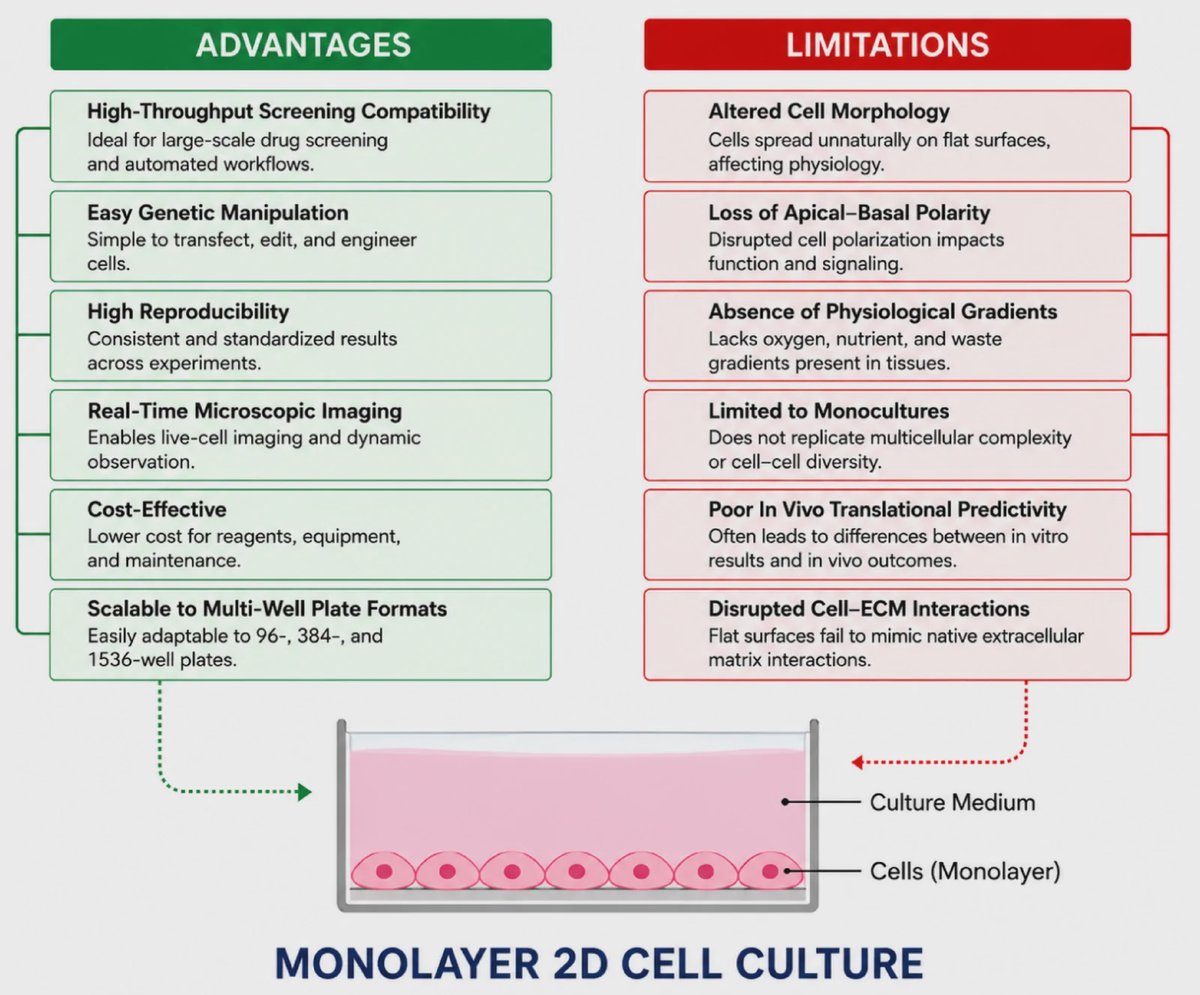
Organoids can recreate cellular diversity and aspects of tissue architecture because cells organize themselves in three dimensions. An intestinal organoid, for example, can capture more of the cell variety found in tissue than a flat layer of cells grown in a conventional dish. But organoids can be variable, and they do not inherently provide carefully controlled fluid flow, mechanical forces, or continuous measurements.
Organ-on-a-chip, often shortened to OoC, provides that control. These microfluidic devices guide tiny volumes of liquid through defined channels, much like plumbing scaled down to the size of a laboratory slide. They can expose cells to perfusion, meaning a continuous flow of nutrient-containing fluid, and to physical cues that more closely resemble an organ's working conditions.
Building Organoids Into Chips
The review focuses on hybrid systems often called organoid-on-a-chip. In these platforms, an organoid supplies biologically rich tissue while the chip supplies a controlled geometry and environment. Combining them can help researchers observe how a tissue model responds when flow, force, or surrounding conditions change.
The authors also examine multi-tissue systems, which connect models of more than one organ. Such setups aim to capture interactions that isolated tissues cannot show, including how an intervention may affect one tissue while producing unintended effects in another. The review identifies potential uses in efficacy evaluation, quality control, mechanistic research, and personalized medicine.
Why Sensors Are Central
Sensor integration is a key part of the proposed synergy. A sensor gives a chip the ability to collect measurements while cells remain in culture, rather than requiring researchers to stop an experiment and analyze it only at the end. In practical terms, it is the difference between checking a plant only after removing it from a greenhouse and monitoring its conditions continuously while it grows.
For organoid and OoC systems, real-time measurements could make experiments more responsive and easier to compare. The review places biosensors alongside microengineering methods, 3D bioprinting, and acoustic bioassembly, a technique that uses sound waves to position or assemble biological materials. Together, these engineering approaches seek to improve the consistency and physiological relevance of microphysiological systems.
Manufacturing Remains a Major Challenge
More realistic models are not automatically more reliable models. The review identifies scalability, reproducibility, and standardization as principal barriers to translation. A platform must produce consistent results across experiments and laboratories before it can support high-stakes decisions in drug development or patient-focused research.
The authors also flag the responsible use of artificial intelligence and multi-omics data. Multi-omics combines large datasets about biological molecules, such as genes, RNA, proteins, and metabolites. These data may help interpret complex chip experiments, but they also raise practical questions about data quality, comparability, and how researchers validate computational conclusions.
Why This Matters
Animal models and conventional cell cultures each leave gaps when researchers try to reproduce human physiology in the laboratory. Organoid-on-a-chip systems aim to narrow those gaps by pairing living, self-organized tissues with the environmental control and measurement capabilities of microfluidic devices. The approach could give researchers a more practical way to test how human-like tissues behave under defined conditions.
The next step is not simply to add more complex features. Developers will need shared benchmarks that show whether these systems are reproducible and clinically relevant. If that validation succeeds, sensor-equipped organoid-on-a-chip platforms may become increasingly useful tools for studying biology and evaluating treatments before they reach patients.
Topics: Microfluidics · Organ-on-a-chip
Start here: Microfluidics explained
Related articles
- Organoids, Organ-on-a-Chip, and the Case for Online LC–MS
- Systematic standardization of organ-on-a-chip under controlled flow conditions: Use case with Caki-1 and A549 cell lines
- TissueGnostics collaborates with Diya Biological Technology in organoid and organ-on-a-chip innovation
- Quantum Nanosensors Could Reveal What Organs-on-Chips Miss